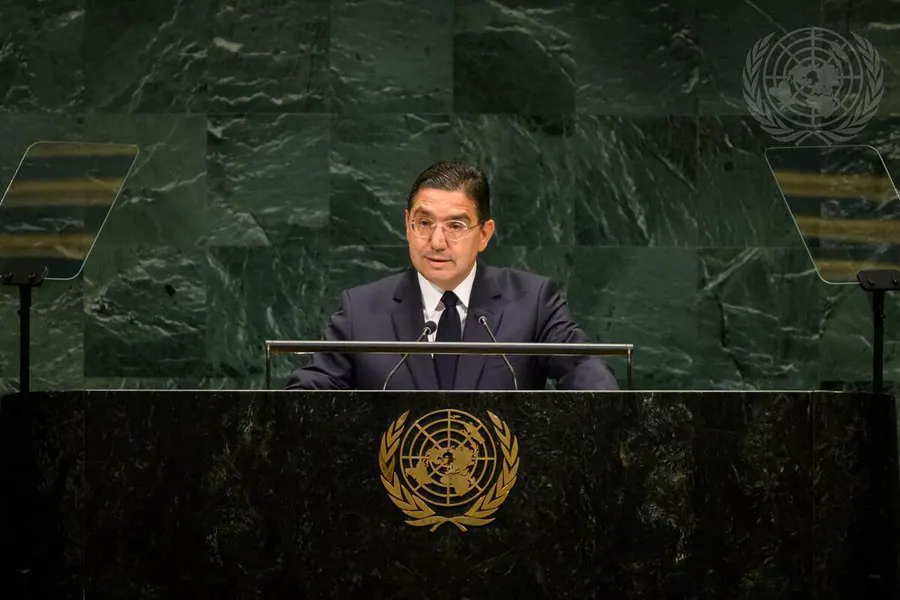
Morocco's Minister of Foreign Affairs, Nasser Bourita, has urged the international community to take stronger action against non-state armed groups, warning that their growing influence poses significant risks to state security, sovereignty, and international stability. In a speech delivered on behalf of Morocco during the 81st session of the United Nations General Assembly in New York, Bourita emphasized the need for a redefined international response to the complex global security environment. He highlighted the expanding activities of non-state armed groups beyond traditional conflict zones.
According to Bourita, more than 200 million people worldwide now live under the control of non-state armed groups or in areas experiencing intense struggles for power. He also noted that over 130 non-state armed groups have been classified as parties to armed conflicts. The UN's summary of Bourita's address reported that these groups have grown considerably and now threaten maritime corridors and straits. Bourita linked such groups to terrorist organizations, criminal networks, and mercenary elements, emphasizing the need for a comprehensive approach to address these threats.
Bourita rejected the idea that non-state armed groups could serve as peaceful or constructive actors in conflict-resolution processes. He argued that these groups, as well as their sponsors, cannot be allowed to become a means of evading accountability or a tool for carrying out what states cannot do directly. Bourita called for international mechanisms to hold accountable states that sponsor, finance, arm, or provide shelter to non-state armed groups.
Morocco's top diplomat also urged the international community to impose deterrent sanctions on armed groups and those supporting them. He stressed that responsibility should extend to parties that finance such groups, supply them with weapons, or provide them with safe havens. Bourita's remarks underscored the need for a collective international response to address the growing threat of non-state armed groups.
Beyond security issues, Bourita called for greater international action on climate change, citing its impact on water and food security, territorial stability, economies, and living conditions. He emphasized that Morocco's climate efforts need to be accompanied by broader international measures, including accessible financing, technology transfers, and greater international solidarity.
The issue of non-state armed groups was a key theme in Bourita's address to the UN General Assembly. He emphasized that these groups have expanded their activities beyond traditional conflict zones and are increasingly affecting maritime routes and strategic straits, including by disrupting international shipping. This has significant implications for global security and stability.
Bourita's call for stronger international action against non-state armed groups reflects Morocco's concerns about the growing security risks posed by these entities. As the international community continues to grapple with these challenges, Bourita's remarks highlight the need for a collective and comprehensive response to address the complex threats posed by non-state armed groups.
Key points
- Morocco's Foreign Minister Nasser Bourita calls for stronger international action against non-state armed groups.
- Over 200 million people worldwide live under the control of non-state armed groups or in areas experiencing intense struggles for power.
- Bourita urges international community to impose deterrent sanctions on armed groups and those supporting them.