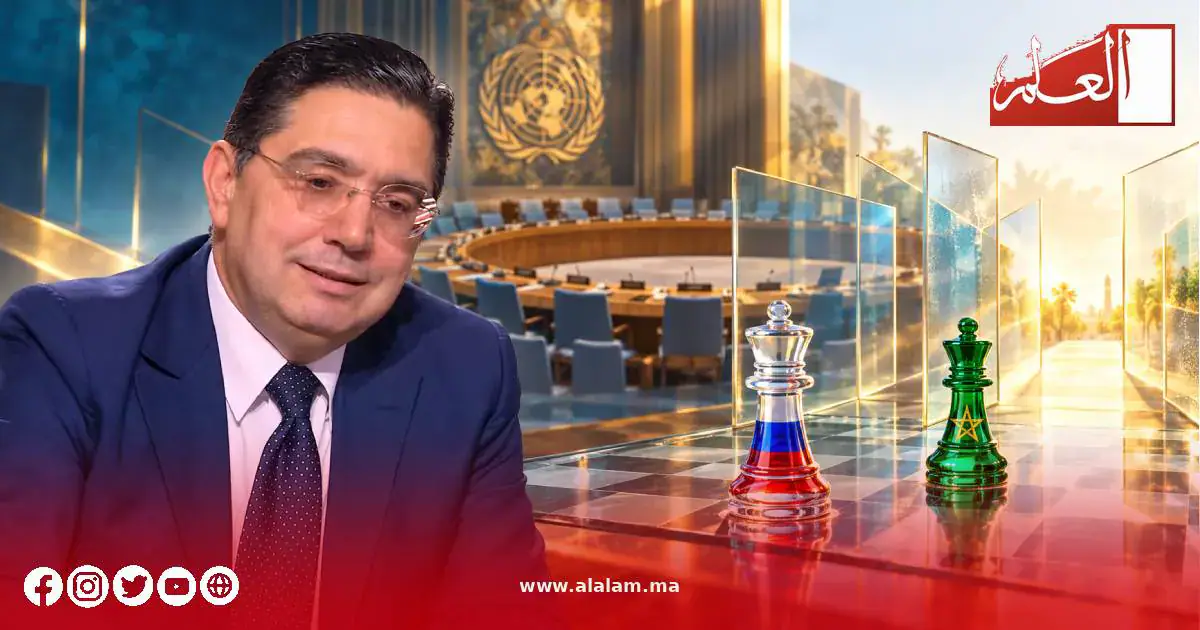
Moroccan Foreign Minister Nasser Bourita disclosed that his country was not caught off guard by Russia's decision to veto a US-proposed resolution on Western Sahara at the United Nations Security Council. According to Bourita, Russia had informed Morocco of its intention to veto the resolution days before the vote. This prior notification allowed Morocco to assess the situation and plan its next steps.
Bourita revealed that Morocco chose not to attempt to change Russia's stance during his meetings with Russian Foreign Minister Sergey Lavrov. Instead, Morocco focused on evaluating the implications of the veto and exploring opportunities to alter the approach to the Western Sahara issue within the UN. The goal was not solely to avoid the veto but to understand how to utilize its outcome to revisit the rules governing the conflict.
Morocco had hoped for a resolution based on UN Resolution 2797, which would clearly outline the basis for negotiations, the negotiation process, and the parties involved, as well as address the humanitarian situation in the Tindouf camps. When Russia's veto became likely, Morocco considered amending the draft resolution as an alternative.
The Moroccan approach signals a shift from managing the conflict within the existing framework to re-examining the rules that have been in place for decades. According to Bourita, this involves questioning the ability of current mechanisms to drive a solution and exploring new avenues for progress. This strategic shift was part of Morocco's thinking even before the veto was cast.
The discussions between Bourita and Lavrov in Moscow on October 28, on the sidelines of the Russia-Africa Summit, demonstrate that there was ongoing communication between Rabat and Moscow before the UN vote. However, this communication does not imply an agreement between the two countries on the use of the veto or its consequences.
By choosing to view Russia's veto as an opportunity to reassess its approach, Morocco aims to move beyond the stalemate and create a new framework for addressing the Western Sahara issue. This involves considering how to engage different parties and what new elements can be introduced to facilitate a resolution.
The situation has sparked reactions beyond Morocco and Russia, with various countries and international organizations weighing in on the implications of the veto and the future of Western Sahara. The international community continues to seek a peaceful and lasting solution to the conflict, with Morocco's strategy indicating a readiness to adapt and engage in new diplomatic efforts.
Key points
- Morocco was informed by Russia of its intention to veto the US-proposed resolution on Western Sahara before the UN Security Council vote.