The United Nations has praised Morocco's alternative sentencing law, describing it as a "very important success story" that other countries should learn from. The law, which came into effect in August 2025, allows judges to impose alternative sentences on individuals convicted of crimes that do not pose a significant threat to society. This approach aims to strike a balance between holding individuals accountable for their actions and providing them with the opportunity to make amends to society.
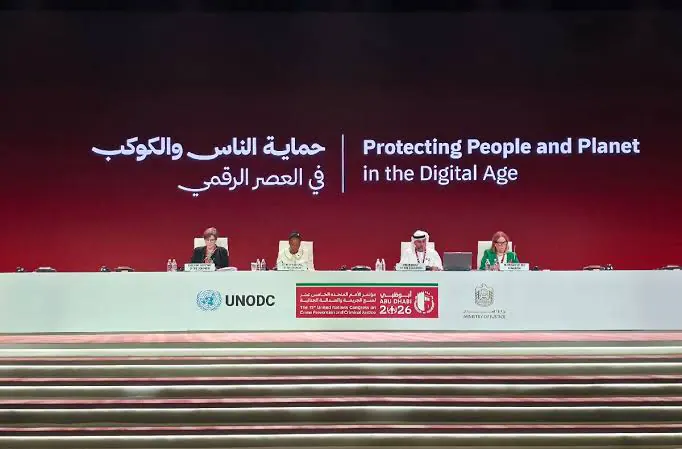
The praise for Morocco's alternative sentencing law came during the 15th United Nations Congress on Crime Prevention and Criminal Justice, held in Abu Dhabi. Egyptian Ambassador to Austria and Permanent Representative to the UN and international organizations in Vienna, Mohamed Nasr, highlighted Morocco's experience as a successful example of alternative sentencing. He noted that this approach could be particularly useful in dealing with minor crimes.
Nasr emphasized that alternative sentencing allows judges to impose a sentence on a convicted individual while also giving them the opportunity to perform community service. This approach enables the individual to take responsibility for their actions while also contributing to society. The Egyptian ambassador suggested that Morocco's experience in this area could be shared with other countries, particularly in Africa and the Arab world.
The Moroccan experience with alternative sentencing was presented by Ahmed Wali Alami, Secretary General of the Public Prosecution Office. He explained that the law regulating alternative sentencing had been accompanied by various components of the justice system, each within their respective areas of competence. This included training and coordination efforts, as well as the development of guidelines to support the implementation of the law.
The 15th United Nations Congress on Crime Prevention and Criminal Justice has brought together over 5,100 participants, including more than 40 ministers of justice and 93 speakers representing countries and regional groups. The congress aims to provide a platform for exchanging experiences, reviewing initiatives, and building new partnerships in the areas of criminal justice and crime prevention.
The congress is expected to produce practical outcomes and a lasting legacy that supports international efforts to develop justice systems and promote the rule of law. The event has also featured high-level participation, with 62 dignitaries attending, including 46 in person and 16 via video conferencing.
The Moroccan law on alternative sentencing is seen as a significant step towards promoting a more humane and inclusive approach to justice. By providing judges with the flexibility to impose alternative sentences, the law aims to reduce the burden on the prison system and promote rehabilitation and reintegration.
Key points
- Morocco's alternative sentencing law has been praised by the UN as a "success story" that other countries should learn from.
- The law allows judges to impose alternative sentences on individuals convicted of minor crimes.
- The UN congress aims to promote international cooperation and knowledge-sharing in the areas of criminal justice and crime prevention.