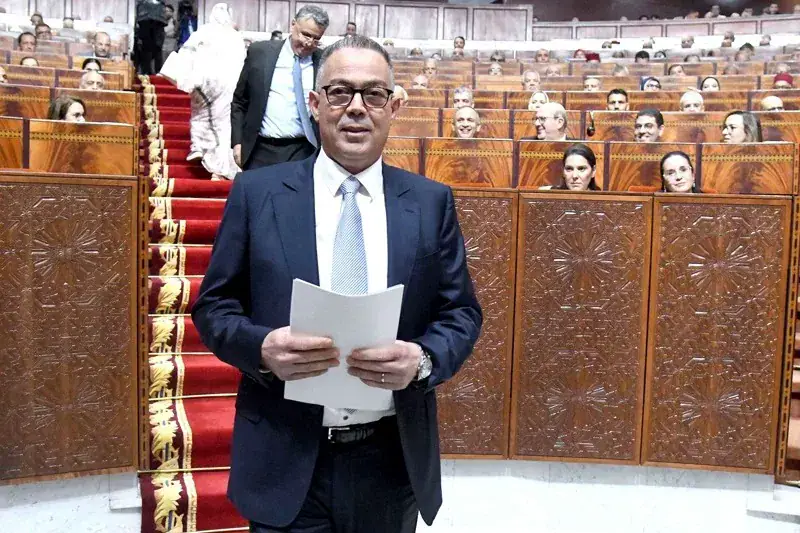
Morocco's Minister of Economy, Finance, and Public Performance, Fouzi Lekjaa, has defended the country's 2027 budget plan, which includes a revision of the income tax aimed at supporting middle-class employees in both the public and private sectors. The plan, part of the 2027 Finance Bill, seeks to alleviate the financial burden on this increasingly fragile demographic. Lekjaa emphasized that the revision is designed to support those who are starting to show signs of financial vulnerability.
Lekjaa highlighted the importance of social dialogue in achieving the government's goals, referencing the previous administration's efforts, which cost around 50 billion dirhams in 2027. He stressed that the current government is focused on three main categories: vulnerable populations, the middle class, and the private sector, recognizing their interdependence in maintaining social balance. The minister assured that the reduction in income tax will be accompanied by social dialogue to benefit those who will not see a reduction in their taxes.
The proposed tax revision will be calculated after deducting professional expenses and social contributions, with family charge reductions considered when calculating the tax amount due. Lekjaa noted that social dialogue is essential to complement this reform, ensuring that the executive will engage in discussions to review what has been planned and what needs to be completed to support incomes and mitigate the effects of rising prices.
Regarding pensions, Lekjaa announced that the minimum pension amount will be increased to 1,700 dirhams in 2027, representing an increase of 200 dirhams compared to the public sector and 700 dirhams compared to the private sector. This measure is expected to benefit nearly 557,000 people, with around 70% of them being part of the National Social Security Fund (CNSS). The annual cost of this measure is estimated at 3.3 billion dirhams.
Lekjaa outlined the government's plan to gradually increase the minimum pension amount to 2,000 dirhams in 2028, 2,500 dirhams in 2029, and 3,000 dirhams in 2030. Additionally, he mentioned that the revaluation of the pension rate for widows will benefit around 431,000 people, with an annual financial cost of 7.33 billion dirhams. These beneficiaries will come from various regimes, including the CNSS, the Collective Retirement Allocation Regime (RCAR), and civil and military pension schemes.
Lekjaa emphasized that the government's approach aims to support incomes and counteract the effects of inflation. He highlighted the importance of a comprehensive vision that includes both tax reductions and social measures to ensure that all segments of society benefit. The minister's presentation to parliament underscores the government's commitment to addressing social and economic challenges.
The 2027 budget plan reflects the government's priorities, focusing on supporting vulnerable populations and promoting economic growth. The proposed measures aim to alleviate financial pressures on middle-class employees and ensure a more equitable distribution of resources. As the government moves forward with its plans, it will be crucial to monitor the impact of these measures on the country's economy and social landscape.
Key points
- The Moroccan government aims to support the middle class through a revision of the income tax.
- The 2027 budget plan includes measures to increase the minimum pension amount and revalue pension rates for widows.
- Social dialogue will play a crucial role in complementing the tax revision and ensuring that all segments of society benefit.