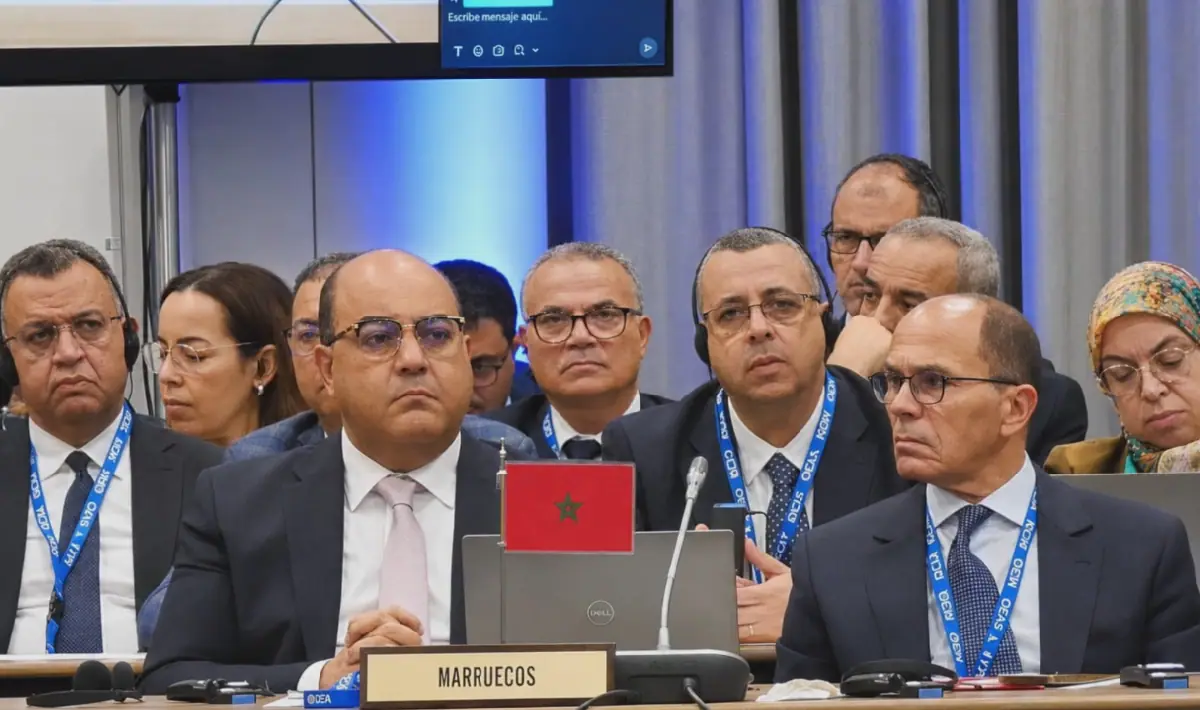
The 25th extraordinary meeting of the International Commission for the Conservation of Atlantic Tunas (ICCAT) is being held in Vilamoura, Portugal, from November 16 to 23, 2026. Morocco's Minister of Maritime Fisheries, Ahmed El Mehdi Mezouari, is leading the country's delegation and has delivered a strong speech, emphasizing Morocco's commitment to preserving marine resources and promoting a sustainable blue economy. He highlighted the importance of collective responsibility in addressing global challenges facing marine ecosystems.
Mezouari stressed that Morocco is committed to playing its part in the collective effort to preserve marine resources, assuming its responsibilities and building compromises that will allow the Commission to move forward. He emphasized that sustainability is not a constraint, but a strategic choice for the country. The Minister also highlighted the importance of science and rigor in ensuring the long-term sustainability of fish stocks, citing the need for data-driven decision-making and collective respect for scientific findings.
Morocco's commitment to preserving marine resources is driven by a pragmatic and scientific approach. The country aims to balance the needs of its fishermen, coastal communities, and future generations, while ensuring national food security. Mezouari emphasized that Morocco will continue to strengthen its conservation efforts, enhance scientific observation mechanisms, and intensify the fight against illegal, unreported, and unregulated fishing.
The Minister's speech also highlighted the importance of South-South cooperation and Atlantic solidarity. Morocco advocates for enhanced cooperation among developing countries, focusing on knowledge sharing, training, and capacity building. Mezouari stressed that collective responsibility requires shared means of action, and Morocco is committed to contributing to a more equitable and sustainable management of marine resources.
On key technical issues, the Moroccan delegation presented pragmatic and equitable proposals. Regarding albacore and bigeye tuna, Morocco expressed its willingness to contribute to collective efforts to rebuild stocks, while ensuring a fair distribution of the total allowable catch. The country also supports the institutionalization of a science-based evaluation process for managing Mediterranean swordfish, taking into account socio-economic realities and the need for balanced distribution.
Mezouari also emphasized the crucial importance of combating illegal fishing and preserving biodiversity. He called for collective action to protect vulnerable species and prevent rule circumvention, which are essential for maintaining the overall health of marine ecosystems. The Minister concluded by launching a call to action, urging the assembly to make this session a turning point in the fight to preserve marine resources.
The Moroccan delegation's participation in the ICCAT meeting reflects the country's commitment to international cooperation and sustainable management of marine resources. As the meeting continues, stakeholders will be watching closely to see how the Commission addresses key challenges and opportunities in the conservation of Atlantic tuna stocks. Morocco's proposals and initiatives are expected to contribute to a more sustainable and equitable management of marine resources.
Key points
- Morocco reaffirms its commitment to preserving marine resources and promoting a sustainable blue economy at the ICCAT meeting.
- The country advocates for enhanced South-South cooperation and Atlantic solidarity to address global challenges facing marine ecosystems.
- Morocco presents pragmatic and equitable proposals on key technical issues, including the conservation of albacore, bigeye tuna, and Mediterranean swordfish.