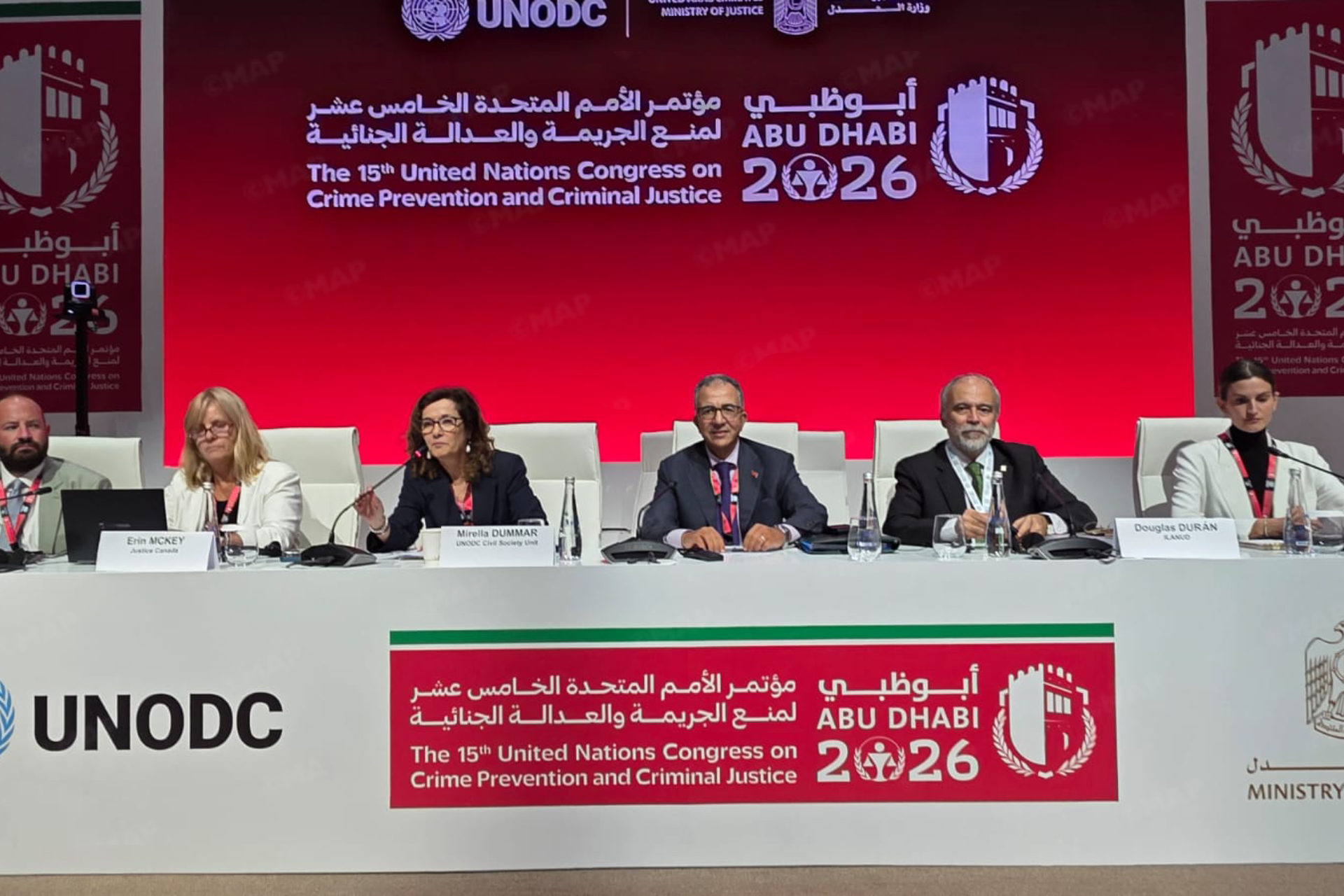
Morocco's Ambassador and Permanent Representative to the International Organizations in Vienna, Azzeddine Farhane, reaffirmed the country's commitment to a cooperative approach to crime prevention and criminal justice at the 15th United Nations Congress on Crime Prevention and Criminal Justice. The congress was held in Abu Dhabi from September 26 to October 1. Farhane highlighted Morocco's experience in hosting the Regional Preparatory Meeting for Western Asia in April 2025.
Farhane stressed that Morocco's approach relies on the involvement of all relevant stakeholders, particularly civil society organizations. He identified five key lessons from Morocco's experience, including the importance of taking regional specificities into account and strengthening inclusion. According to Farhane, addressing regional specificities is crucial as transnational crime has a global dimension but often remains local or regional.
The second lesson centers on inclusion, which Farhane said strengthens both the legitimacy and effectiveness of crime prevention efforts. Governments cannot address increasingly complex crime-related challenges alone, he said, pointing to the contributions of civil society, academia, practitioners, young people, the private sector, and local communities. Their participation should go beyond consultation and become part of a genuine culture of co-creation.
Farhane also highlighted the importance of using regional diversity as a basis for global convergence. Different regions approach crime prevention and criminal justice through distinct historical, institutional, and social perspectives. Such differences do not prevent the pursuit of consensus, Farhane said, adding that regional diversity can enrich multilateral decision-making.
The ambassador also emphasized the need for continuity between consultation, negotiation, and implementation. The Abu Dhabi Declaration should not mark the end of the preparatory process but rather serve as a new starting point, Farhane said. He called for stronger follow-up mechanisms between UN Congresses on crime prevention to allow regional actors and civil society to contribute to the implementation and assessment of international commitments.
Farhane's fifth lesson focuses on translating partnerships into concrete action. He called for greater interaction among governments, the United Nations Office on Drugs and Crime (UNODC), civil society, academia, and other stakeholders. Farhane also stressed the need for greater complementarity among international instruments addressing transnational organized crime, corruption, terrorism, and related threats.
The ambassador concluded that the success of the UN Congress should ultimately be measured not only by the declaration adopted at the meeting but also by the ability to translate regional perspectives into global commitments, global commitments into national action, and national action into greater justice, security, and trust for citizens. Morocco will continue to promote an approach to crime prevention and criminal justice based on cooperation, prevention, human dignity, institutional capacity building, and international solidarity.
Key points
- Morocco's Ambassador Azzeddine Farhane emphasizes the importance of regional specificities in addressing transnational crime.
- Inclusion of civil society organizations and other stakeholders is crucial for effective crime prevention efforts.
- Morocco's approach to crime prevention and criminal justice is based on cooperation, prevention, human dignity, institutional capacity building, and international solidarity.