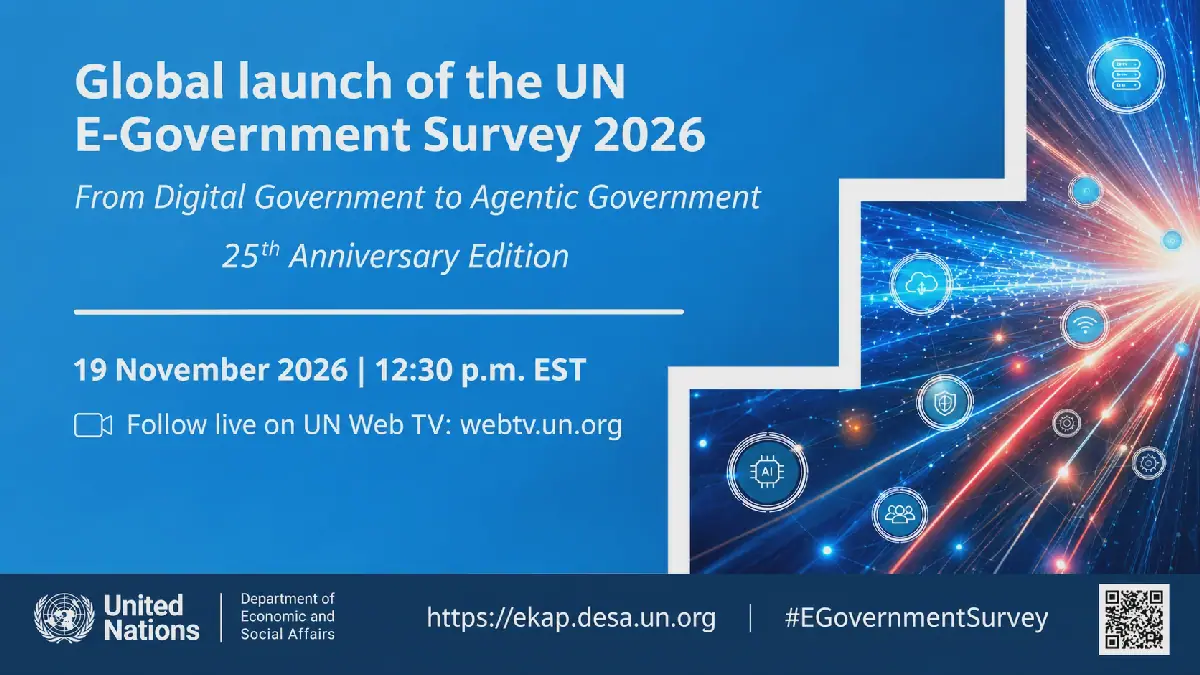
The Moroccan government has made significant strides in digital development, ranking second in Africa and 89th globally in the 2026 E-Government Development Index (EGDI). According to a report by the United Nations Department of Economic and Social Affairs (UN DESA), Morocco obtained a score of 0.7350, surpassing the global average of 0.6675. This progress represents a 7.4% increase from the 2024 edition, where Morocco scored 0.6841 and ranked 90th worldwide.
The EGDI report, titled "E-Government Survey 2026: From Digital Government to Agile Government," assesses the advancement of public administrations globally based on three key components: telecommunications infrastructure, online services, and human capital. Morocco excelled in telecommunications infrastructure, scoring 0.877, followed by human capital (0.69) and online services (0.685). This strong performance in telecommunications infrastructure has contributed significantly to Morocco's overall ranking.
In Africa, Morocco trails behind South Africa, which ranks first on the continent and 52nd globally with a score of 0.83. Other African countries, such as Mauritius and Tunisia, rank third and fourth, respectively. The report highlights that only a few countries in the Arab world, including Saudi Arabia, the United Arab Emirates, and Bahrain, have achieved a "very high" level of development in e-government.
Globally, the top three countries in the EGDI are South Korea, Denmark, and Singapore, with scores of 0.99, 0.98, and 0.97, respectively. The report notes that the global average score has increased by 4.6% between 2024 and 2026, driven primarily by the growth and widespread adoption of online public services.
The Moroccan government's efforts to enhance its e-government capabilities are part of a broader trend towards digital transformation. By investing in telecommunications infrastructure and online services, Morocco aims to improve the efficiency and accessibility of its public services. This development is expected to have a positive impact on the country's economic and social development.
The UN DESA report emphasizes the importance of e-government in promoting sustainable development and achieving the United Nations' Sustainable Development Goals (SDGs). By leveraging digital technologies, governments can enhance transparency, accountability, and citizen engagement, ultimately leading to better governance and improved quality of life for citizens.
As Morocco continues to develop its e-government capabilities, it is likely to face new challenges and opportunities. The country's progress in this area will depend on its ability to balance the needs of different stakeholders, including citizens, businesses, and government agencies. By doing so, Morocco can harness the potential of digital technologies to drive economic growth, improve public services, and enhance the overall well-being of its citizens.
Key points
- Morocco ranks second in Africa and 89th globally in the 2026 E-Government Development Index with a score of 0.7350.
Reporting sources
- E-gouvernement 2026 : le Maroc se hisse au 2e rang africain et à la 89e place mondiale selon l’ONU · Le Quotidien de Nouakchott