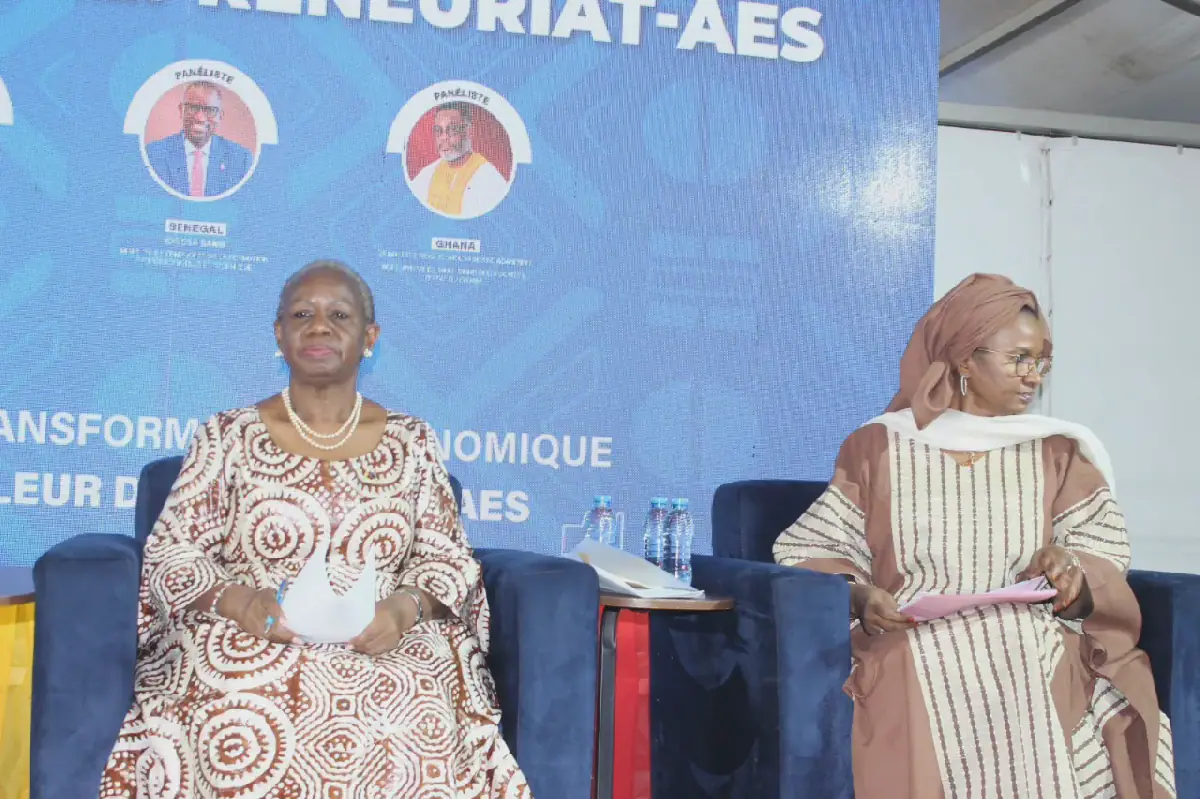
Guinea's Minister of National Education, Literacy, Technical Education, and Vocational Training, Bintou Keita, led a delegation to the second edition of the International Entrepreneurship Salon of the Alliance of Sahel States (AES) in Bamako, Mali, on November 18, 2026. The goal was to share Guinea's vision focusing on employability, self-employment, and matching training with market needs. Keita presented an integrated approach to youth insertion, emphasizing the importance of valorizing national human resources for economic sovereignty.
Keita highlighted that economic sovereignty begins with mastering skills and local content. She outlined three priority areas for employability: generalizing entrepreneurial education through training programs, strengthening bridges between school and the workforce, and facilitating access to markets for young project leaders. These orientations translate into concrete commitments, including making entrepreneurship a competence for all and ensuring continuous follow-up of beneficiaries from the classroom to economic insertion.
The minister explained that the government's strategy involves making entrepreneurship a compulsory skill, with modules already integrated into curricula since 2024. The project aims to teach entrepreneurship by doing, including designing projects, studying markets, managing budgets, and convincing financiers. Keita also emphasized the need to break down institutional silos to ensure continuous monitoring of beneficiaries.
Keita stressed the importance of building bridges between education and the workforce, including training teachers, perfecting workers, and guiding and accompanying young people towards employment and self-employment. The National School of Technical and Professional Teaching (ENPETP), the National Office for Vocational Training and Perfection (ONFPP), the Guinean Agency for Employment and Entrepreneurship Promotion (AGUIPEE), and the National Employment and Entrepreneurship Directorate form a cohesive chain.
The minister highlighted the need to open markets to those being trained, making access to economic outlets an integral part of education. This includes simplifying public procurement, stimulating local production, and financing small and medium-sized enterprises (SMEs). Keita cited the Simandou 2040 program, which includes major projects in mining, energy, maintenance, logistics, construction, and services, as an opportunity for Guinean companies and young people.
The Guinean delegation's participation in the Bamako forum facilitated exchanges of experiences, transferred competencies, and explored partnerships with other countries. This dynamic reflects a shared desire to make vocational training and entrepreneurship sustainable drivers of wealth creation and social stability. The Guinean approach focuses on cooperation and regional partnerships to address youth employment and entrepreneurship challenges.
Keita's presentation and the subsequent discussions underscored the importance of regional cooperation and knowledge sharing in addressing the challenges of youth employment and entrepreneurship in the Sahel region. The Guinean strategy aims to create a more enabling environment for young entrepreneurs and to promote sustainable economic growth through human resource development.
Key points
- Guinea's Minister Bintou Keita emphasizes the importance of economic sovereignty through human resource development.
- The Guinean strategy focuses on three priority areas: generalizing entrepreneurial education, strengthening bridges between school and work, and facilitating market access for young project leaders.
- The strategy aims to make entrepreneurship a compulsory skill for all, with a focus on practical training and continuous follow-up of beneficiaries.