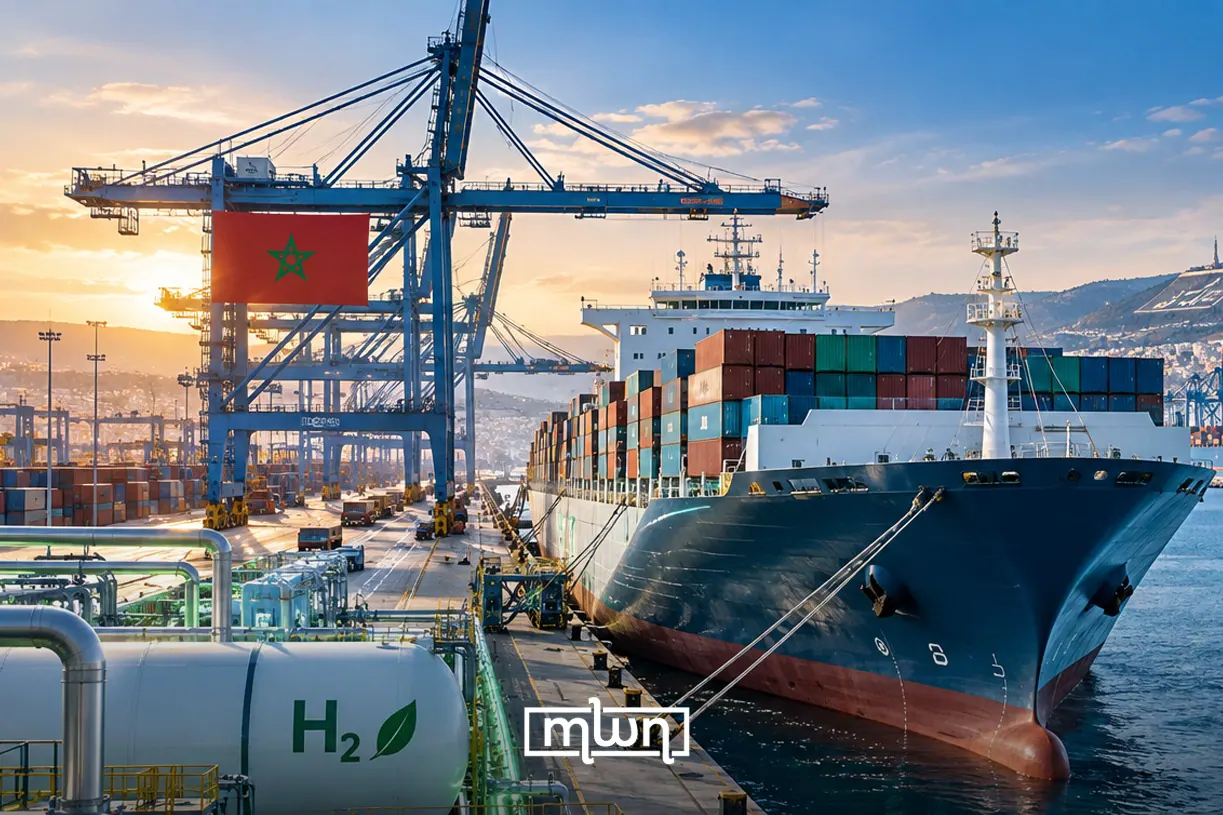
Morocco is emerging as a strong contender in the evolution of the modern shipping industry, driven by its strategic position, abundant renewable energy resources, and cost-effective means of converting hydrogen into fuel. The country's ports are well-equipped to handle the components of a non-fossil-fuelled industry, making them a pivotal hub for the production, storage, bunkering, and export of green hydrogen. This development is expected to create new shipping jobs, generate income, and provide access to clean drinking water.
The Moroccan government has put in place a strategic framework for developing the green sector, including port infrastructure development. A World Bank study, "Gateway to Green Energy: Moroccan Ports as Hubs for Hydrogen Fuel Development and Trade," has identified four major Moroccan ports - Tanger Med, Mohammedia, Jorf Lasfar, and a port in the Tan-Tan vicinity - as crucial to Morocco's plans to become a significant contributor to the maritime industry. These ports are expected to play a vital role in the production and export of green hydrogen.
The World Bank predicts that by 2030, ships calling at Moroccan ports will demand approximately 0.2 million tons of hydrogen-equivalent in fuel, rising to 2.83 million tons by 2050. This raw material will be converted to green bunker fuel in the form of ammonia or methanol. Tanger Med, one of the largest container ports in the world, situated on the Strait of Gibraltar, will serve as a vital green bunkering hub. The port's strategic location will enable it to capitalize on busy shipping routes.
Jorf Lasfar, which supports the steel industry and the OCP Group, will integrate green hydrogen derivatives as feedstock into current industrial processes, enabling the decarbonization of the Moroccan fertilizer industry. The port already manages two million tons of ammonia every year. Mohammedia, with its vast storage potential, can accommodate large-scale hydrogen storage, reducing the overall Levelized Cost of Hydrogen and bringing efficiencies for the Moroccan economy.
Tan-Tan will be developed to provide solar and wind energy opportunities, and Morocco plans to use it to develop hydrogen derivatives for transportation to other ports. The country's vision is to manufacture low-cost green hydrogen, which will be in high demand, particularly in Europe, where it is forecast that over 10 million tons of green hydrogen will be imported by 2030.
Morocco's efforts to drive the green shipping fuel revolution are expected to have numerous benefits, including the creation of new jobs, generation of income, and access to clean drinking water. The surplus energy generated from hydrogen production will also help local communities. With its strategic position, abundant renewable energy resources, and cost-effective means of converting hydrogen into fuel, Morocco is well-positioned to become a leading provider of green hydrogen.
As the shipping industry transitions to sustainable emissions levels, Morocco is poised to capitalize on its strengths and become a major player in the green shipping fuel market. The country's ports are being developed to handle the production, storage, bunkering, and export of green hydrogen, making it an attractive location for investors and businesses looking to capitalize on the growing demand for green energy.
Key points
- Morocco aims to become a major player in the green shipping fuel market by leveraging its geographic location and renewable energy resources.
- The country's ports, including Tanger Med, Mohammedia, Jorf Lasfar, and Tan-Tan, are being developed to handle the production, storage, bunkering, and export of green hydrogen.
- Morocco is expected to manufacture low-cost green hydrogen, which will be in high demand in Europe, where over 10 million tons of green hydrogen are forecast to be imported by 2030.