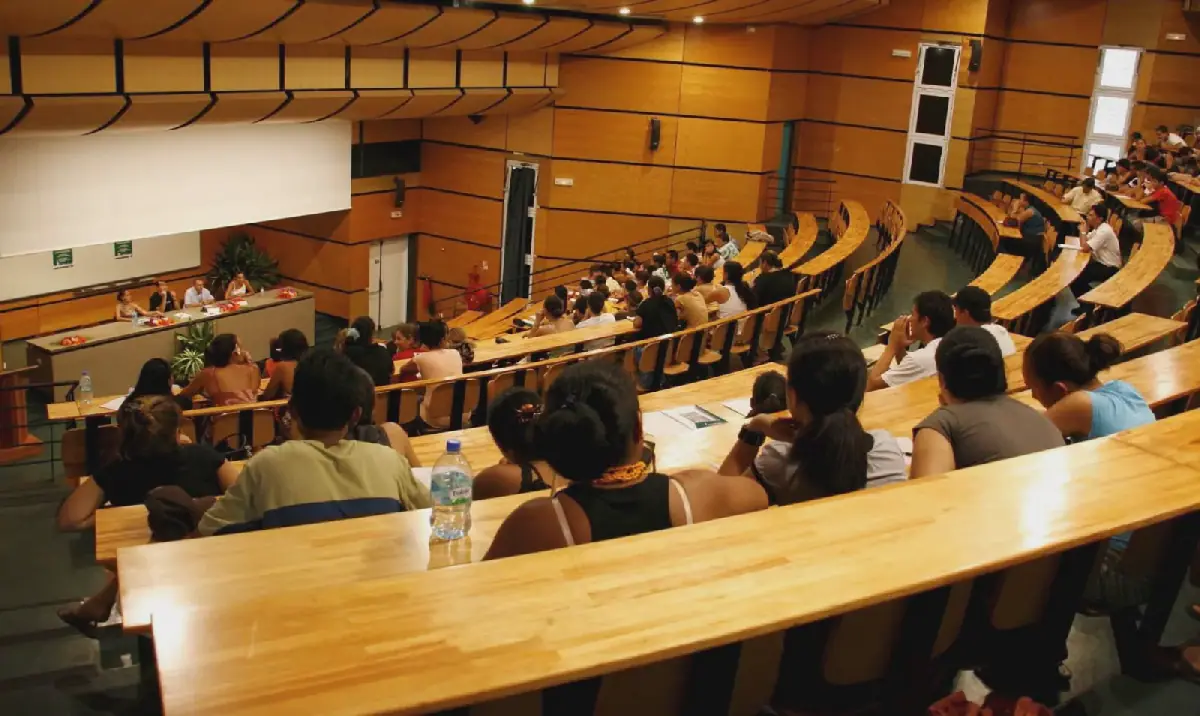
Morocco's Higher Education Minister Azzedine El Midaoui presented a new university map to the House of Representatives on Monday. The plan aims to increase the number of public universities from 12 to 27. Each university will have a maximum of 40,000 students, significantly down from the current average of 95,000 students per university. This move is based on a diagnosis of territorial imbalance in the distribution of higher education institutions across the country.
The current distribution of higher education institutions in Morocco is highly uneven. Eight provinces are home to half of the country's higher education institutions, while over 37 provinces have none. The regions of Dakhla, Laâyoune, Guelmim, and Errachidia, which currently have no universities, will be equipped with new institutions. Additionally, Ouarzazate will become a university hub linked with Zagora and Tinghir. New institutions have already been established in Taourirt, Taroudant, Tiznit, and Taounate.
As part of this reform, 66 new institutions have been created, including 46 that resulted from the split of large structures and 20 new-generation institutions. A further 17 institutions are in the process of being finalized. The plan also includes the creation of 50 new-generation institutions by 2030. These new institutions will focus on subjects such as law, human sciences, mathematics, cybersecurity, water management, and green energies.
The minister has allocated approximately 200 million dirhams for the first phase of the project, which will focus on the headquarters of university presidencies and their operating means. The program for the 50 new-generation institutions is estimated to cost around 2 billion dirhams. The data presented to justify the reform highlights significant challenges in the current higher education system. Nearly half of students drop out of university in their first year, and unemployment rates exceed 20% among graduates of certain license programs.
The higher education sector in Morocco faces significant growth, with student numbers expected to increase by 35% by 2030. Some universities may then have up to 200,000 students. The prolonged duration of studies also has financial implications, with a two-year extension estimated to cost 400 million dirhams, compared to 128 million dirhams for a standard duration. Flexible scheduling has been proposed as a solution, which could reduce congestion by 25-30% in large institutions.
The governance aspect of the reform includes the creation of administrators' councils responsible for ensuring the continuity of public policies and evaluating university presidents. The creation of university poles and dedicated management companies is also planned. New texts are being prepared for the National Center for Scientific and Technical Research, the National Center for Student Life, and the Moroccan Agency for Evaluation and Quality Assurance.
The reform has received a favorable opinion from the Higher Council of Education, Training, and Scientific Research, although observations have been made regarding governance and cost. The presentation of the reform was marked by criticism from deputies, who focused less on the university map and more on student conditions. Issues such as the non-revaluation of scholarships since 2019 and the low amount of daily allowance were raised.
Key points
- Morocco plans to increase the number of public universities from 12 to 27.
- The new university map aims to address territorial imbalance and high student numbers.
- The reform includes the creation of 50 new-generation institutions by 2030.