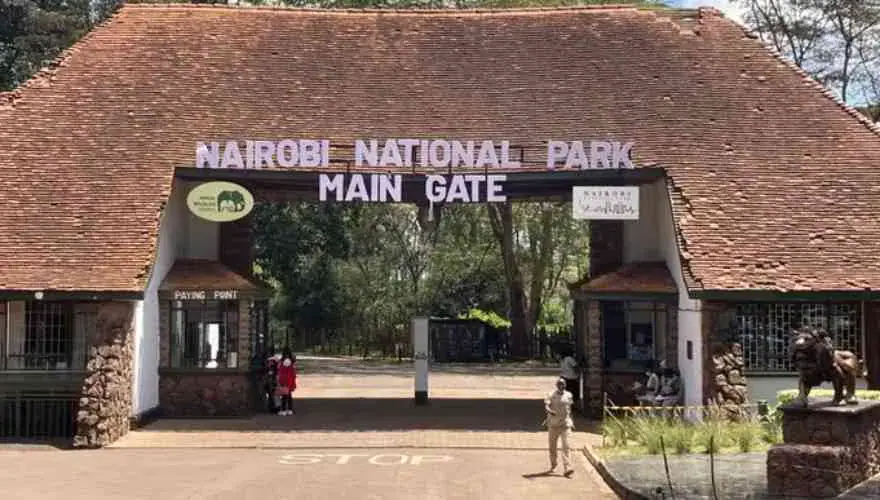
The Environment and Land Court in Nairobi has issued an order stopping the government from constructing a car park at the Nairobi Animal Orphanage and undertaking activities that could damage Nairobi National Park. This decision was made on October 27, 2026, in a petition filed by 4,642 Kenyans. The court prohibited vegetation clearance, tree felling, excavation, and construction within the disputed area pending the determination of the case.
The court's ruling directed that the site's status quo, as documented in a report following a court visit on July 21, be maintained. However, the orders allowed Kenya Wildlife Service (KWS) to undertake works strictly necessary to secure the excavated and fenced Phase One area against erosion and further degradation, with the court's permission. This means that KWS can continue with the care, treatment, and welfare of animals at the existing orphanage.
The conservatory orders are limited to four months from the date of the ruling, during which time the petitioners ought to have prosecuted their petition to its logical conclusion unless extended by the court. The petitioners celebrated what they described as a victory for citizen-led environmental protection, while cautioning that the legal battle was far from over. They urged the public to remain vigilant during the four months and report any activities that could damage the park.
Chief Justice Emeritus David Maraga welcomed the ruling, congratulating Friends of Nairobi National Park, Just Act Kenya, the Green Belt Movement, and the 4,642 petitioners. He described the decision as a monumental triumph of constitutionalism over executive lawlessness, citing Articles 42 and 69 of the Constitution, which guarantee the right to a clean and healthy environment and impose obligations on the State to protect the environment.
Maraga criticised what he termed as a contradiction between Kenya's international climate commitments and developments threatening conservation areas. He argued that the park plays an important role beyond tourism, including air purification, microclimate regulation, flood mitigation, and water catchment management. He also called on the KWS board and management to uphold their constitutional responsibilities and "decouple" from state capture.
The petitioners' goal remains the permanent protection of Nairobi National Park. They urged anyone who witnesses tree felling, excavation, grading, fencing, road construction, or other activity at the disputed site to document and report it. Maraga also criticised the government's actions, stating that Kenya's President William Ruto poses globally as Africa's premier climate champion while simultaneously destroying the country's conservation areas.
The court's decision has been seen as a significant victory for environmental conservation in Kenya. The case will continue to be heard, and the petitioners are expected to present their arguments to ensure the protection of Nairobi National Park. The court's orders have provided a temporary reprieve for the park, and it remains to be seen what the outcome of the case will be.
Key points
- The Environment and Land Court in Nairobi has barred the government from constructing a car park at the Nairobi Animal Orphanage and undertaking activities that could damage Nairobi National Park.
- The court's ruling was made in a petition filed by 4,642 Kenyans, and the conservatory orders are limited to four months.
- Chief Justice Emeritus David Maraga welcomed the ruling, describing it as a monumental triumph of constitutionalism over executive lawlessness.