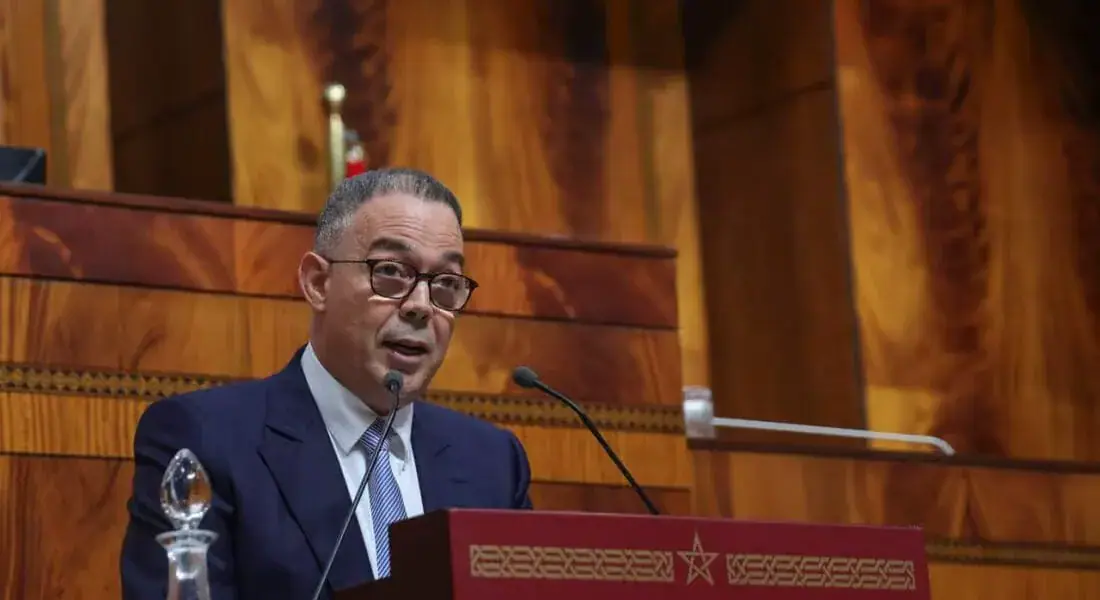
Morocco's government is contemplating stricter controls on food exports and a reorganization of marketing channels to alleviate persistent price pressures. The move was announced by Finance Minister Fouzi Lekjaa during a discussion on the 2027 budget bill at the House of Representatives. Lekjaa emphasized the need to guarantee a stable supply of essential products at reasonable prices. This initiative aims to strike a balance between promoting agricultural exports and meeting domestic consumption needs.
The government's plan includes modernizing 12 wholesale markets and improving connections between production and consumption hubs. These measures are designed to address the surge in food prices and enhance the domestic market's supply chain. Lekjaa highlighted that regulating food exports and reforming distribution channels are crucial to achieving these goals. The proposed reforms seek to prevent imbalances in the distribution chain from shifting from one segment to another.
Lekjaa noted that Morocco has faced seven consecutive years of drought, affecting agricultural production and market supplies. In this context, he argued that it is unrealistic to increase export volumes when the domestic market is experiencing significant price hikes. The government's stance reflects its desire to achieve a better balance between developing agricultural exports and meeting national consumption requirements.
The proposed export controls will be developed in consultation with producers to account for the economic realities of various sectors. Lekjaa dismissed the idea of reverting to the old export management model, which was overseen by the Office de commercialisation et d'exportation (OCE). Instead, the government aims to define new regulations that promote a balanced approach to export development and domestic supply needs.
Lekjaa stressed that a comprehensive approach is necessary to control food prices, involving export regulation, wholesale market modernization, and marketing channel reform. He emphasized that these measures must be implemented in a complementary manner to prevent dysfunctionalities from shifting from one segment of the distribution chain to another.
The government's objective is to ensure the availability of essential food products in sufficient quantities at accessible prices, without undermining the development of productive and commercial activities. The proposed reforms aim to promote a stable and balanced food supply chain, addressing both domestic consumption needs and export development goals.
The implementation of these measures is expected to have a positive impact on Morocco's food market, enabling the country to better manage price pressures and ensure a stable supply of essential products. The government's efforts to engage with producers and stakeholders will be crucial in shaping the new regulations and ensuring their effectiveness.
Key points
- Morocco's government considers stricter export controls and market reforms to address rising food prices and ensure stable supplies.
- The proposed reforms include modernizing wholesale markets and improving connections between production and consumption hubs.
- The government aims to strike a balance between promoting agricultural exports and meeting domestic consumption needs.