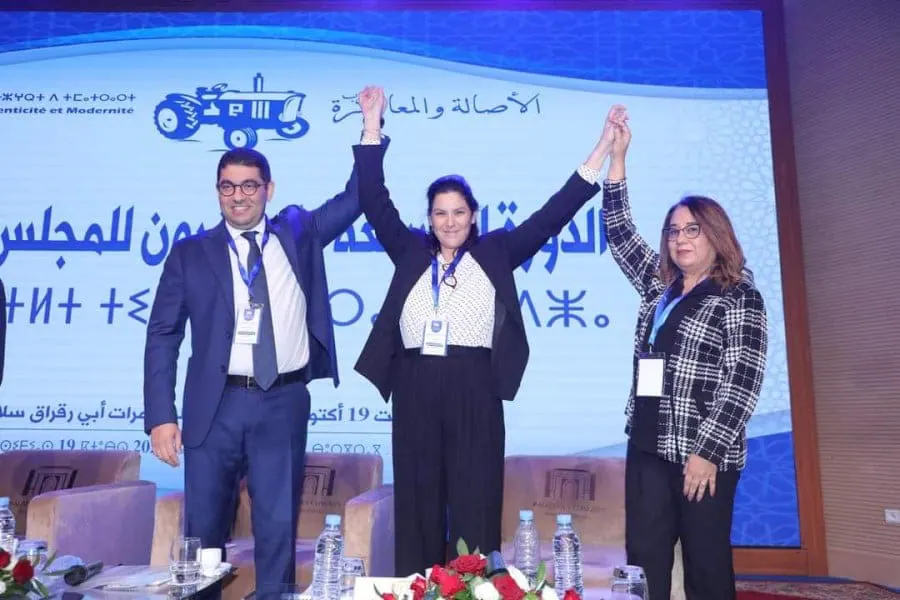
The Moroccan political landscape is bracing for a significant development as the country considers appointing its first female prime minister. Following the recent legislative elections, the party that emerged victorious, the Authenticity and Modernity Party (PAM), is now in the spotlight. According to the Moroccan Constitution, the King appoints the prime minister from the party that leads the parliamentary elections.
The potential appointment of Fatima Zahra El Mansouri, the collective coordinator of the PAM, has sparked interest and debate. El Mansouri has previously served as Minister of Urban Planning, Housing, and City Policy in the government of Aziz Rabbah. Her possible appointment would mark a milestone in Moroccan politics, making her the first woman to hold the office of prime minister.
The appointment of a female prime minister would not be unprecedented in the Arab world. In October 2021, Tunisian President Kais Saied appointed Najla Bouden Ramadhan as prime minister, making her the first female head of government in Tunisia. However, her tenure was short-lived. The Moroccan context, however, is distinct, with a different constitutional framework and political landscape.
The decision to appoint a prime minister ultimately rests with King Mohammed VI, who will consider various factors, including the need to form a stable government and address pressing social and economic challenges. Morocco faces significant issues, including high unemployment, inflation, and social inequality. The new prime minister will be expected to tackle these challenges and deliver on campaign promises.
El Mansouri is not the only contender for the position, with other names, such as Fatima Esseed, Mehdi Ben Said, and Fouzi Lekjaa, being mentioned as potential candidates. The PAM's victory in the elections has also raised questions about the party's ability to form a stable government and address the country's pressing issues.
The appointment of a female prime minister could also have implications for women's representation in Moroccan politics. While Morocco has made progress in increasing female participation in politics, women remain underrepresented in leadership positions. The appointment of El Mansouri or another female candidate could help to change this dynamic and pave the way for more women to take on leadership roles.
The King's decision is expected to be announced in the coming days or weeks. Regardless of who is appointed, the new prime minister will face significant challenges in addressing Morocco's social and economic issues. The country's future will depend on the ability of the new government to deliver on campaign promises and address the needs of its citizens.
Key points
- The appointment of Morocco's first female prime minister would be a significant milestone in the country's politics.
- The decision to appoint a prime minister rests with King Mohammed VI, who will consider various factors, including the need to form a stable government.
- The new prime minister will face significant challenges in addressing Morocco's social and economic issues.