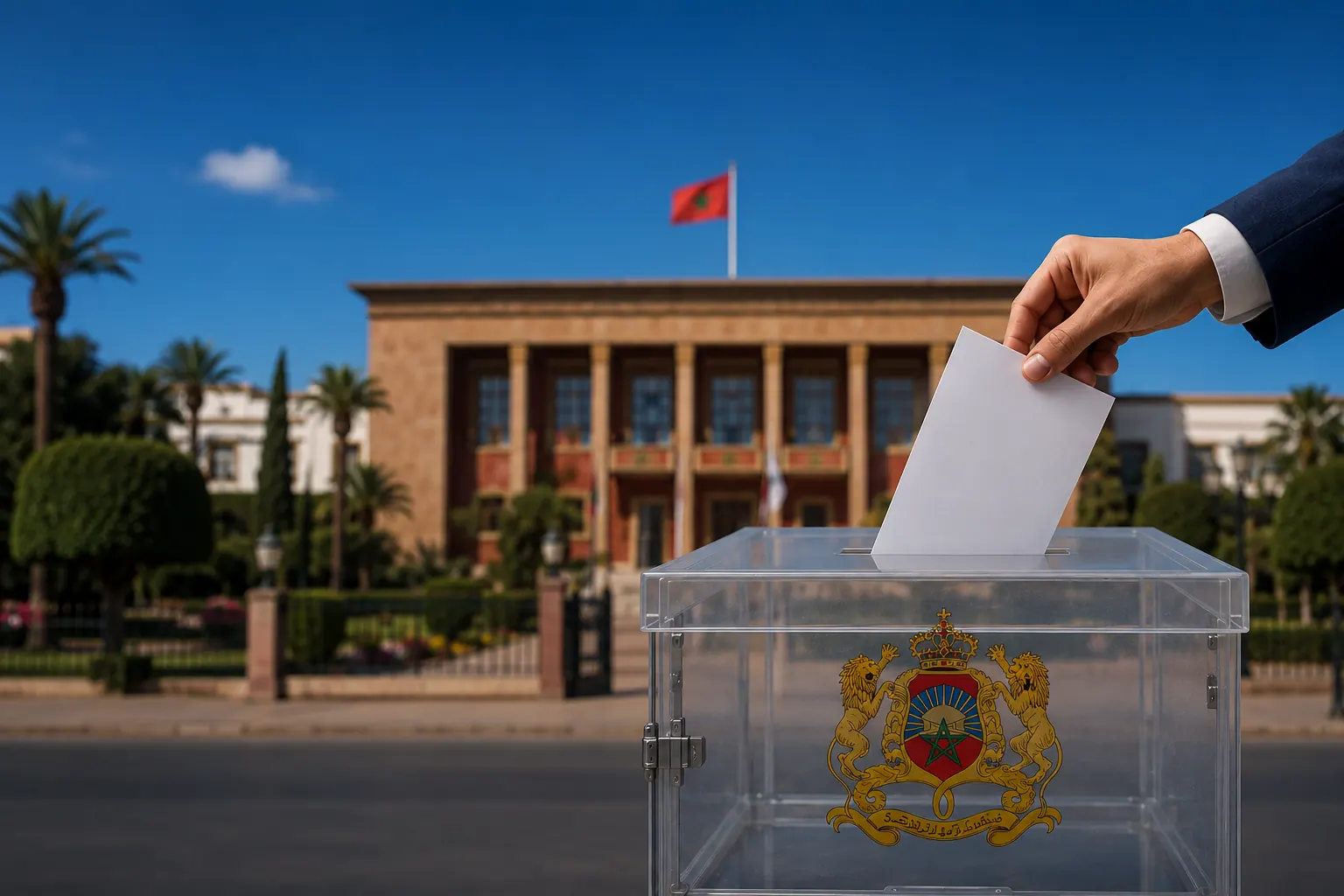
Morocco's legislative elections kicked off on Wednesday, September 23, under the watchful eyes of international and regional missions. This development adds a new dimension to the electoral process, placing various stages of the exercise under the scrutiny of multiple political and legal entities. Over 3,000 observers and monitors are participating, including nearly 200 international observers, along with dozens of international organizations and diplomatic missions accredited in Morocco.
The observation process is not limited to polling day but extends to various stages of the electoral process. Observers are tasked with familiarizing themselves with the legal and regulatory framework, meeting with election authorities, political parties, civil society, and media representatives. They will then proceed to polling stations to monitor the voting process, vote counting, and result compilation. This process aims to provide independent assessments of the electoral process.
According to official figures, the scope of observation in the 2026 elections has expanded. The Special Committee has accredited 26 non-governmental organizations and one national institution, in addition to 30 international organizations. This brings the total number of observers to 3006, including 783 representatives from the National Human Rights Council and 2023 from Moroccan non-governmental organizations. Nearly 200 international observers from diverse regions are also participating.
International observers represent various regions, including Africa, Europe, the Americas, and Asia. Notable international missions participating include the Organization Internationale de la Francophonie, led by Ambassador Andre-Manius Ekomo, and the Arab League, headed by Ambassador Hussein Al-Hindawi. These missions engage with key stakeholders, including political parties, civil society, and diplomatic missions.
The International Republican Institute has also announced a rapid technical assessment mission for the parliamentary elections in the Dakhla-Oued Eddahab and Laayoune-Sakia El-Hamra regions. This adds another layer to the international presence in the elections. Observers are expected to provide evaluations that will contribute to discussions on the integrity and transparency of the electoral process.
The participation of international observers is significant for Morocco, as it demonstrates the country's commitment to transparency and accountability. Observers are required to adhere to neutrality, non-interference, and respect for national laws. Their assessments will provide valuable insights into the electoral process, contributing to the country's democratic development.
As the elections unfold, the focus will be on the integrity of the process and the ability of the various stakeholders to ensure a free and fair exercise. The involvement of international observers and organizations will play a crucial role in this regard, providing an added layer of scrutiny and accountability to the electoral process.
Key points
- Over 3,000 observers are monitoring Morocco's legislative elections.
- International observers represent diverse regions, including Africa, Europe, the Americas, and Asia.
- The observation process extends beyond polling day to various stages of the electoral process.