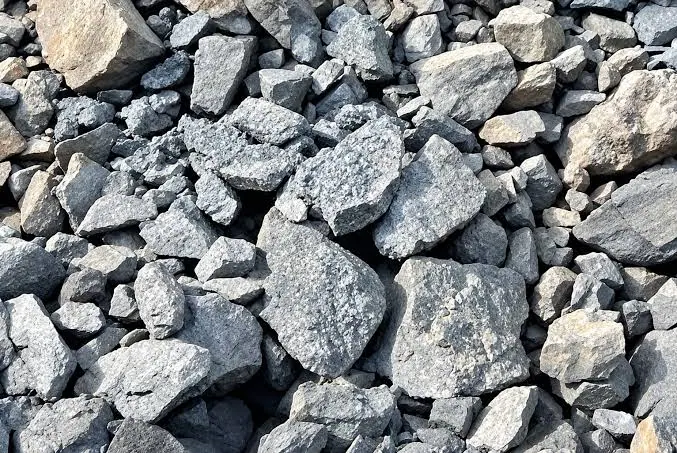
Morocco has emerged as the leading supplier of phosphate rock to the European Union, accounting for 27% of the bloc's total imports. This positions Morocco ahead of Russia, which holds a 24% share, Algeria with 10%, and Israel with 7%, according to a report by the Italian Circular Economy Network (CEN). These figures underscore the EU's significant reliance on external sources to secure this strategic material.
Phosphate rock plays a crucial role in the agricultural sector and fertilizer production. Globally, Morocco contributes approximately 14% to phosphate rock production, placing it second after China, which dominates with 44% of global production. Within Europe, Finland leads the list of producers mentioned in the report, with an 18% share. The EU's dependence on imports for phosphate rock stands at 82%, escalating to 100% for primary phosphorus.
The strategic importance of these materials is underscored by their vital role in agriculture and fertilizer production, making the assurance of a continuous supply a priority for Europe. The report highlights that the EU's supply sources are not limited to a single country. Alongside Morocco, Russia provides phosphate-based fertilizers and compound products, while Algeria and Israel contribute smaller but consistent quantities.
Despite its significant reliance on external supplies, Europe possesses a considerable margin to reduce its dependence on imports by recovering and reusing phosphorus. The report notes that around 15% of phosphorus inputs are lost, particularly through wastewater treatment sludge, livestock manure, slaughterhouse waste, and organic materials. This indicates potential for improving phosphorus recycling and reducing waste.
Interestingly, despite the EU's substantial reliance on external supplies, phosphorus prices have generally maintained a level of stability. However, this stability does not preclude temporary fluctuations due to national and international developments and events. The dynamics of the global phosphate market can be influenced by various factors, including production levels, demand, and geopolitical situations.
The report's findings emphasize the need for the EU to diversify its supply sources and enhance its resilience to potential disruptions in the global phosphate market. By understanding the current landscape of phosphate rock supply and exploring opportunities for increased recycling and domestic production, the EU can work towards mitigating risks associated with its heavy reliance on imports.
Moving forward, efforts to secure a stable and sustainable supply of phosphate rock and phosphorus will likely involve a combination of strengthening partnerships with reliable suppliers like Morocco, investing in recycling technologies, and potentially developing domestic production capacities. Such strategies will be crucial for ensuring the EU's agricultural and fertilizer sectors remain robust and competitive in the face of global market dynamics.
Key points
- Morocco accounts for 27% of the EU's phosphate rock imports.
- The EU relies on imports for 82% of its phosphate rock needs.
- Europe can reduce its dependence on imports by recovering and reusing phosphorus.