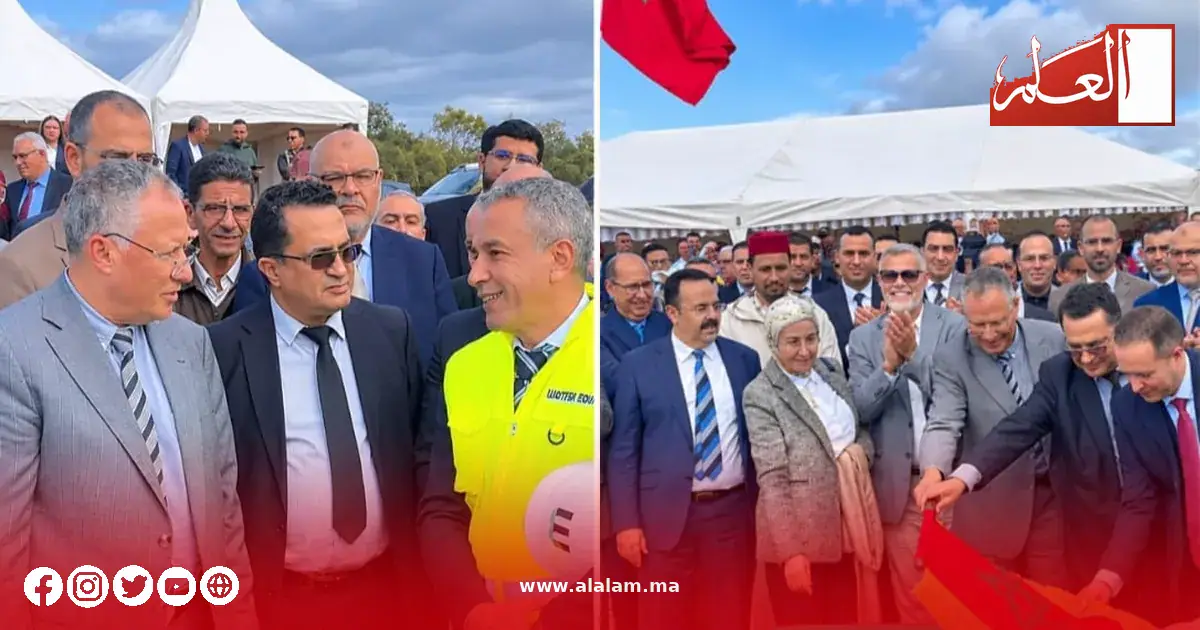
On Wednesday, November 25, 2026, the governor of Larache province officially launched a major wastewater treatment project in Larache and Ksar El-Kebir. The project, valued at MAD 495 million, aims to serve Larache, Ksar El-Kebir, and three nearby centers. The facility will have a treatment capacity of 54,000 cubic meters per day. The project is part of Morocco's national program for integrated liquid sanitation and reuse of treated wastewater.
The project is being implemented by the Regional Multi-Service Company of Tangier-Tetouan-Al Hoceima, in partnership with the Ministry of Interior, Ministry of Equipment and Water, and other institutional stakeholders. The construction of the plant will take 24 months and will be built on a 10-hectare site. The facility will use an activated sludge treatment system. The project includes civil engineering, equipment, and external development work.
The project consists of three integrated technical phases. The first phase involves wastewater treatment through primary, biological, and tertiary stages. The second phase focuses on sludge treatment through thickening, dewatering, and solar drying. The third phase involves renewable energy production through anaerobic digestion of sludge and biogas valorization using a cogeneration unit for electricity and heat.
The project is expected to create several environmental, social, and economic benefits for the region. These benefits include reducing the discharge of untreated wastewater into the natural environment, protecting the aquifer and Atlantic coast, and preserving the water quality of the Loukkos River. The project will also help meet the growing demand for water in Larache and Ksar El-Kebir.
The project will provide a reliable source of treated water for irrigation, reducing the pressure on conventional water resources. The facility will produce around 5,587 tons per year of dried sludge that can be used as an alternative fuel in the cement industry. The project will also generate renewable energy from biogas, providing electricity for the plant's operation and heat for digesters.
The project is part of Morocco's efforts to promote green and circular economy approaches. The project will enable the country to make progress in wastewater treatment and reuse, contributing to sustainable development and environmental protection. The project is expected to improve the living conditions and health of the local population.
The project has been awarded to a consortium of companies, including WATERLEAU, NGE, CID, QUADRIC, and NEOGENESIS, with LPEE as the monitoring laboratory. The project's implementation is expected to be completed within 24 months, and it will be an important milestone in Morocco's efforts to improve wastewater treatment and promote sustainable development.
Key points
- The project has a budget of MAD 495 million and will serve Larache, Ksar El-Kebir, and three nearby centers.
- The facility will have a treatment capacity of 54,000 cubic meters per day and will produce renewable energy from biogas.
- The project aims to reduce the discharge of untreated wastewater into the natural environment and promote sustainable development.