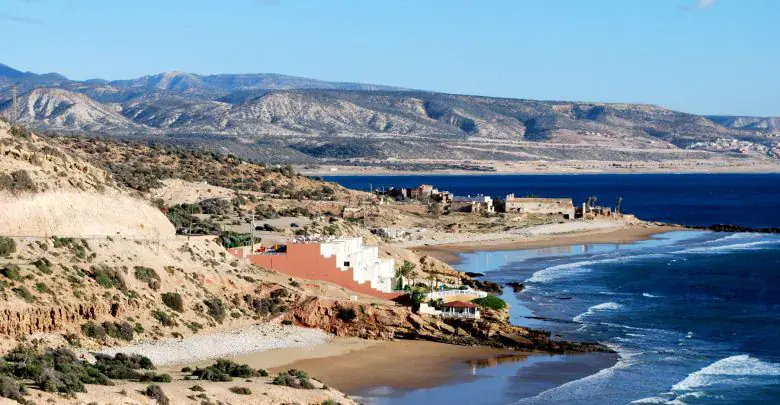
The Moroccan government has taken a significant step towards safeguarding its coastline by initiating a major project in Salé. The first phase of the coastal protection project involves constructing maritime and terrestrial protection works to mitigate erosion and instability issues affecting areas behind the coastline. This development is part of a broader strategy to protect the country's coastal regions from the impacts of climate change and natural phenomena.
The project, led by the Direction provinciale de l’Equipement du transport et de la logistique de Rabat, aims to address the pressing issues of coastal erosion and instability in Salé. The works will include the construction of a semi-dike reinforced with artificial blocks and a massif built with reinforced geosynthetics. These structures are designed to limit the effects of wave action and stabilize the coastline. The project's scope also encompasses detailed studies to identify potential constraints and ensure the stability of the works during construction.
A critical aspect of the project is its comprehensive approach to coastal protection. The system will combine maritime and terrestrial components to provide a robust defense against coastal erosion. This integrated strategy reflects the complexities of coastal management and the need for multifaceted solutions. By adopting this approach, Morocco aims to enhance the resilience of its coastline and protect the surrounding areas from potential damage.
The international tender for the project was launched on October 28, 2026, with an estimated cost of 385.2 million Moroccan Dirham (MDH). The deadline for bid submissions is set for November 5, 2026. The project's location is along the Avenue Abdelkrim El Khatib, also known as the coastal road, in Salé. This area is crucial for both local communities and the environment, making the project's timely completion a priority.
The project's scope of work includes a range of critical activities. The contractor will be responsible for conducting necessary studies to define the execution procedures for maritime and terrestrial works. They will also need to identify and address access, circulation, and supply constraints related to the site and work areas. Furthermore, the contractor must ensure the stability of the structures during construction and provide a technical study if requested by the project owner.
The coastal protection project in Salé is a significant investment in Morocco's infrastructure and environmental sustainability. By enhancing the resilience of its coastline, the country can better protect its communities, ecosystems, and economic assets from the impacts of climate change. The project's success will depend on effective implementation, collaboration between stakeholders, and careful consideration of the complex environmental and social factors at play.
As Morocco moves forward with the project, it will be closely watched by environmentalists, local communities, and international observers. The project's outcomes will have implications for coastal management practices not only in Morocco but also in other countries facing similar challenges. With a strong focus on sustainability and resilience, the Salé coastal protection project has the potential to serve as a model for future initiatives.
Key points
- The project combines maritime and terrestrial protection works to address coastal erosion and instability in Salé.
- The estimated cost of the project is 385.2 million Moroccan Dirham (MDH).
- The project is part of Morocco's efforts to enhance the resilience of its coastline and protect communities and ecosystems from climate change impacts.