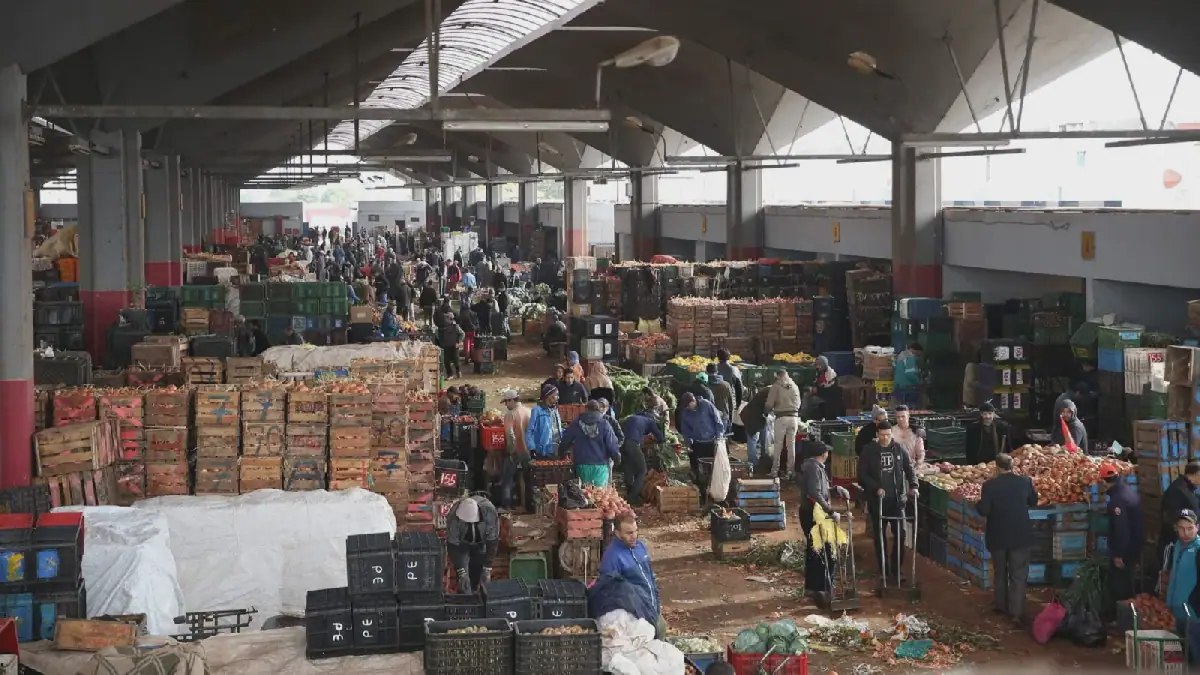
Morocco's government has introduced a new set of measures aimed at controlling food prices and exports, as part of its 2027 budget bill. The bill includes a device designed to curb speculation in the food sector. It proposes to regulate commercial margins based on actual services provided. The government also plans to limit exports temporarily in case of exceptional shortages. A new legislative framework for the creation and management of wholesale markets will be established.
The new measures are designed to balance the needs of the domestic market, production, stocks, and already contracted exports. Seasonal plans will be implemented to achieve this balance. The regulation of exports will be temporary and proportionate, triggered by thresholds related to stocks, prices, and the duration of coverage of needs. In case of a predictable deficit, a forecast import calendar and a reduction in customs duties are planned.
The bill also targets distribution circuits, with the aim of revising the regime of agents and eliminating the obligation for physical passage of goods through wholesale markets. This obligation is seen as increasing costs without adding value. Six regional distribution companies will be established in major agricultural areas, including Souss, Tadla, Gharb, Loukkos, Doukkala-Abda, and Oriental.
These regional companies will be governed by a unified set of rules and will be subject to annual audits. They will offer services such as collection, sorting, packaging, refrigerated storage, and transportation. The companies will allow producers to sell their products at auctions or through contracts with different buyers. The bill emphasizes that these companies should not become public monopolies.
The new measures will apply to several key products, including cereals, potatoes, onions, tomatoes, red meat, sardines, and olive oil. In the fisheries sector, refrigerated storage units will be built in several ports, including Larache, Al Hoceïma, Safi, Tan-Tan, Laâyoune, and Dakhla. A national information system on food markets will be established to monitor prices, stocks, and supply flows.
The system will also include alert mechanisms to respond quickly to potential shortages or price increases. The control of food distribution will be based on risk assessment, and digital invoicing will be gradually integrated. The new device is expected to come into effect in 2027. However, the bill does not specify the sanctions regime that will accompany the regulation of margins or the authority responsible for its implementation.
The government aims to increase transparency and reduce food costs for consumers through these measures. The bill is part of a broader effort to improve food security and stability in Morocco. The country has faced several food price shocks in recent years, and the government is seeking to mitigate the impact on low-income households.
Key points
- Morocco's 2027 budget bill includes measures to regulate food prices and exports.
- The new measures aim to balance domestic market needs, production, and exports.
- A national information system on food markets will be established to monitor prices and stocks.