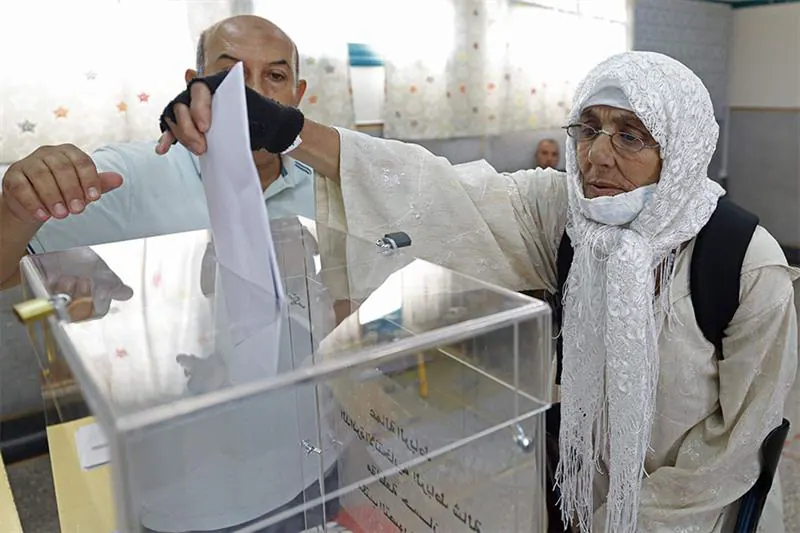
Morocco is holding legislative elections with around 16 million people eligible to vote for 395 deputies in the House of Representatives. The elections are taking place against a backdrop of concerns over purchasing power, employment, and inequality. The country's unemployment rate has been rising, and there is a sense of disillusionment among citizens with the political class.
The voting process began with a reported 11.34% turnout by 12:00 PM, with young people's participation being closely watched. Many citizens, including Majda Bakatir, 59, expressed their disillusionment with the political class, citing unfulfilled promises related to healthcare, education, and purchasing power.
In contrast, some citizens like Karim Ennaciri, 55, believe that the electoral process can bring about change and renewal within political parties. The results of the elections are expected to be announced later in the evening, with the winning party's leader set to become the new head of government, tasked with forming an executive for a five-year term.
The Rassemblement national des indépendants (RNI) and the Parti authenticité et modernité (PAM) are considered favorites in the elections. The RNI, led by Aziz Akhannouch, has highlighted its achievements in education, healthcare, and salary increases during its campaign. However, Akhannouch has faced accusations of conflicts of interest related to his business dealings.
The PAM has also gained popularity, particularly with the recruitment of Fouzi Lekjaa, the minister in charge of the Budget. Lekjaa has emphasized the party's focus on empowering youth and creating value-added opportunities. The party's other prominent figure, Fatima Ezzahra Mansouri, is seen as a potential candidate for the position of head of government if the PAM wins.
Other parties, including the Istiqlal and the Parti de la justice et du développement (PJD), also have a chance of winning. The Istiqlal has focused on social issues, while the PJD has positioned itself as a force for change, promising to combat corruption.
The elections take place less than two months after a mass influx of migrants, mostly young Moroccans, into the Spanish enclave of Ceuta. The outcome of the elections will be closely watched, both domestically and internationally, as Morocco navigates its complex social and economic challenges.
Key points
- The elections are seen as a test of the country's democratic process and the ability of its political parties to address the concerns of its citizens.
- The outcome of the elections will determine the country's next head of government and the direction of its policies for the next five years.
- The elections are taking place against a backdrop of rising unemployment, inequality, and social discontent in Morocco.