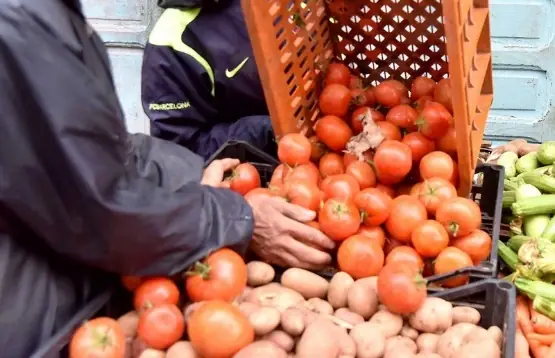
The Moroccan authorities have temporarily banned trucks carrying vegetables and fruits without valid export licenses from crossing border crossings. This move comes after a surge in prices of various agricultural products. According to sources, a meeting is scheduled for Monday between concerned authorities and professionals to discuss the issue of licenses and find a solution that balances the needs of the domestic market and export commitments to African markets.
The decision to halt exports is temporary and does not imply a complete ban on exports. Industry professionals have expressed hope that today's talks will lead to a resumption of shipments, taking into account food sovereignty and securing domestic market needs, as well as exporters' commitments and contracts. Most exporters supply both the domestic and external markets.
The price of tomatoes has decreased from 17 dirhams to between 12 and 13 dirhams per kilogram in final sales markets, following the halt in export licenses. However, the price remains high in installment markets compared to the reference wholesale market in Inzakan. Industry professionals point out that the cost of production is a significant challenge for farmers, with energy and fertilizer prices increasing substantially.
According to Hanish, the official statistics show that tomato exports have decreased by around 22% compared to the same period last year. He attributes the high prices of some vegetables to climatic factors, such as exceptional heatwaves in August and September, which damaged crops. Hanish notes that the production covers around 85-90% of market needs during the period from October to May.
There is a significant difference between the prices of tomatoes at production and in urban markets. While farmers sell tomatoes at between 3 and 6 dirhams per kilogram in the central market in Souss Massa, the price in northern, eastern, and central cities reaches 15-17 dirhams, sometimes even 20 dirhams. Hanish believes that this difference confirms that the high prices are not related to producers or farmers but to distribution and intermediation chains.
The meeting scheduled for Monday aims to find a formula that preserves the regular supply of the national market and protects exporters' commitments to their African partners. Industry professionals are counting on this meeting to resolve the issue and ensure a balance between domestic needs and export obligations.
The issue highlights the challenges faced by Moroccan farmers and exporters, including rising production costs, climatic factors, and distribution chain issues. A solution that addresses these challenges while ensuring a stable supply of vegetables to both domestic and external markets is crucial to resolving the current crisis.
Key points
- Morocco temporarily halts vegetable exports amid rising prices and aims to find a solution that balances domestic market needs and export commitments.
Reporting sources
- بعد وقف صادرات الخضر: الطماطم تنخفض من 17 إلى 12 درهما واجتماع اليوم لحسم ملف الرخص · Al Ittihad Al Ichtiraki