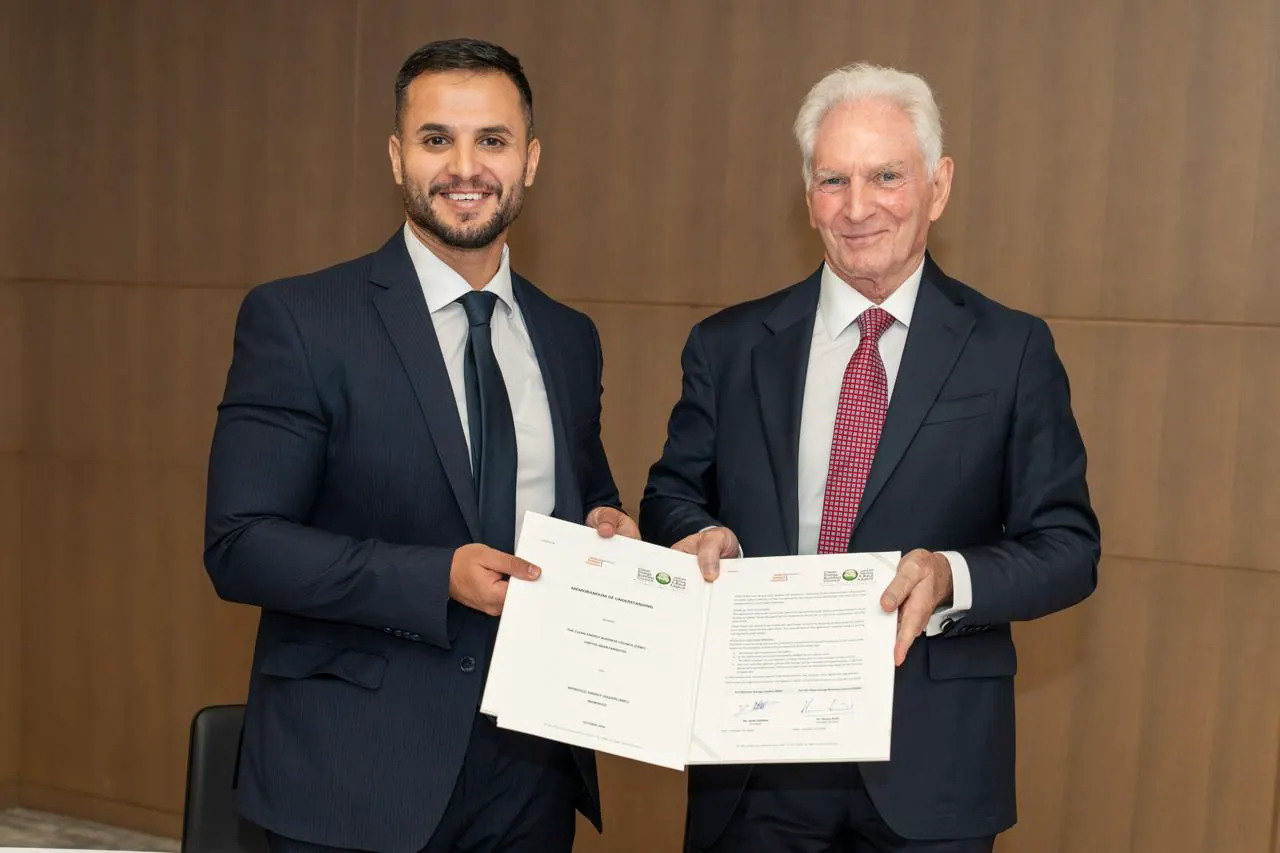
Morocco is set to attract greater investment in energy transition through a new partnership between Morocco Energy Leaders (MEL) and the Clean Energy Business Council (CEBC). The partnership aims to connect Moroccan energy stakeholders with investors across the region. MEL President Nabil Jedaira and CEBC Chairman Nasser Saidi signed the strategic cooperation agreement. The agreement brings together energy executives, investors, policymakers, and industry leaders to support Morocco's energy transition.
The partnership will focus on renewable energy development, green hydrogen and Power-to-X projects, sustainable infrastructure, industrial decarbonization, energy security, climate finance, and clean technology. The agreement will also support executive forums, policy dialogue, business and investment missions, capacity-building initiatives, and public-private partnerships. Jedaira explained that the partnership will create a powerful platform to accelerate sustainable growth and unlock transformational opportunities for Morocco, Africa, and the wider region.
Jedaira highlighted Morocco's potential to expand its role in renewable energy, green hydrogen, sustainable infrastructure, and industrial decarbonization. He stated that Morocco is uniquely positioned to become a global leader in these areas. The country aims to raise the share of renewable energy in its electricity mix to 52% by 2030. To support this goal, the Moroccan Agency for Sustainable Energy (Masen) plans to launch a nationwide digital mapping system in 2026.
CEBC Chairman Nasser Saidi emphasized that financing will play a central role in expanding clean energy projects, particularly in Africa. He stated that the resources, technologies, and investment opportunities already exist but that more capital needs to reach projects at competitive financing costs. Saidi said CEBC will use its network of investors, corporations, financiers, developers, and clean technology companies to support projects in Morocco.
Through the partnership, CEBC plans to connect Gulf capital and expertise with Moroccan projects in renewable energy, green hydrogen, grid interconnection, and industrial decarbonization. Saidi stated that CEBC will put its network to work for Morocco and develop the blended finance and risk-sharing tools that draw in private investment. He also praised Morocco's credible long-term policy, strong institutions, and early investment in renewables.
The partnership comes as Morocco seeks to expand renewable energy capacity and develop new sectors linked to the energy transition. Morocco's geographic position and renewable energy resources give it an important role in cooperation linking Europe, Africa, and the Middle East. The organizations will work together to identify investment opportunities, facilitate partnerships, promote technology transfer, and support the development of projects with long-term economic and environmental benefits.
The agreement reflects the two organizations' shared objective of strengthening cooperation between the public and private sectors and mobilizing investment for the energy transition. The partnership is expected to strengthen knowledge exchange between policymakers and private-sector actors and encourage greater participation from investors and technology companies. Key initiatives will be launched to support Morocco's energy transition and create new investment opportunities across the region.
Key points
- Morocco aims to raise the share of renewable energy in its electricity mix to 52% by 2030.
- The partnership will focus on renewable energy development, green hydrogen and Power-to-X projects, and sustainable infrastructure.
- CEBC will connect Gulf capital and expertise with Moroccan projects in renewable energy and industrial decarbonization.