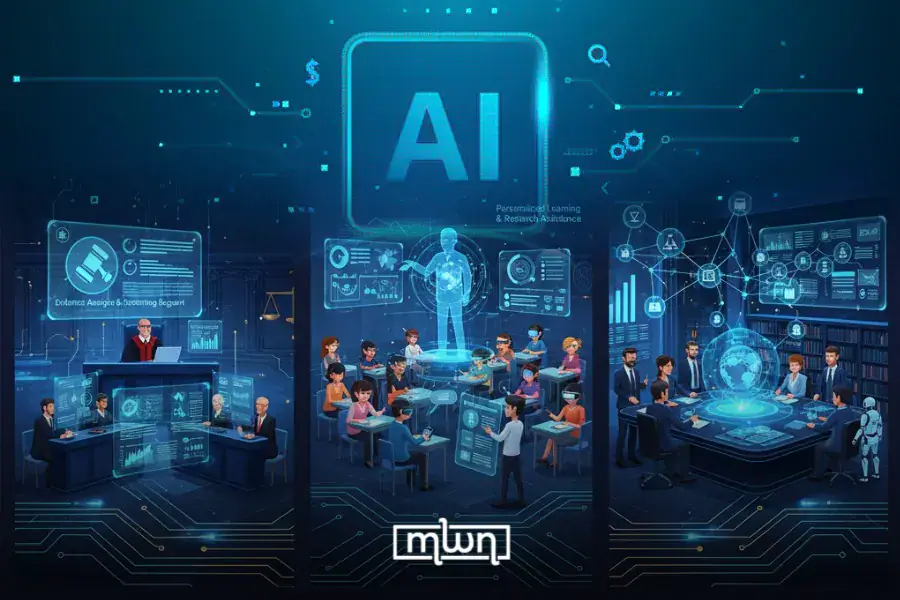
On October 16, King Mohammed VI of Morocco appointed Ahmed Rahhou to lead the country's new Ministry of Artificial Intelligence, Digital Transformation, and Administration Reform. This move signals Morocco's intention to become a leader in AI, with ambitious goals for job creation, training, innovation, and economic growth. The appointment marks a significant step towards integrating AI into the country's machinery of government.
As Morocco builds its AI future, it faces questions about the impact of AI on daily life. Author and researcher Barbara R. Maxwell, who has been working with AI systems from her home in Morocco, notes that the country's AI strategy should focus not only on infrastructure and skills but also on how AI is entering homes, classrooms, and workplaces. Maxwell emphasizes the need to listen to people beyond the technology circles, including teachers, artists, and small-business owners.
Maxwell's experience working with AI systems has shown her the value of collaboration between humans and machines. She has developed essays, poems, and research with AI agents, questioning and challenging their responses to ensure accuracy and context. This experience has also highlighted the need for boundaries, transparency, and human accountability in AI development and use.
However, the increasing use of AI in daily life raises concerns about consumer protection, information integrity, and mental and emotional well-being. Maxwell notes that when AI models are replaced without warning, users can lose months of accumulated work context, and creative partnerships can fracture. She argues that Morocco's AI strategy should address these issues and promote responsible adoption of AI.
To achieve this, Morocco could establish a standing citizens' forum on lived AI experience, alongside its technical and economic initiatives. This forum would provide a platform for people to share their experiences and concerns about AI, ensuring that the country's AI strategy is informed by the needs and perspectives of its citizens. Additionally, Morocco could support independent research into long-term human-AI interaction and require clear disclosure of how AI systems store and retrieve personal information.
The country's AI strategy should also prioritize meaningful data portability, allowing users to transfer their work between platforms without losing valuable context. Furthermore, Morocco could establish strong standards for consent, age-appropriate use, and provenance, ensuring that AI systems are developed and used in ways that respect human rights and dignity.
As Morocco moves forward with its AI ambitions, it has the opportunity to define a wiser model of AI development and use. By prioritizing responsible adoption, transparency, and human accountability, Morocco can harness the benefits of AI while minimizing its risks. The kingdom's experience can serve as a model for other countries, and its leadership in AI can help shape a more equitable and sustainable future for all.
Key points
- Morocco's AI strategy should prioritize responsible adoption and human accountability.
- The country should establish a standing citizens' forum on lived AI experience.
- Morocco should support independent research into long-term human-AI interaction.
Reporting sources
- Read article: Morocco Is Building an AI Future. I Am Already Living Inside One · Morocco World News