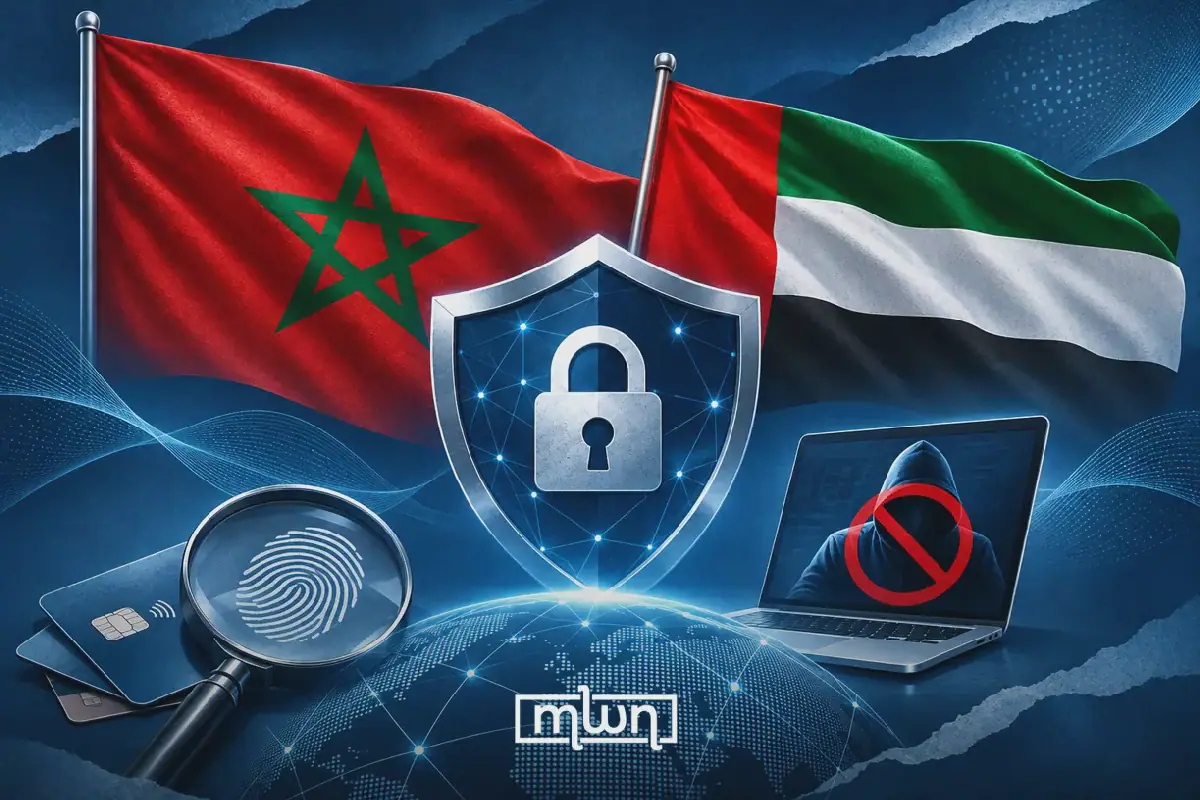
Morocco and the United Arab Emirates have strengthened their cooperation to combat digital fraud and protect cross-border financial transactions. This move is crucial for Moroccan businesses, which are vulnerable to international fraud. A convincing message, apparently sent by a longstanding buyer, can redirect one shipment's payment to an account controlled elsewhere. Effective cooperation respects national legal frameworks while reducing the time criminals exploit between jurisdictions.
On 21 October, the UAE announced the results of Operation Confrontation Ghost, an international effort involving 30 countries, 13 private-sector and technology partners, and two international organisations. The reported results included the disruption of more than 123 million fraud attempts, arrests of more than 960 suspects, and the identification of funds and assets exceeding $39 billion. However, identifying assets is not the same as returning that sum to victims.
Morocco has strong reasons to view this news through an economic rather than ceremonial lens. Businesses dealing with buyers, banks, logistics firms, and digital platforms across borders rely on messages and payment instructions that can be imitated. Tourism operators face demands for deposits and refunds; smaller exporters juggle foreign-language correspondence and multiple intermediaries; households receive persuasive payment requests that appear to originate from legitimate institutions.
A useful Morocco-UAE agenda would therefore begin with payment interruption, not simply with arrests. When a company reports a suspicious transfer, the first hours matter. Financial institutions should know which counterpart to contact across borders and which transaction details must be preserved. Investigators need clear, lawful channels to request information before funds move further through a chain of accounts.
Such arrangements should be built on privacy safeguards and judicial accountability, not on indiscriminate access to customers' financial data. A practical minimum standard could require independent verification of any change to a supplier's bank details, approval by two people for unusually large payments, and a simple incident card naming the bank contact and reporting route.
Chambers of commerce and industry associations could turn these ideas into short, multilingual guidance tailored to real invoice and procurement workflows. Training succeeds when an accounts employee knows exactly what to do with the suspicious message on a busy afternoon. The language dimension deserves particular care, as Morocco's commercial relationships cross Arabic, French, English, and other linguistic settings.
Public evaluation should distinguish attempted losses, assets identified, funds frozen, sums returned, and cases reaching court. These categories cannot responsibly be rolled into a single impressive headline. For Morocco, closer exchange with Emirati institutions could be valuable if it helps build that kind of measurable response.
Key points
- Morocco and UAE join forces to combat digital fraud
- Effective cooperation requires clear communication channels
- Anti-fraud efforts should prioritise practical, measurable results