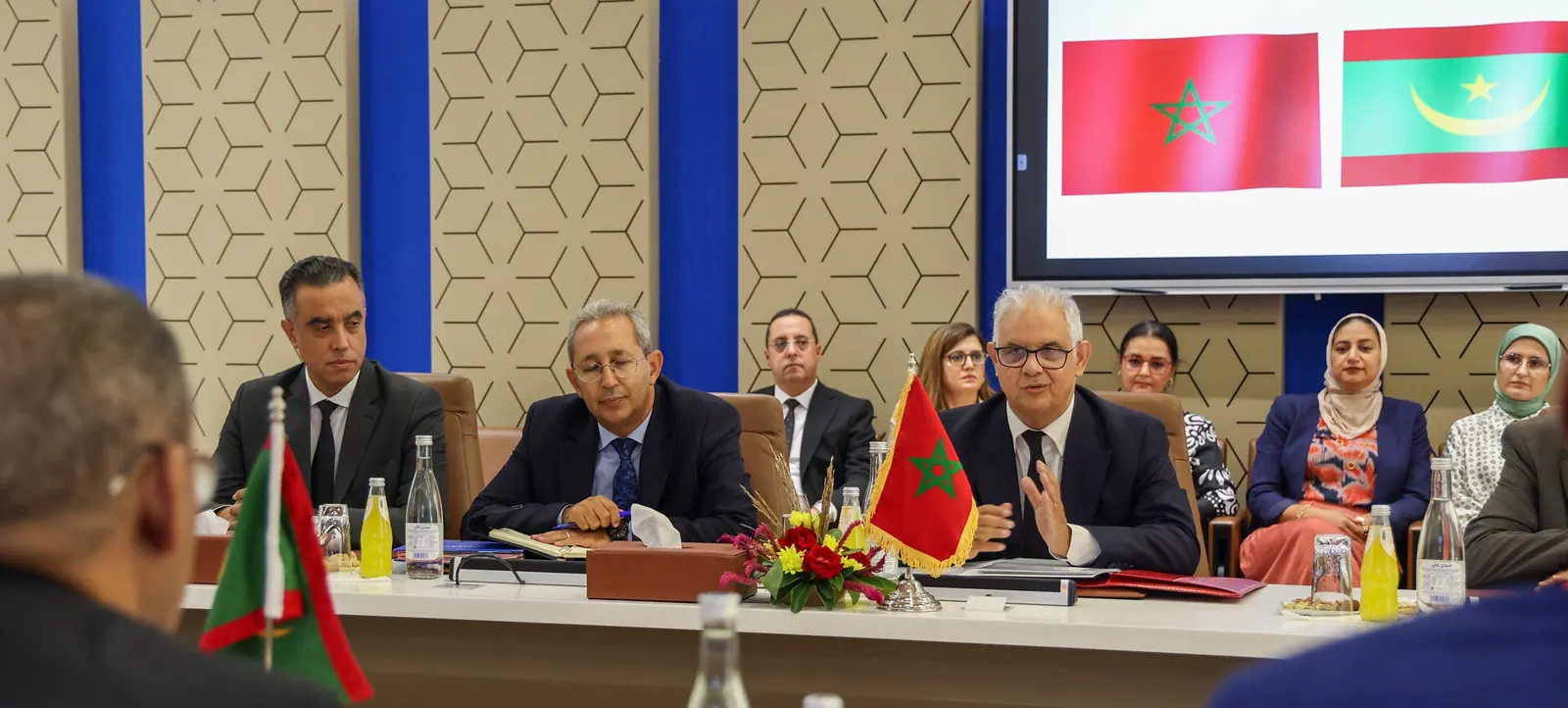
Morocco and Mauritania have taken a significant step towards enhancing their economic ties with the signing of a framework convention for the rehabilitation and expansion of the Nouakchott-Nouadhibou road axis. The agreement, signed in Rabat by Moroccan Minister of Equipment and Water, Nizar Baraka, and his Mauritanian counterpart, Ely Ould El Veirik, marks a crucial milestone in the development of regional infrastructure. The project covers a distance of 480 kilometers, starting from kilometer 55.
The convention outlines the development, improvement, maintenance, and rehabilitation of the road axis, as well as the establishment of a joint technical bureau in Mauritania to oversee the project's implementation. Both parties have agreed on a participatory approach based on sharing expertise and dividing roles, with a focus on addressing the impacts of climate change on regional infrastructure. This collaborative effort aims to facilitate the movement of people and goods, promoting economic cooperation between Morocco and Mauritania.
The significance of this project extends beyond the bilateral relationship between Morocco and Mauritania. The Nouakchott-Nouadhibou axis is a vital segment of the land connection between Morocco and West Africa. Morocco's section of the link has been completed, with the Guerguerat passage finished and ongoing construction towards Dakhla. The continuity of this road network is essential for the success of Morocco's Atlantic initiative, which seeks to provide landlocked Sahel countries with access to the ocean.
The implementation of this project is critical for the realization of the Atlantic initiative, as it requires a continuous and suitable road infrastructure for heavy transportation, service areas, and efficient border crossings. Without such infrastructure, the initiative remains a declaration of intent. The agreement is part of a broader bilateral roadmap that also covers port infrastructure and logistics, sectors identified by both countries as key drivers of their cooperation.
The signing of the convention aligns with the directives of King Mohammed VI and President Mohamed Ould Cheikh El Ghazouani, emphasizing the importance of this project for regional development. However, details regarding the project's budget, financing method, and implementation timeline have not been disclosed at this stage. The agreement reflects the commitment of both countries to enhancing their economic partnership through infrastructure development.
The project is expected to have a positive impact on trade and economic cooperation between Morocco and Mauritania, as well as on the broader regional economy. By improving the road network, the two countries aim to increase the flow of goods and services, creating new opportunities for businesses and contributing to economic growth. The joint technical bureau will play a crucial role in ensuring the project's successful implementation.
The rehabilitation and expansion of the Nouakchott-Nouadhibou road axis are set to contribute significantly to the development of regional infrastructure, fostering economic integration and cooperation between Morocco, Mauritania, and the wider West African region. The project's success will depend on effective collaboration and coordination between the two countries, as well as on the implementation of measures to address the challenges posed by climate change.
Key points
- The project aims to facilitate economic cooperation and trade between Morocco and Mauritania.
- The agreement is part of a broader bilateral roadmap covering port infrastructure and logistics.
- The project's success is critical for the realization of Morocco's Atlantic initiative.