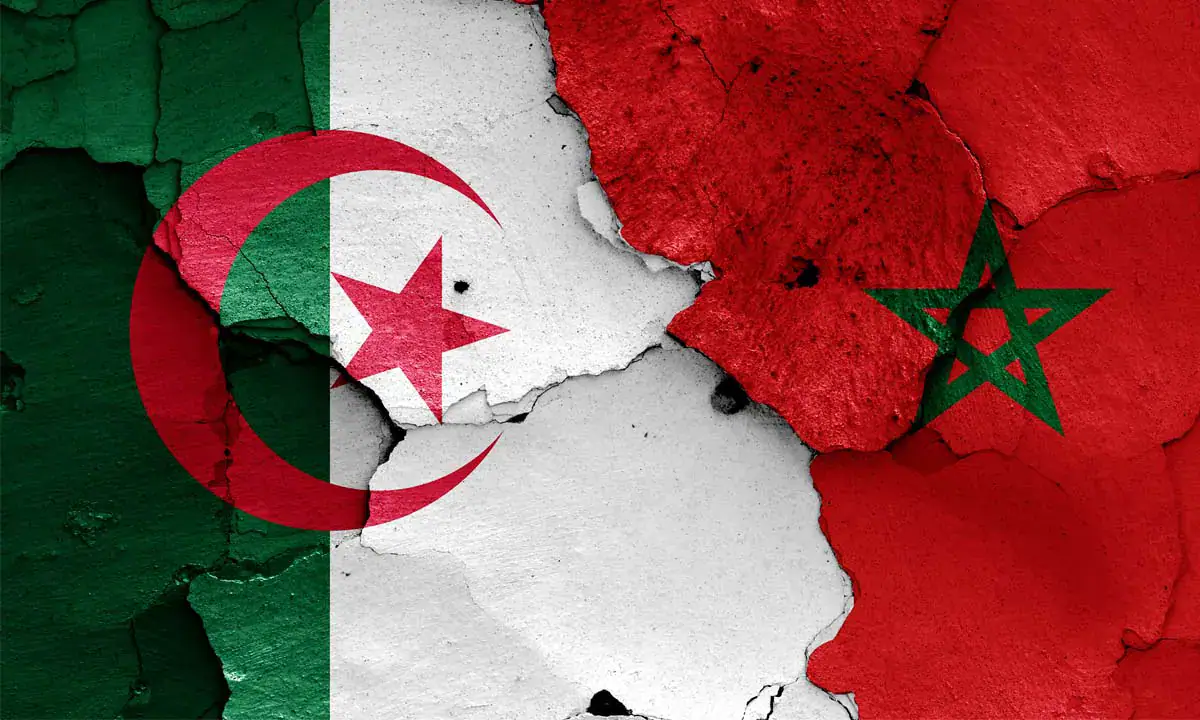
The military modernization efforts of Morocco and Algeria continue to escalate, fueled by ongoing political and diplomatic tensions between the two nations. According to data from the Stockholm International Peace Research Institute (SIPRI), the combined military expenditure of Morocco and Algeria exceeded $31 billion in 2025. This development highlights the growing significance of security and defense considerations in the strategic calculations of both Rabat and Algiers.
Algeria's military spending in 2025 stood at $25.4 billion, marking an 11% increase from 2024. In contrast, Morocco's military expenditure was $6.3 billion, representing a 6.6% rise during the same period. This disparity in military spending reflects the differing financial resources allocated to the military by each country. However, the quality of military equipment, readiness, industrial and technological capabilities, and command and logistical support systems also play a crucial role in determining the balance of power.
Morocco is accelerating the modernization of its military arsenal, with a focus on enhancing its air capabilities and strengthening its defense and precision weaponry systems. Notable projects include the acquisition of 25 American F-16 Block 72 fighter jets and a program to upgrade 23 existing fighter jets to an advanced level of electronic and combat equipment. In October 2026, the US defense contractor Lockheed Martin announced the successful completion of the first flight test of a Moroccan F-16 Block 72 fighter jet.
The introduction of Apache AH-64E helicopters into service also represents a significant enhancement of Morocco's air capabilities. As of October 2023, Morocco had received 19 out of 24 contracted helicopters. Additionally, the US approved a potential sale to Morocco in 2023, including 18 HIMARS launchers and 40 ATACMS tactical missiles, along with other equipment and ammunition. These initiatives are part of Morocco's broader strategy to modernize its defense capabilities and diversify its sources of military supplies.
Algeria, on the other hand, continues to allocate substantial resources to its military, with a diverse arsenal that includes Russian-made fighter jets, air defense systems, and land and naval equipment. The Algerian air force operates Russian-made Sukhoi fighter jets, including the Su-30, while its navy possesses advanced submarines and warships. These investments reflect Algeria's efforts to develop its air and naval capabilities as part of a broader strategy to modernize its military.
According to SIPRI, Morocco was the largest importer of arms in Africa between 2021 and 2025, with a 12% increase in imports compared to the previous five-year period. In contrast, Algeria's arms imports declined by 78% during the same period. SIPRI ranked Morocco 28th globally in terms of major arms imports, while Algeria was ranked 33rd. However, SIPRI noted that the estimated value of Algeria's arms imports might be lower than the actual figure due to limited information on some deals.
The ongoing rivalry between Morocco and Algeria is closely tied to the unresolved dispute over the Western Sahara region, which has contributed to the escalation of military spending and modernization efforts. The absence of diplomatic relations between the two countries since 2021 and the closure of their land border since 1994 have further complicated the situation. As both nations continue to enhance their military capabilities, the region remains susceptible to miscalculation and tension, highlighting the need for effective channels of communication to mitigate the risk of escalation.
Key points
- The military expenditure of Algeria is approximately four times that of Morocco.
- Morocco has become the largest importer of arms in Africa.
- The rivalry between Morocco and Algeria is driven by the Western Sahara conflict and competition for regional leadership.