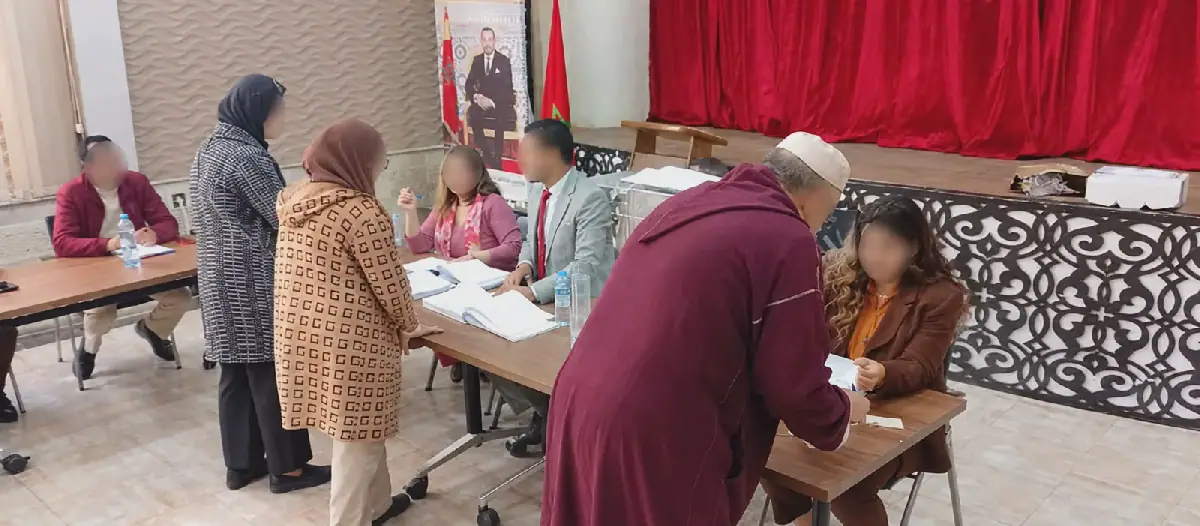
The recent cooperative elections for General Administration Employees in Meknes, Morocco, saw 32 candidates competing for 15 available seats. The elections, which took place on Friday, November 13, 2026, involved a total of 448 votes cast at three voting offices. The voting offices were located at the Music Institute, the City Hall, and the Mohammed V Youth House.
According to the results announced, Najim Omrani emerged as the top candidate with 448 votes, followed closely by Abd al-Aziz Bensbia with 442 votes. Alal Tabakh secured the third position with 391 votes. Other notable candidates included Abd al-Haqq Moumahchi with 387 votes, Mohammed Mabrouk with 383 votes, and Zbir Nashit with 383 votes.
A total of 15 candidates secured positions in the top list, with the following ranking: 1. Najim Omrani: 448 votes. 2. Abd al-Aziz Bensbia: 442 votes. 3. Alal Tabakh: 391 votes. 4. Abd al-Haqq Moumahchi: 387 votes. 5. Mohammed Mabrouk: 383 votes. 6. Zbir Nashit: 383 votes. 7. Mansour Ourgh: 305 votes. 8. Naima Abbadi: 299 votes. 9. Younes Chakri: 281 votes. 10. Mohammed Achkoud: 261 votes. 11. Rashid Harrika: 258 votes. 12. Lahcen Bober: 252 votes. 13. Ibrahim Maazouzi: 244 votes. 14. Ayoub Qaseri: 239 votes. 15. Ahmad Azzouzi: 223 votes.
The elections were conducted in anticipation of reinforcing representation within the cooperative institution and advancing its health and social services. This development aligns with the expectations of public administration employees and aims to enhance their rights and benefits. The recently elected representatives are expected to prioritize defending the interests of employees and enhancing the quality of services provided.
The cooperative elections signify an essential step towards strengthening the participatory approach and institutional representation. All 32 candidates participated actively in the electoral process, showcasing their dedication to contributing to the cooperative's growth and betterment. Meknes's recent cooperative elections reflect an essential milestone in promoting participatory governance.
As the election results have been announced, attention shifts to the prospective stage and its ensuing responsibilities for the elected representatives. The elected officials are expected to exhibit responsibility and effectiveness in representing the interests of employees and enhancing cooperative services. Ensuring transparency and good governance will be crucial in their roles.
The elected representatives' primary challenge will be translating the trust they have gained into tangible actions that prioritize service to employees and defense of their rights. Their effectiveness will be gauged based on their ability to enhance cooperative services and uphold the principles of transparency and accountability.
Key points
- The recent cooperative elections in Meknes, Morocco, saw 32 candidates competing for 15 available seats, with Najim Omrani securing the top position with 448 votes.