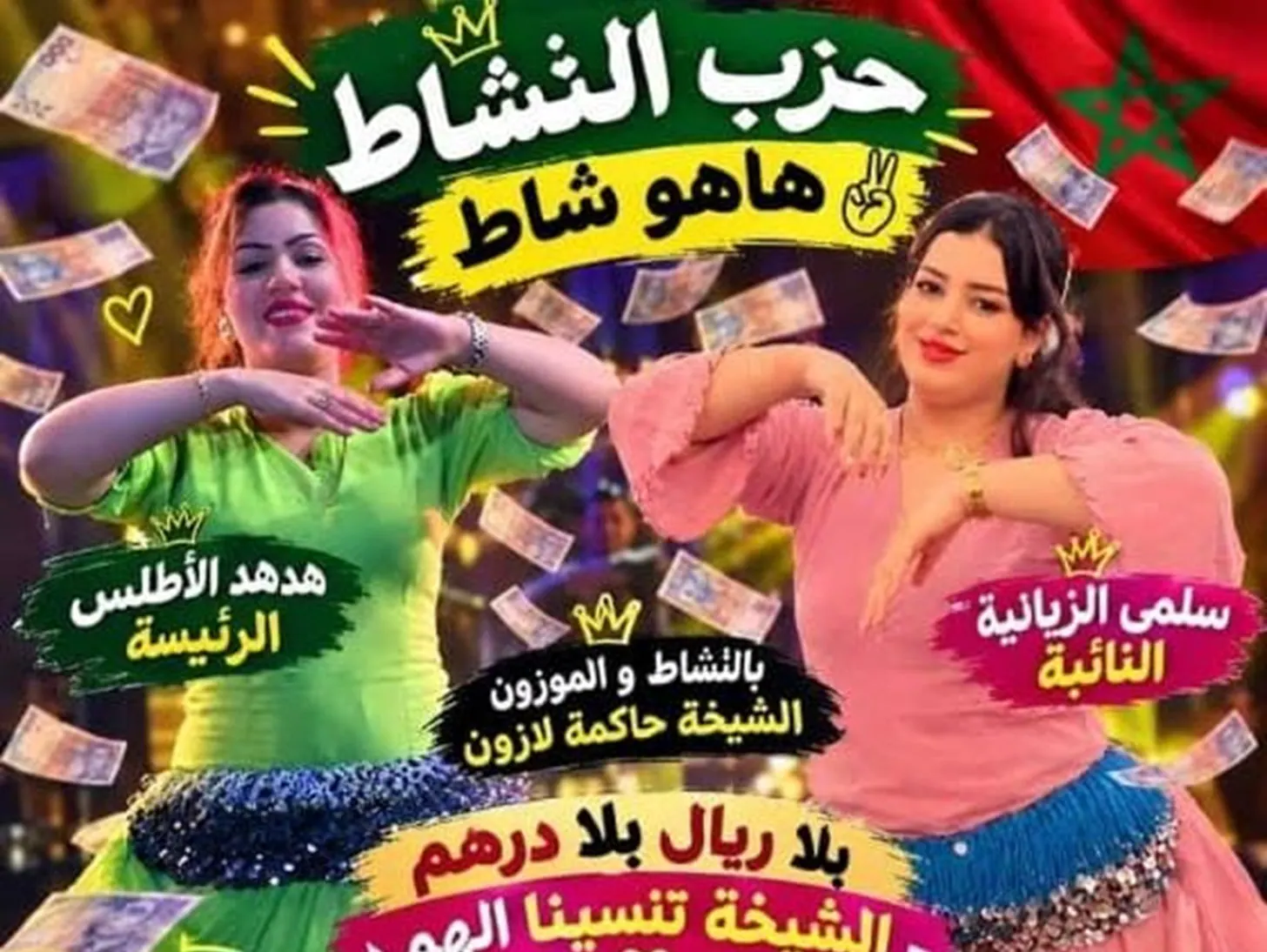
In Morocco, elections often spark discussions about the elites that represent the people. However, one group remains on the sidelines of this process: female artists and entertainers, known as "cheikhats." These women are often treated as mere "comparses" by political parties to energize campaigns and gather crowds at rallies. The question remains as to why these women, who gauge public sentiment daily, are not encouraged to run for parliament or local councils.
The traditional image of a cheikha, limited to singing and dancing, no longer applies to many of these female artists. Many, such as Fati Douka, are educated, aware, and hold qualifications. Some are doctors, others are graduates, and some have even completed their studies. For instance, Fati Douka has a significant following, while Dr. Hoda has strong relationships and Fati Khneifer has a robust social network that she could leverage to defend her district and bring development projects to her constituents.
Parliament and councils need people close to the people, with influence and credibility. Cheikhats live among Moroccans and understand their real concerns, knowing where resources are abundant and where there is hardship. Elections are not just about politics for cheikhats; they also represent a genuine economic opportunity, as the advertising and promotion market thrives during this period. Some cheikhats even wish elections would recur annually.
However, the issue lies in timing. Elections usually take place after the wedding season, which coincides with the end of summer. This timing creates significant pressure. A clever proposal would be to schedule elections during harvest season, when rural areas and villages are bustling with activity. With the economy thriving during harvest, combining politics with this period would be a winning combination.
According to cultural critic and political observer, Mohamed Socrates, it is time to move beyond stereotypes and the exploitation of popular art behind the scenes. He advocates for educated cheikhats to lead development initiatives from within legislative institutions and local councils. Other topics seem to be emerging within the government, with certain figures, such as Berka and Ould Al Rashid, at the forefront of discussions.
The issue of women's representation in Moroccan politics, particularly that of cheikhats, highlights a broader challenge in achieving a more inclusive and representative democratic process. By engaging with and empowering these influential women, Morocco may unlock a more vibrant and participatory form of democracy. As the country navigates its political landscape, it will be crucial to address the concerns and aspirations of all its citizens, including those from the artistic and entertainment sectors.
Key points
- Many Moroccan female artists and entertainers, known as "cheikhats," possess the influence, credibility, and qualifications to contribute meaningfully to the country's parliament and local councils.
- The timing of elections in Morocco often conflicts with the priorities and activities of cheikhats, suggesting a need for a more strategic scheduling approach.
- Empowering cheikhats to participate in politics could enrich Morocco's democratic process, providing a more nuanced understanding of citizens' concerns and aspirations.