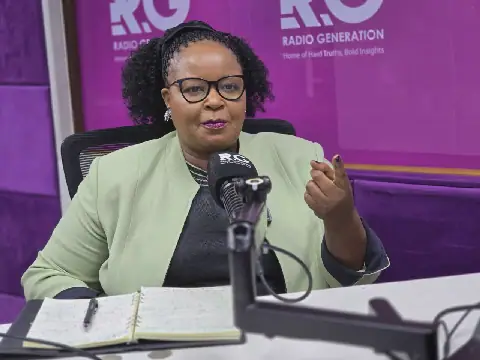
As Morocco prepares to head to the polls on September 23, 2026, voters are weighing their options. For one voter, Sami Jennane, the decision is not based on emotions or empty promises, but on a careful analysis of facts and figures. Jennane, who has been voting since she was eligible, has always taken the process seriously, discussing the issues with her family and evaluating the candidates' programs.
Jennane's approach to voting has become more sophisticated over the years. She has created a fact-based evaluation grid, comparing the 2021 promises of the parties with the 2026 reality. Her criteria for evaluation include protection sociale, économie et emploi, santé, éducation, and lutte contre les disparités. By examining the data, Jennane has concluded that the RNI party, which won in 2021, has made significant progress in various areas.
According to Jennane's analysis, the RNI party has achieved notable successes in healthcare, education, and employment. The budget for healthcare has doubled, with a 114% increase, and four new faculties of medicine have been opened. Additionally, 1,400 health centers have been renovated, and 1,600 more are planned. The party has also made progress in education, with 80% of schools adopting the new pédagogique model.
Jennane's evaluation also highlights the RNI party's achievements in employment and finance. Nearly one million jobs have been created between 2021 and 2026, and the Charte d'investissement has been deployed after decades of delay. The party has also reduced the déficit budgétaire from 5.5% to 3% over four years, while increasing recettes fiscales by 59%.
While acknowledging that the RNI party's performance is not perfect, Jennane believes that the party has demonstrated its ability to deliver on its promises. In contrast, she is skeptical about the programs of other parties, which she sees as vague lists of vœux pieux. Jennane's approach to voting is driven by her desire for continuity and her preference for a party with a clear vision and a proven track record.
Jennane's family has traditionally been involved in the voting process, and they will likely accompany her to the polls on September 23. She believes that voting is not just a civic duty but also a rational decision that requires careful consideration of the facts. By making an informed choice, Jennane hopes to contribute to the country's progress and stability.
Ultimately, Jennane's decision to vote for the RNI party is based on her confidence in its ability to deliver on its promises. She believes that the party's vision and achievements make it the best choice for Morocco's future. As the country prepares to head to the polls, Jennane's approach serves as an example of the importance of informed and rational decision-making in the electoral process.
Key points
- Moroccan voter uses data-driven approach to decide on election
- RNI party's achievements in healthcare, education, and employment highlighted
- Voter prioritizes continuity and rational decision-making in electoral process