In Morocco, the social studies subject has become a contentious issue amid educational reforms under the "Leadership Project". The subject, which includes history, geography, and civic education, has undergone significant changes, sparking concerns among teachers. They argue that the new approach has deviated from the subject's original purpose and identity. The reforms aim to modernize and make the subject more relevant, but teachers claim that the changes have made it unrecognizable.
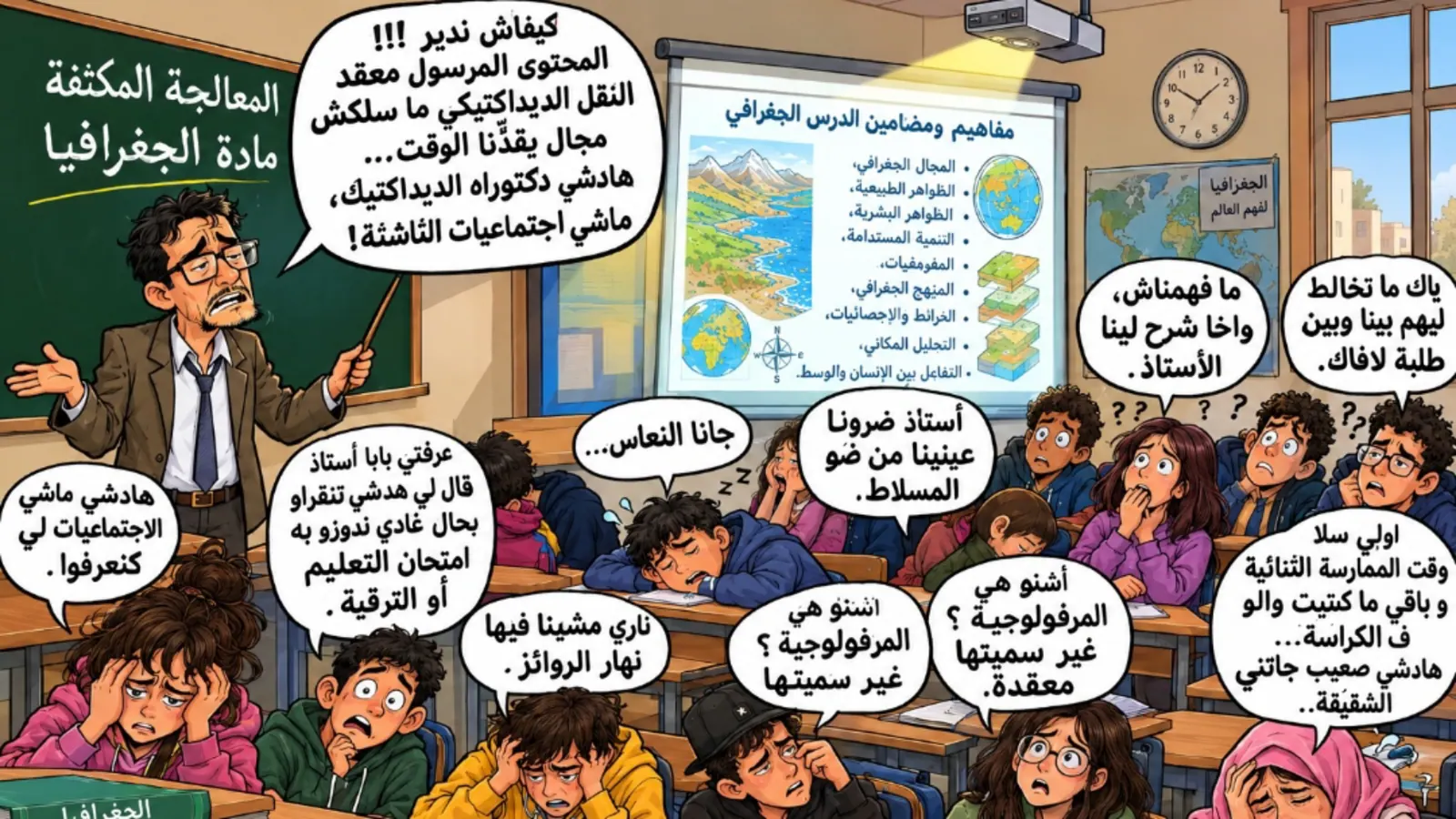
The social studies subject has undergone two experimental phases, with the first phase implemented during the 2024-2025 academic year. Teachers and students found themselves struggling with the new approach, which they felt was too focused on Arabic and mathematics. In the second phase, during the 2025-2026 academic year, the subject was transformed to prioritize Arabic and mathematical skills, leading to ridicule from students. Teachers and students are now awaiting the third phase, hoping for a more balanced approach.
Teachers have expressed concerns that the new approach prioritizes theoretical knowledge over practical skills and community engagement. They argue that the subject's social, national, and global dimensions have been neglected. The teachers' union has called for a more nuanced approach that takes into account the needs of students and the community. They also urge the authorities to involve teachers in the decision-making process to ensure that the subject is relevant and effective.
The ongoing reforms have led to a sense of frustration and disillusionment among teachers and students. They feel that the changes have not been adequately explained, and that the new approach is too rigid and inflexible. The situation has sparked a heated debate about the role of social studies in Moroccan education and the need for a more inclusive and effective approach.
Teachers are urging the authorities to reconsider their approach and involve them in the decision-making process. They argue that their experience and expertise are essential in developing a curriculum that is relevant and effective. The teachers' union has called for a more collaborative approach that prioritizes the needs of students and the community.
The social studies subject has become a critical component of Moroccan education, with many arguing that it plays a vital role in shaping students' understanding of their country and the world. The ongoing reforms have sparked concerns about the subject's future and its ability to fulfill its intended purpose. Teachers and students are urging the authorities to take a more nuanced approach that prioritizes the subject's core values and objectives.
In conclusion, the social studies subject in Morocco is at a crossroads, with many stakeholders calling for a more inclusive and effective approach. The authorities must take into account the concerns of teachers and students to ensure that the subject fulfills its intended purpose. The future of social studies in Morocco hangs in the balance, and it remains to be seen how the authorities will respond to the growing concerns about the subject's direction.
Key points
- Moroccan teachers are urging authorities to rescue the social studies subject from what they describe as a "great captivity" amid ongoing educational reforms.