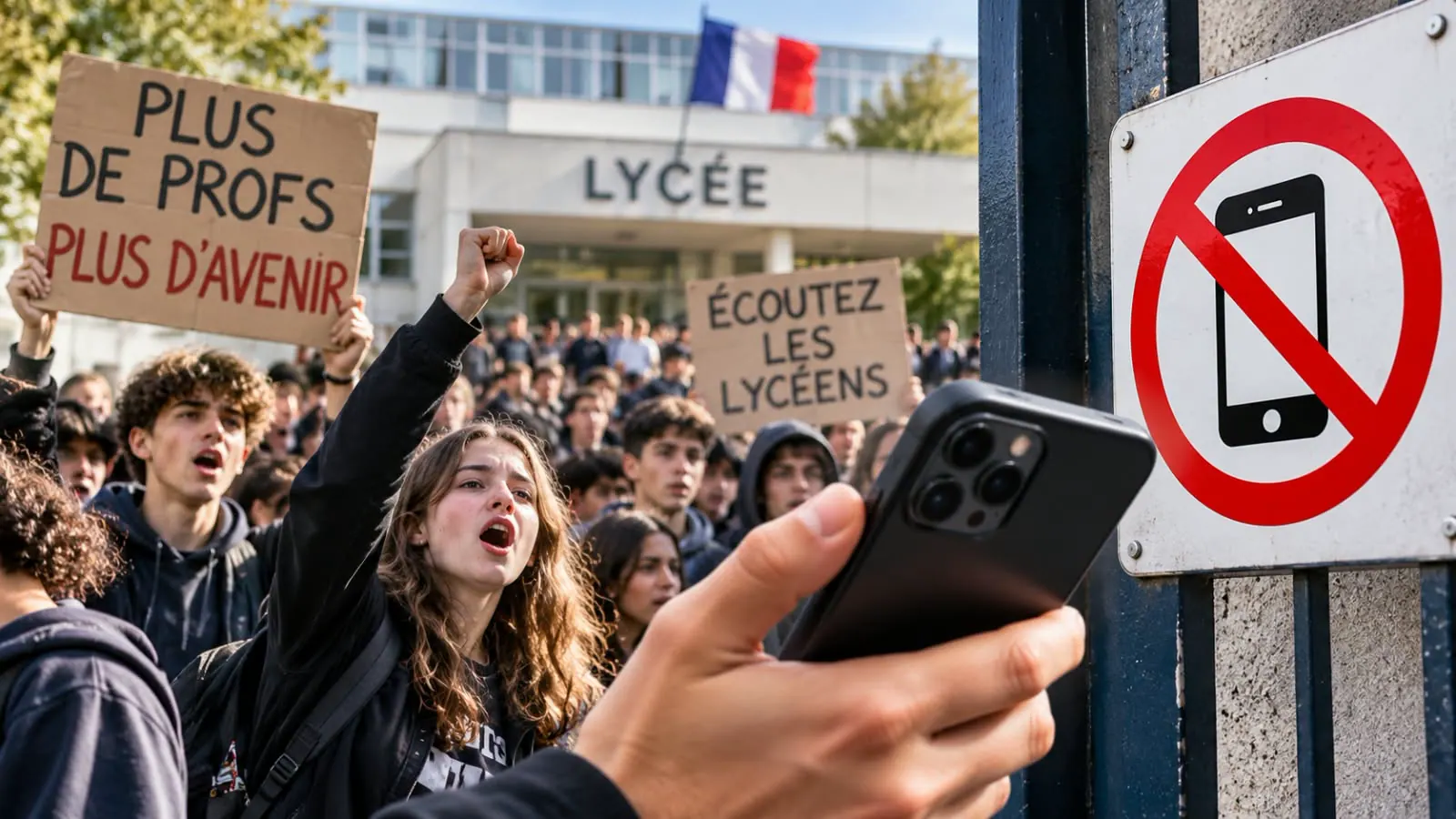
Student protests have erupted in France over the government's decision to ban smartphones in secondary schools. The ban, which came into effect at the start of the 2026-2027 academic year, aims to reduce distractions and improve the learning environment. However, students argue that the ban is an overreach and an attempt to restrict their freedom. The protests are not just about the ban, but also about deeper issues such as a shortage of teachers, overcrowding, and concerns about the future.
The ban on smartphones is part of a broader effort to reduce the use of screens in schools. The French government argues that excessive screen time is detrimental to students' academic performance and overall well-being. However, some students and parents have expressed concerns that the ban is too restrictive and does not take into account the importance of smartphones in modern life. They argue that smartphones are not just a means of communication, but also a tool for accessing information, socializing, and self-expression.
The protests have been sparked by a combination of factors, including the smartphone ban, but also by deeper issues such as a shortage of teachers and overcrowding in schools. Many students feel that the education system is not providing them with the support and resources they need to succeed. The protests are a manifestation of a broader discontent among young people in France, who are concerned about their future and the quality of education they are receiving.
The French government has defended the ban, arguing that it is necessary to improve the learning environment and reduce distractions. However, some experts have questioned whether the ban is the most effective way to address the issue. They argue that education and responsible use of technology are key to helping students navigate the digital world. The ban has sparked a national debate about the role of technology in education and the balance between freedom and restriction.
The protests have been marked by demonstrations and rallies across France. Students have been joined by teachers and parents, who are also concerned about the impact of the ban on education. The protests have highlighted the need for a more nuanced approach to addressing the issues facing the education system. The government has announced plans to engage in dialogue with students and teachers to find a solution that works for everyone.
The smartphone ban is not the only issue facing the French education system. The country is struggling with a shortage of teachers, particularly in subjects such as mathematics and science. The government has announced plans to recruit more teachers and improve working conditions, but it remains to be seen whether these measures will be enough to address the problem.
The protests in France have sparked a wider debate about the role of technology in education. As the use of smartphones and other digital devices becomes increasingly prevalent, educators and policymakers are grappling with how to balance the benefits of technology with the potential drawbacks. The outcome of the protests and the debate in France will be closely watched by educators and policymakers around the world.
Key points
- The ban on smartphones in French secondary schools aims to reduce distractions and improve the learning environment.
- The protests are not just about the ban, but also about deeper issues such as a shortage of teachers, overcrowding, and concerns about the future.
- The debate in France highlights the need for a more nuanced approach to addressing the issues facing the education system.