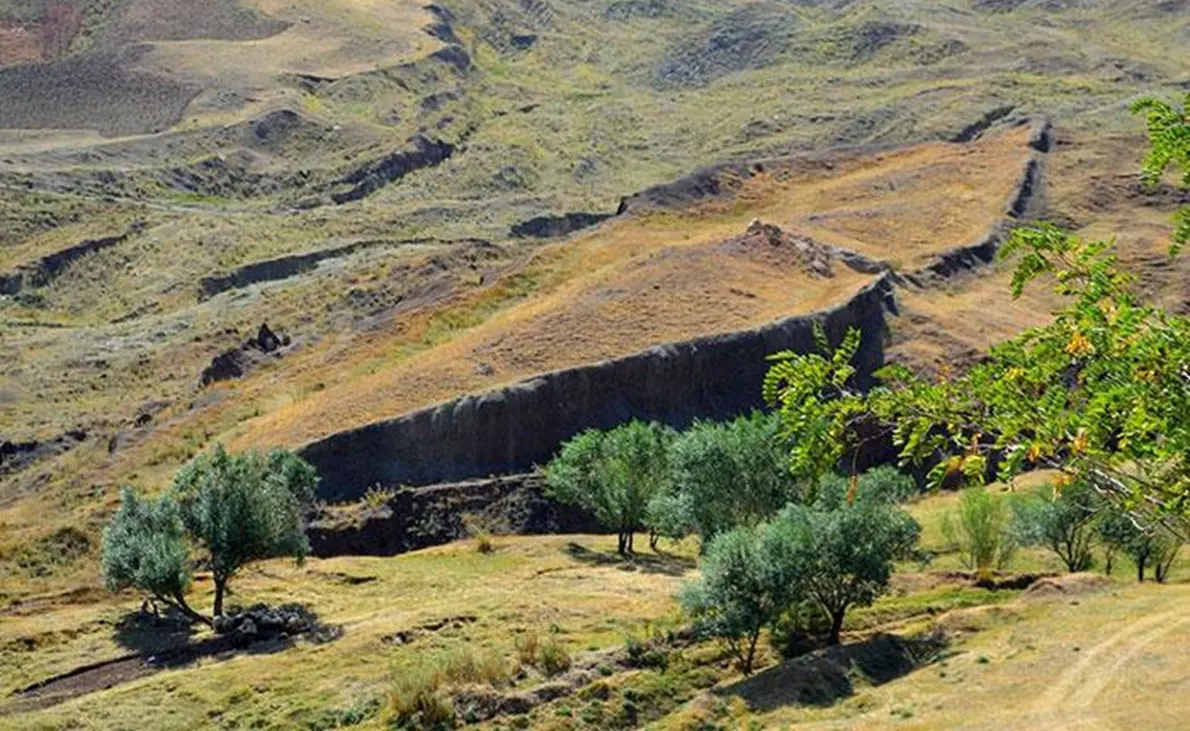
For centuries, people have searched for Noah's Ark, but no conclusive evidence has been found. A site in eastern Turkey, known as the Durupinar formation, has drawn researchers and enthusiasts due to its ship-like appearance. Located 29 kilometers from the summit of Mount Ararat, the formation has led some to believe it could be the remains of the ark. This interest stems from the biblical account in Genesis, which states that the ark "rested upon the mountains of Ararat" after the flood.
The site has been a topic of discussion since the Middle Ages, with debates over whether "Ararat" refers to the modern-day mountain range or an ancient name associated with the Kingdom of Urartu. In June 2026, a new investigation was launched, led by Professor Jinker's team from the Turkish University of Sivas, with 25 researchers from various countries participating. However, most geologists and archaeologists specializing in the area do not consider the site as evidence of an ancient ship.
A 1996 study published by geologists from California State University, Northridge, concluded that the Durupinar formation is not a ship but a natural geological structure that resembles one. The researchers attributed its shape to factors such as volcanic rock erosion, mud flows, and landslides. As of now, there is no compelling archaeological or geological evidence to confirm that the formation is indeed the remains of Noah's Ark.
The new investigation aims to provide further insights into the site. The research team's findings, expected to be published in 2027, may shed new light on the debate. While some researchers remain skeptical, others continue to explore the possibility that the site could be connected to the biblical story.
The study of the Durupinar formation involves an interdisciplinary approach, combining geology, archaeology, and biblical studies. Researchers are working to understand the site's geological history and determine whether it could have been formed by natural or human-made processes. The investigation also involves analyzing samples and data collected from the site.
The search for Noah's Ark has been ongoing for centuries, with various claims and discoveries made over the years. While the Durupinar formation is one of the most intriguing sites, it remains to be seen whether it will be confirmed as a significant archaeological find. The scientific community continues to approach the site with caution, emphasizing the need for rigorous testing and verification.
As the investigation continues, researchers are urged to remain objective and consider alternative explanations for the site's unique shape. The study's findings will contribute to a better understanding of the region's geological and cultural history, regardless of its connection to the biblical story. The research team's work will help to shed new light on the site and its significance.
Key points
- The Durupinar formation in Turkey has sparked debate over its possible connection to Noah's Ark.
- Researchers have found no conclusive evidence to confirm the site as the remains of the ark.
- The investigation's findings, expected in 2027, may provide new insights into the site's geological and cultural significance.