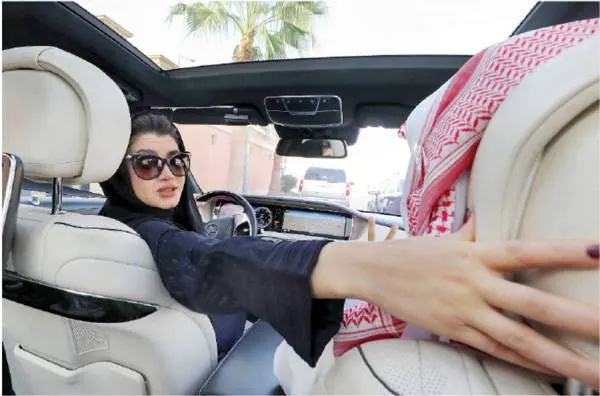
On September 26, a striking coincidence occurred, as the Islamic world reflected on the death of influential Islamic scholar Ibn Taymiyyah in 1328 and the Saudi government's decision in 2017 to grant women the right to drive. Ibn Taymiyyah, who died in prison in Damascus, was known for his conservative and rigid interpretations of Islamic law, which have had a lasting impact on Islamic thought. His ideas, despite his death, continue to shape the lives of many, particularly women, who have faced restrictions and limitations due to his interpretations.
Ibn Taymiyyah's legacy has been marked by controversy, with many criticizing his views on women, which led to their exclusion from public life and restrictions on their mobility. His interpretations of Islamic law, which emphasized the importance of preventing potential chaos and disorder, were used to justify the oppression of women. However, the passage of time has seen a shift in societal attitudes, with many Muslim-majority countries and communities reevaluating their stance on women's rights.
The decision by Saudi King Salman bin Abdulaziz in 2017 to allow women to drive marked a significant turning point in the country's history. The move was seen as a major breakthrough for women's rights in the kingdom, where women had previously been barred from driving. The decision was also viewed as a challenge to the conservative and patriarchal norms that have long dominated Saudi society.
The connection between Ibn Taymiyyah's death and the Saudi decision to allow women to drive is not coincidental. Rather, it highlights the ongoing struggle between conservative and progressive forces in the Islamic world. While Ibn Taymiyyah's ideas continue to influence Islamic thought, the Saudi decision represents a rejection of his rigid interpretations and a move towards greater social and economic freedom for women.
The impact of Ibn Taymiyyah's legacy extends beyond Saudi Arabia, with his ideas influencing Islamic thought and practice around the world. However, his views on women have been widely criticized, with many arguing that they are out of touch with the needs and aspirations of modern Muslim women. The Saudi decision to allow women to drive has been seen as a significant step towards greater gender equality in the kingdom.
The decision to allow women to drive in Saudi Arabia has also been viewed as a reflection of the changing attitudes towards women's rights in the country. While there is still much work to be done to achieve full equality, the decision represents a significant milestone in the struggle for women's rights in Saudi Arabia. The move has also been seen as a way to promote economic and social development in the kingdom.
As the Islamic world continues to grapple with the challenges of modernity and progress, the legacy of Ibn Taymiyyah and the Saudi decision to allow women to drive serve as a reminder of the ongoing struggle between conservative and progressive forces. While there are many challenges ahead, the decision to allow women to drive represents a significant step towards greater freedom and equality for women in Saudi Arabia and beyond.
Key points
- The death of Ibn Taymiyyah and the Saudi decision to allow women to drive highlight the ongoing struggle between conservative and progressive forces in the Islamic world.
- Ibn Taymiyyah's legacy continues to shape Islamic thought and practice, particularly with regards to women's rights.
- The Saudi decision to allow women to drive represents a significant step towards greater gender equality in the kingdom.