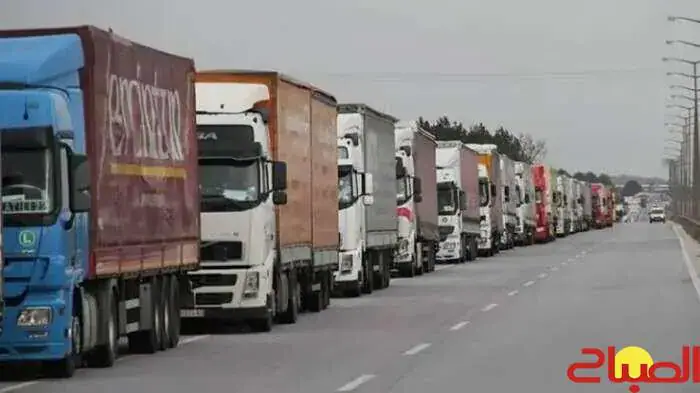
The National Coordination of Road Transport Unions in Morocco has called on the government to review the exceptional subsidy allocated to the sector, seeking an increase of over 60% and regular monthly payments. This demand comes as fuel prices continue to rise, significantly impacting the financial burden on transport professionals. The unions, led by Fatima Zahra Mansouri, the head of government, argue that the current subsidy mechanism, established in 2022, is no longer effective due to irregular payments that do not match the scale of fuel price increases.
The subsidy mechanism was introduced in 2022 following a national strike by road transport professionals protesting high fuel prices. At the time, the government committed to disbursing the subsidy at the beginning of each month if fuel prices exceeded 12 dirhams per liter, as promised by Minister of Budget Fouzi Lekjaa on March 21, 2022. However, this commitment has not been consistently honored, leading to increased financial pressure on goods transport professionals. The unions are now demanding a revision of the subsidy amounts allocated to each vehicle, an increase of over 60%, and a guarantee of regular monthly payments.
The unions also stress the need for institutionalizing the subsidy, ensuring it is disbursed monthly, and continuing this mechanism as long as the gasoil price exceeds 17 dirhams per liter. Furthermore, they have requested the reopening of the electronic platform for subsidy registration, allowing transporters to register for the quotas related to June and the first half of July, which were not settled. The unions also seek resolution of pending files since the program's launch in 2022 and settlement of outstanding dues to beneficiaries.
In addition to revising and regularizing the subsidy, the transport unions are calling for a dialogue with sector representatives to address technical and administrative issues hindering the management of this mechanism. They aim to find solutions to accumulated files and ensure the government honors its previous commitments. The unions believe that without regular payments and adjustments to reflect fuel price changes, the subsidy does not achieve its intended purpose.
The National Coordination of Road Transport Unions argues that revising subsidy amounts and settling outstanding dues would alleviate the financial burdens weighing on transporters and maintain the stability of the road transport sector for goods. The sector plays a crucial role in Morocco's economy, and the unions' demands reflect the challenges faced by professionals in coping with rising operational costs.
The issue highlights the broader challenge of managing fuel price volatility and its impact on critical sectors such as road transport. With fuel prices remaining high, the pressure on transport professionals continues to mount, affecting their operational costs and, by extension, the prices of goods transported. The government's response to the unions' demands will be crucial in determining the sector's stability and the overall economic impact.
As the situation unfolds, stakeholders are watching closely for the government's reaction to the unions' demands. An increase in the fuel subsidy and its regularization would be a significant step towards addressing the financial challenges faced by road transport professionals in Morocco. This development could also set a precedent for how the government manages subsidies for other sectors affected by fuel price fluctuations.
Key points
- Moroccan road transport unions demand an over 60% increase in fuel subsidy and regular monthly payments.