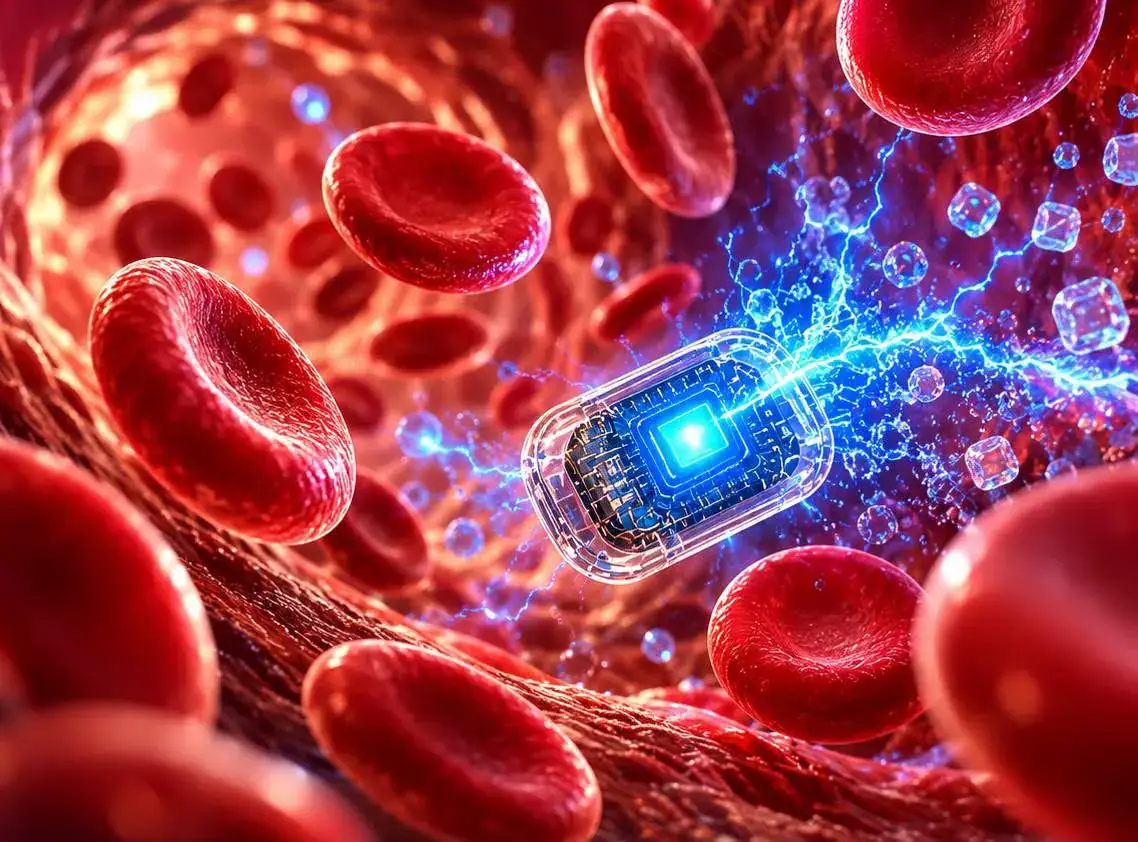
Researchers at the Swiss Federal Institute of Technology in Zurich, ETH Zurich, have developed an innovative device that can be implanted in the body to help combat high blood sugar levels. The device uses light to convert excess glucose into a substance called gluconate, which can be easily eliminated from the body through urine. This new approach aims to provide an alternative method for managing blood sugar levels, particularly for individuals with diabetes.
The device relies on an electrically-supported chemical reaction to convert glucose into gluconate, rather than relying directly on insulin to lower blood sugar levels. In experiments conducted on mice with diabetes and obesity, the device showed promising results, helping to regulate blood sugar levels and even leading to weight loss during the trial period. These findings have generated significant interest, as they propose a novel approach to managing excess blood sugar.
While the initial results are encouraging, the device is still in the experimental stage, and its effectiveness and safety in humans have not been proven. Therefore, it cannot be considered a viable treatment for diabetes or a replacement for insulin or other medications currently used by patients. However, if the researchers can successfully demonstrate the device's safety and efficacy in humans, it may open up new avenues for managing diabetes in the future.
The development of this device is a significant breakthrough, as it offers a new approach to managing blood sugar levels. Current treatments for diabetes often rely on insulin injections or oral medications, which can have limitations and side effects. The new device has the potential to provide a more efficient and effective way to regulate blood sugar levels, improving the quality of life for individuals with diabetes.
The researchers behind the device are optimistic about its potential, but they acknowledge that further testing is needed to confirm its safety and efficacy in humans. The device is still in the early stages of development, and it will likely take several years before it can be considered for use in clinical settings. Nevertheless, the initial results are promising, and the device has generated significant interest in the scientific community.
Diabetes is a major public health concern, affecting millions of people worldwide. Current treatments for diabetes can be effective, but they often have limitations and side effects. The development of new treatments, such as the device developed by the ETH Zurich researchers, is crucial to improving the management of diabetes and the quality of life for individuals affected by the condition.
The researchers plan to continue testing the device in animal models and eventually move on to human clinical trials. If the device proves to be safe and effective, it could provide a new treatment option for individuals with diabetes, improving their quality of life and helping to manage the condition more effectively.
Key points
- Researchers develop implantable device using light to convert excess blood sugar into a harmless substance
- Device shows promising results in animal trials, regulating blood sugar levels and leading to weight loss
- Further testing is needed to confirm the device's safety and efficacy in humans