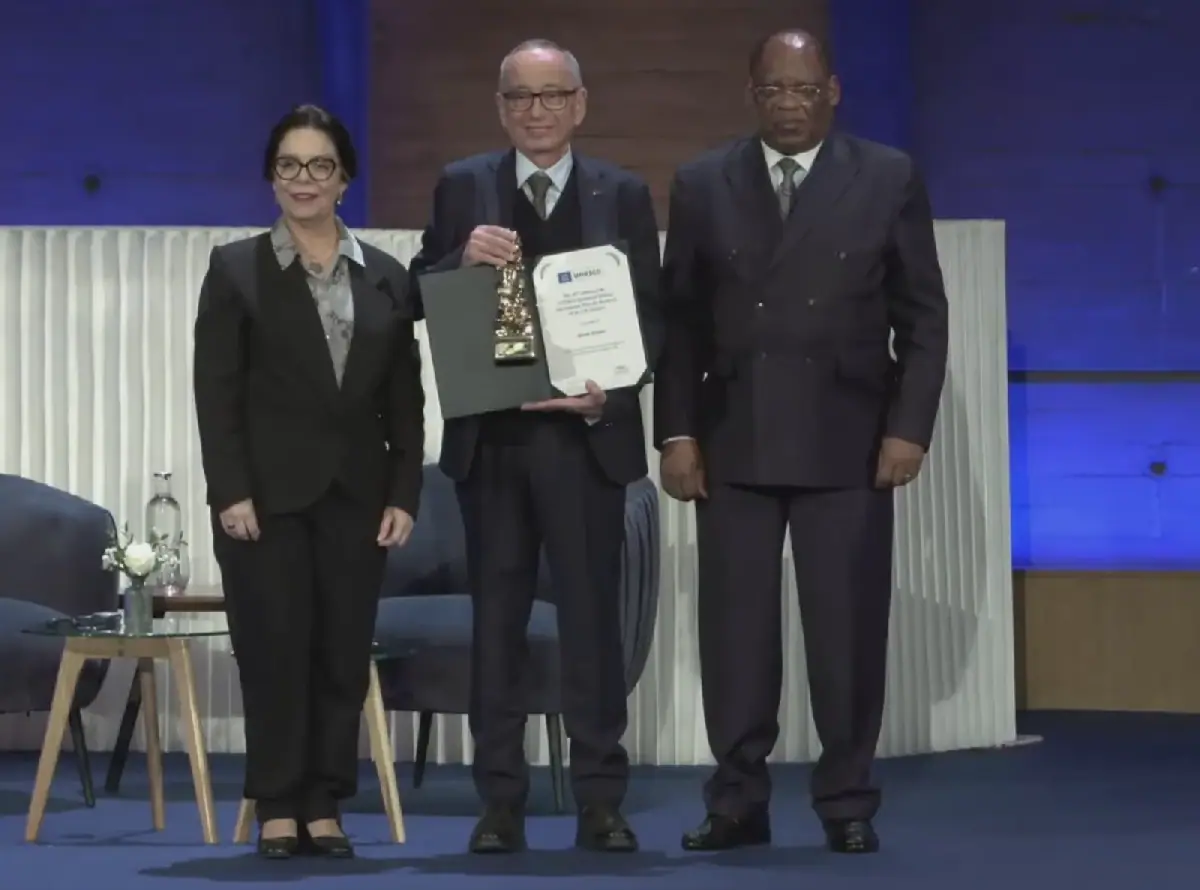
Moroccan researcher Adnane Remmal has been awarded the UNESCO-Guinea Equatorial International Prize for life sciences research. He was honored alongside two other researchers for their contributions to scientific research and improving human health. Remmal, a professor at the University of Sidi Mohamed Ben Abdellah in Fez, was recognized for his pioneering work in combating antibiotic resistance. This global health challenge has significant implications for public health.
Remmal's research led to the development of OLIPEN, an antibiotic associated with an essential oil component. This treatment has been approved for clinical use, offering new therapeutic options for patients with multi-resistant infections in Morocco. Additionally, he has developed natural alternatives to antibiotics for animal husbandry. This integrated approach aims to limit antibiotic use and promote safer, more sustainable food production.
The UNESCO prize acknowledges the contribution of Moroccan scientific research to international efforts addressing major health challenges, particularly antimicrobial resistance. Remmal expressed his gratitude to UNESCO and the Republic of Equatorial Guinea for the award. He emphasized that antimicrobial resistance is a silent threat that transcends borders, compromising public health, human development, food security, and global equity.
Remmal highlighted his approach, which has been validated in Morocco and benefited hundreds of thousands of patients. This approach involves restoring the effectiveness of existing antibiotics rather than systematically developing new molecules. It combines a conventional antibiotic with a natural molecule that acts as a "resistance breaker," allowing treatment to be effective against resistant bacteria.
The researcher praised the vision of King Mohammed VI, who prioritizes human development, health sovereignty, and scientific excellence in Morocco's national priorities. The prize jury, chaired by Moroccan physicist Rajaâ Cherkaoui El Moursli, also recognized Chinese neuroscientist Nancy Yuk-yu Ip and Spanish professor Carlos Martín Montañés for their contributions to scientific research.
The prize, celebrating its tenth edition, honors scientific advancements in essential fields such as neurodegenerative diseases, tuberculosis, and antibiotic resistance. The three laureates shared a total award of $300,000 and received a statuette created by Equato-Guinean artist Leandro Mbomio Nsue. The ceremony took place in the presence of UNESCO Director-General Khaled El-Enany and several diplomats and researchers.
Cherkaoui El Moursli expressed pride in Morocco's contribution to international scientific research and emphasized the importance of science as a driver of progress, innovation, and cooperation between nations. She called for increased investment in research, encouragement of young African researchers, and consolidation of South-South scientific partnerships to enable the continent to contribute fully to knowledge production and addressing global challenges.
Key points
- The prize recognizes Remmal's work on antibiotic resistance and its implications for public health.
- Remmal's approach combines conventional antibiotics with natural molecules to restore their effectiveness.
- The UNESCO prize promotes scientific advancements in essential fields, including neurodegenerative diseases and tuberculosis.