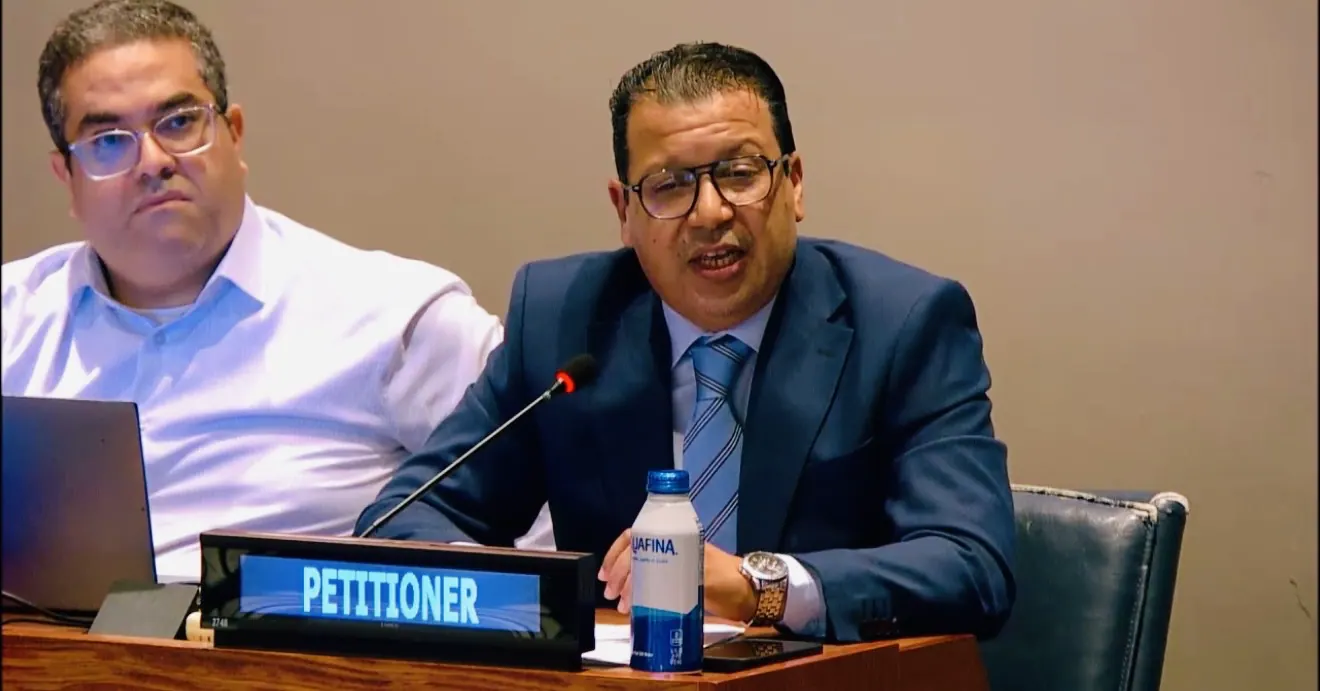
Zine El Abidine Wali, head of the African Forum for Research and Studies on Human Rights, addressed the UN Fourth Committee on Thursday, praising the adoption of UN Security Council resolution 2797 on Western Sahara. He noted the Council's consensus on supporting the autonomy initiative as a basis for resolving the Western Sahara conflict. Wali emphasized that this resolution marks a significant development in the international approach to this issue.
Wali highlighted that the inhabitants of the southern regions are celebrating a new moment in the conflict, different from previous ones. He pointed to the date of October 31, 2026, when the Security Council adopted resolution 2797, which sets the framework for efforts to find a lasting solution to the conflict. Wali stressed that the world knows who is behind the conflict and who finances and sustains it.
The Moroccan representative clarified that the Security Council's resolution adopted the autonomy proposal under Moroccan sovereignty as the sole basis for negotiations. He described this as a clear international expression of a cumulative political and diplomatic process. Wali noted that this approach reflects the international community's conviction that relying on outdated ideas is no longer acceptable.
Wali emphasized that support for the autonomy proposal is not just a matter of diverse bilateral positions but rather an international consensus led by influential countries such as the United States, France, Spain, and Germany. He added that this consensus extends to African, Arab, and Latin American countries, as well as regional blocs like the European Union, which has adopted a unified position supporting autonomy.
Wali pointed out that this significant political dynamic is accompanied by a series of diplomatic steps on the ground, including the opening of 30 consulates in the cities of Laayoune and Dakhla. He described these developments as a clear practical recognition of Moroccan sovereignty over Western Sahara. Wali also highlighted significant international investments, particularly from the United States and France, in the region.
Wali stressed that the implementation of autonomy in the Western Sahara regions will not start from scratch but will build on Morocco's institutional progress in recent years. He noted that Morocco's 2011 constitution enshrined a territorial organization based on decentralization and advanced regionalization. Wali added that subsequent legislation has granted elected regional authorities competencies in economic and social development.
Wali concluded that resolution 2797 is part of this process and aims to consolidate the institutional and developmental dynamics in Western Sahara. He emphasized that the resolution provides a direct response to outdated narratives that still influence some discourses on the conflict. Wali stated that the inhabitants of Western Sahara consider it unjustifiable to delay the rights of entire generations to stability, development, and a secure future.
Key points
- The UN Security Council's resolution 2797 on Western Sahara supports the autonomy initiative under Moroccan sovereignty.
- The international community, including influential countries and regional blocs, supports the autonomy proposal.
- Morocco has made significant progress in decentralization and regionalization, laying the groundwork for autonomy in Western Sahara.