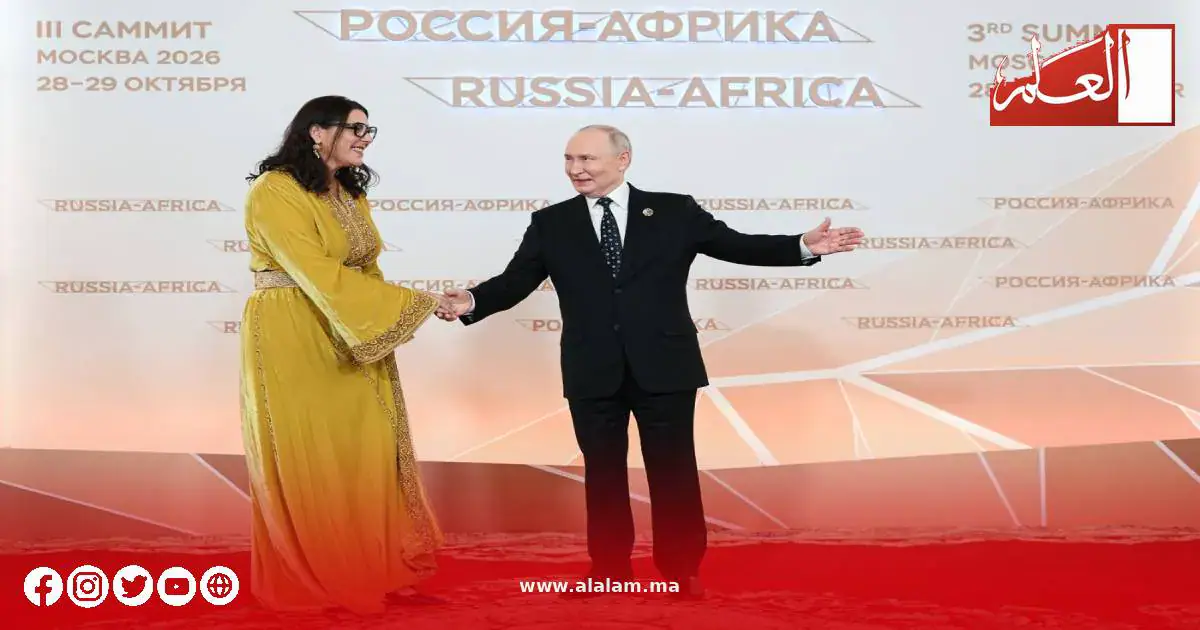
Moroccan Prime Minister Fathima Zahra El Mansouri led the country's delegation to the third Russia-Africa Summit in Moscow, where she underscored the significance of Africa in Morocco's foreign policy under the leadership of King Mohammed VI. El Mansouri called for a shift from planning to implementation in Russia-Africa partnerships, focusing on key areas such as food security, energy, and technology transfer. She highlighted the need for cooperation that addresses Africa's priorities and fosters sustainable development.
El Mansouri showcased several Moroccan initiatives aimed at promoting African integration and cooperation, including the Atlantic African countries initiative and the king's project to connect landlocked Sahel countries to the Atlantic Ocean through modern infrastructure. She also cited the Nigeria-Morocco Atlantic Gas Pipeline as a flagship project that could enhance regional development, integration, and stability. These initiatives reflect Morocco's commitment to supporting Africa's growth and prosperity.
The Moroccan Prime Minister emphasized that the Russia-Africa partnership should transition from conceptualization to concrete action, building on the foundations laid at previous summits in Sochi and St. Petersburg. She stressed the importance of aligning cooperation with Africa's needs, particularly in areas such as food security, energy, manufacturing, and technology transfer. El Mansouri expressed Morocco's willingness to contribute its expertise to launching innovative and effective cooperation.
El Mansouri noted that the relationship between Africa and the rest of the world is based on mutual need, with Africa offering not only natural resources but also a significant human capital, strategic geographic location, and rich cultural and historical heritage. She highlighted the achievements of the Russia-Africa Summit, including strengthened dialogue, adopted action plans, and expanded cooperation in areas such as food, energy, infrastructure, health, education, and technology.
In the bilateral context, El Mansouri emphasized the long-standing friendship between Morocco and Russia, which has been strengthened through strategic partnerships established in 2002 and 2016. She noted that Morocco is among Russia's top three economic partners in Africa, with bilateral trade reaching $630 million in 2025. El Mansouri also highlighted the growing number of Moroccan students in Russia, with over 7,000 students enrolled in Russian universities during the 2024-2025 academic year.
El Mansouri and Russian President Vladimir Putin discussed opportunities for further cooperation in areas such as energy, science, and technology. She welcomed the establishment of a working committee between the two countries' foreign ministries, which held its first meeting in September 2026. This committee aims to deepen political dialogue and explore new avenues for cooperation between Morocco and Russia.
The cooperation between Morocco and Russia extends to scientific research, particularly in the field of marine biology. The Russian Federal Agency for Fishery announced the launch of a research vessel, "Atlantida," to assess fish resources in Moroccan waters, with the participation of Moroccan researchers. This joint project aims to provide a model for scientific cooperation and knowledge sharing between the two countries.
Key points
- Morocco's Prime Minister Fathima Zahra El Mansouri advocates for tangible cooperation with Russia in areas such as food security, energy, and technology transfer to support Africa's development.
- El Mansouri highlights Morocco's initiatives to promote African integration, including the Atlantic African countries initiative and the Nigeria-Morocco Atlantic Gas Pipeline.
- The Russia-Africa Summit provides a platform for Morocco and Russia to strengthen their strategic partnership and explore new opportunities for cooperation.