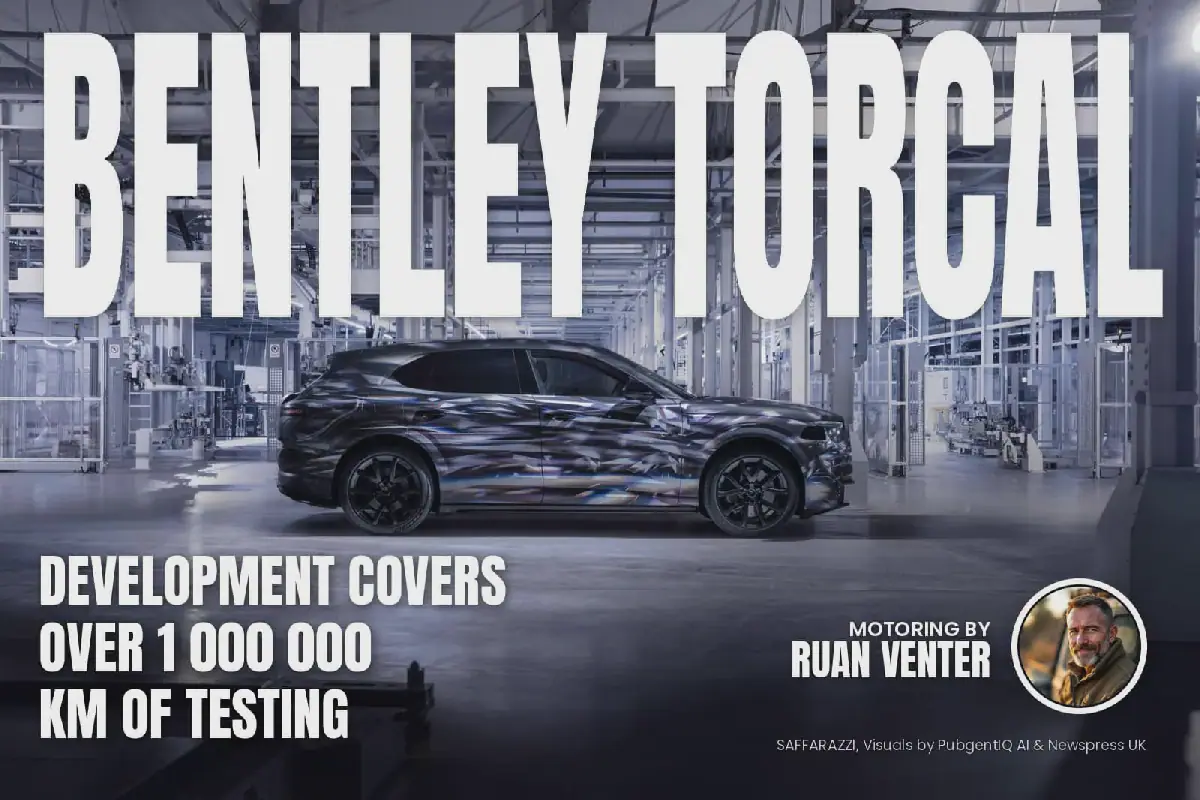
Bentley's first electric vehicle, the Torcal, has undergone extensive testing, with prototype and pre-series cars covering over 1,000,000 km. The testing was conducted in a wide range of temperatures, from -38°C in Sweden to over 40°C in desert heat, and at altitudes from sea level to more than 14,000 ft at Pikes Peak in Colorado. This rigorous testing aimed to validate the vehicle's performance, durability, and safety in various environments.
The development of the Torcal involved the use of Extended Reality (XR) technology, which was used more extensively than on any previous Bentley model. In the company's XR Hub, a fully digital version of the car was built, allowing engineers to evaluate how occupants interact with the vehicle before physical parts existed. This reduced development time and enabled the team to make necessary adjustments.
Physical Design Confirmation was also conducted, checking fit, clearance, serviceability, and build quality. More than 90% of parts were available at this stage, and laser scanning compared components directly against CAD data. Sequenced slow-build exercises simulated production conditions to validate assembly, ensuring that the vehicle meets Bentley's quality standards.
The Torcal's electrical and software development involved three specialist teams handling electrical architecture, software integration, and validation testing. Every six weeks, a new software integration level is produced, adding refinements and new functions. Each release is validated in laboratories and in real-world vehicles before the next phase begins, ensuring that the vehicle's software is reliable and efficient.
The Torcal's battery safety testing is a critical aspect of its development. The battery delivers an energy density of more than 180 Wh/kg and weighs approximately 625 kg. A composite impact shield mounted beneath it protects the cells and associated components from blows to the underside. Multiple layers of protection and monitoring are built into the design to prevent fire propagation or explosion.
The battery testing program includes a two-hour fire test and a steel projectile fired at more than 100 mph. Salt-spray corrosion exposure and other environmental and durability evaluations are also part of the program. These tests ensure that the Torcal's battery meets the highest safety standards.
As customer deliveries approach, the camouflage is being removed from the development fleet. The Torcal's testing and development phase has been extensive, with a focus on ensuring that the vehicle meets Bentley's quality and safety standards. The vehicle's software will continue to be updated every six weeks, adding new functions and refinements.
Key points
- The Torcal has completed over 1,000,000 km of testing in various conditions.
- The vehicle's battery safety testing includes a two-hour fire test and a steel projectile fired at more than 100 mph.
- The Torcal's software will continue to be updated every six weeks, adding new functions and refinements.