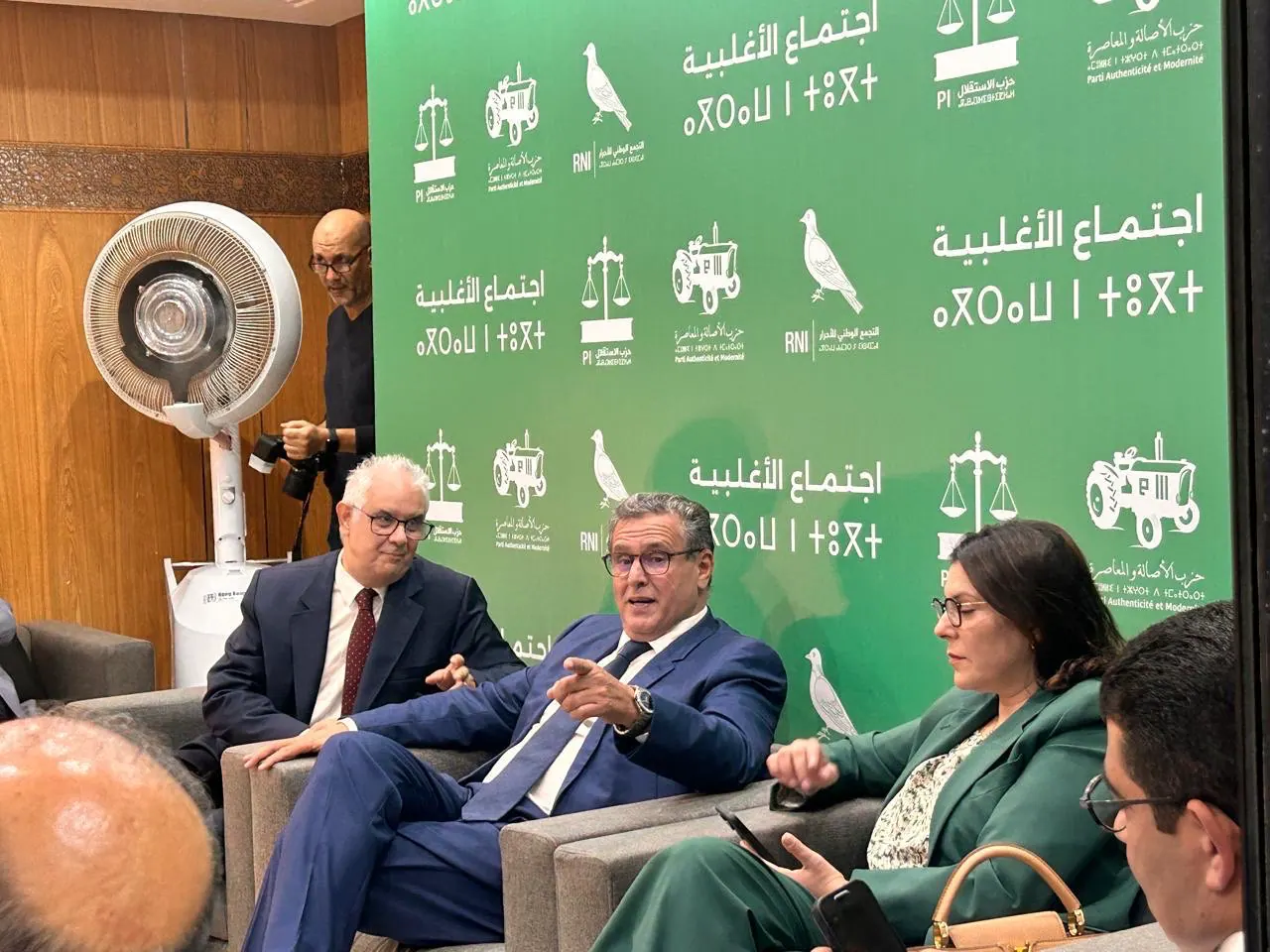
Morocco's political landscape is bracing for a significant shift as major parties intensify their efforts ahead of the upcoming elections. According to sources, the leadership of the Parti de la Justice et du Développement (PJD), Parti de l'Authenticité et de la Modernité (PAM), and Rassemblement National des Indépendants (RNI) are holding continuous meetings and intense contacts with local networks and notables to secure seats that will determine the country's next government.
The PJD, also known as the "Freedom Party," is optimistic about its chances, with a senior party official stating that they expect to secure between 95 and 96 parliamentary seats. This number is seen as a comfortable lead to maintain the party's hold on the government and outmaneuver its main rival, the PAM. The official also noted that the party's popularity has endured since the 2021 elections, with increased support in some areas.
In contrast, the PAM is confident that it will surpass the PJD, with a party leader predicting that they will secure over 96 seats. The PAM's strategy focuses on two key elements: winning over voters in smaller cities and regions, and leveraging the "punitive vote" against the PJD in urban areas where discontent with the party's performance is high.
The PAM's calculations are based on its strong support from business leaders and notables, as well as the boost provided by the recent joining of Fouzi Lekjaa, a popular figure. The party is also counting on its ability to capitalize on the discontent within the PJD, which has been plagued by internal conflicts and criticism over its handling of economic issues.
Meanwhile, the Istiqlal party has opted for a more low-key approach, choosing to focus on behind-the-scenes negotiations and alliances with other parties. According to sources, the Istiqlal party is not actively seeking to become the largest party but is instead focused on securing key government positions and influencing the distribution of ministerial portfolios.
The Istiqlal party's strategy involves forming secret alliances with the PAM in several regional districts, with the aim of limiting the PJD's influence and creating a new balance of power. This approach reflects the party's pragmatic approach to politics and its desire to play a significant role in the next government.
As the elections approach, Morocco's major parties are engaged in a fierce battle for voters' support. The outcome will have significant implications for the country's future, with the winner likely to shape the government's policies and priorities for the next term. Key points to watch include the final seat tally for each party and the potential for coalition-building or alliances between parties.
Key points
- The PJD is expecting to secure between 95 and 96 parliamentary seats.
- The PAM is confident that it will surpass the PJD and secure over 96 seats.
- The Istiqlal party is focusing on behind-the-scenes negotiations and alliances to secure key government positions.