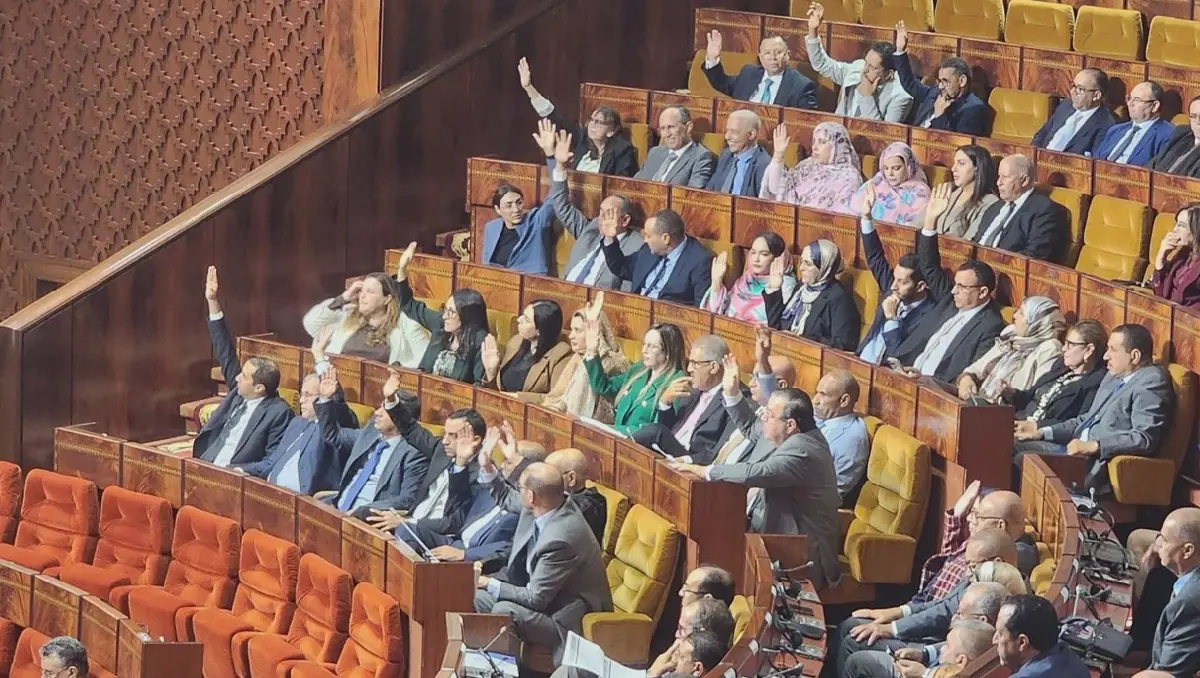
The Moroccan parliament recently held a plenary session to examine and vote on the second part of the 2027 finance bill. The debate focused on the effectiveness of public spending and the impact of allocated credits on improving social services and reducing territorial disparities. The ruling majority welcomed the government's financial efforts to accelerate various projects, while the opposition called for a balance between public spending efficiency and equitable distribution of credits and investments across different regions.
The majority groups praised the financial effort deployed by the government in the health and social protection sectors, with an allocation of nearly 2.9 billion dirhams in additional credits. They emphasized the importance of directing these credits towards completing ongoing projects, such as hospital construction, improving healthcare quality, and providing necessary medical resources. The goal is to reduce waiting times for medical appointments and ensure equal access to healthcare.
In the areas of employment and social dialogue, the majority welcomed the creation of a ministry combining these two domains, considering it a reflection of the government's focus on social dialogue as a key pillar of economic and social stability. They also noted an increase of nearly 19.4 million dirhams in credits allocated to this sector and a 53% rise in the budget of the National Employment and Skills Promotion Agency.
The opposition groups, however, expressed concerns about the government's ability to create stable and sustainable jobs in a context of limited economic growth. They stressed the need to support small and medium-sized enterprises, facilitate their access to financing and public markets, and encourage rural enterprises and cooperatives to ensure an equitable distribution of employment opportunities.
On the issue of housing, the opposition praised the housing aid programs but called for their adaptation to the specificities of rural areas, mountainous regions, and oases. They also warned against the rising prices of real estate, construction materials, and borrowing costs, which make access to decent housing increasingly difficult, particularly for young people and low-income households.
The opposition also emphasized the importance of associating local authorities with new generation territorial development programs, placing them at the heart of programming, implementation, and monitoring processes to put an end to territorial disparities and establish true territorial justice. They also underlined the need to reform the judicial system, preserve its independence and integrity, and modify legislative texts related to justice to improve its performance.
Ultimately, the debate on the 2027 sectoral budgets highlighted the challenges facing Morocco, including the need to balance public spending efficiency with equitable territorial distribution, create stable jobs, and address social and economic disparities.
Key points
- The Moroccan government has allocated significant credits to the health and social protection sectors, with a focus on completing ongoing projects and improving healthcare quality.