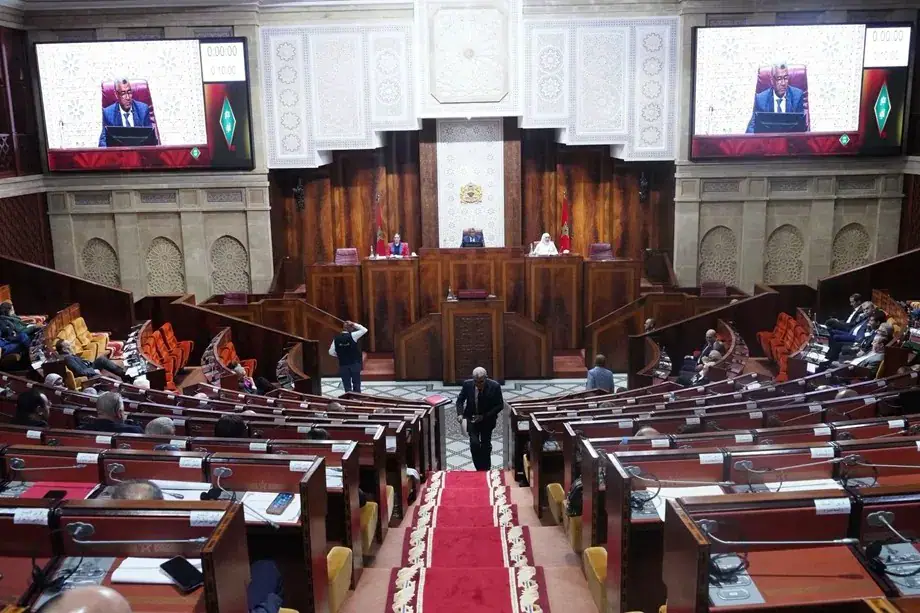
Morocco's House of Representatives approved the 2027 finance bill with a majority vote on November 14. The bill received 179 votes in favor, with 126 votes against and no abstentions. The session was chaired by House of Representatives Speaker Ahmed Touizi. The bill's approval comes after the government responded to parliamentarians' interventions on the second part of the financial bill.
The finance bill includes several amendments proposed by parliamentarians, totaling 291 changes. These amendments focused on revising income tax, reviewing customs duties on imported goods, and supporting purchasing power. The government's proposals aim to restore purchasing power and establish a sustainable social state. The bill also outlines measures to support families' income and complete the implementation of the royal project for social protection.
The 2027 finance bill is based on five priorities. These priorities include regaining purchasing power and establishing a sustainable social state. The bill also aims to improve the healthcare system, education, and vocational training. Additionally, it seeks to promote decent housing and support economic growth. The government has allocated 44.2 billion dirhams for social protection in 2027.
The bill's second priority focuses on integrating young people into education, training, and decent work. This involves reducing school dropout rates and providing young people with suitable solutions for integration. The third priority involves accelerating the implementation of advanced regionalization and new integrated territorial development programs. This includes allocating 210 billion dirhams over eight years to promote employment and basic services.
The fourth priority aims to enhance strategic sovereignty in water, energy, food, and digital sectors. This includes increasing the storage capacity of national dams and accelerating the construction of seawater desalination plants. The bill also seeks to raise the share of renewable energy to 52% of installed electrical capacity by 2030.
The fifth priority involves building a strong economy capable of financing social and strategic ambitions. This includes promoting investment in infrastructure and industry, as well as ensuring macroeconomic and financial stability. The bill will now be sent to the Senate for discussion and voting, before returning to the House of Representatives for a second reading.
The approval of the 2027 finance bill marks an important step in Morocco's budget planning process. The bill's implementation is expected to have a positive impact on the country's economy and social development. The government has emphasized its commitment to achieving the bill's objectives and promoting sustainable growth.
Key points
- The 2027 finance bill aims to restore purchasing power and establish a sustainable social state in Morocco.