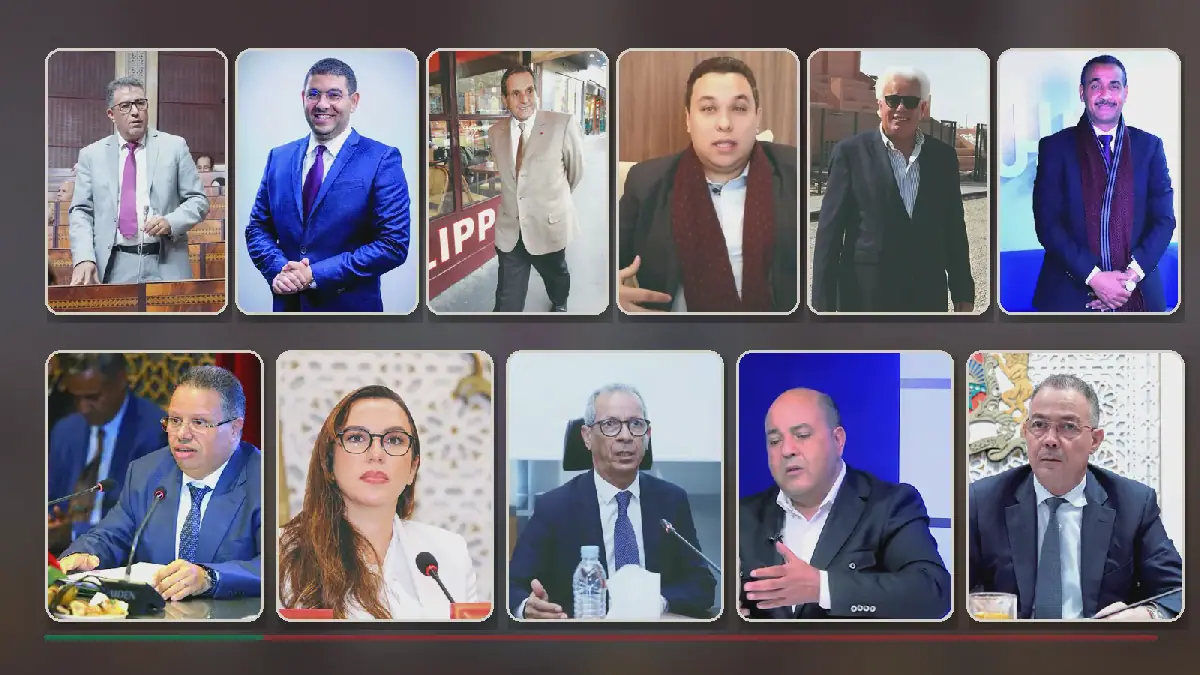
Morocco's new government, led by Fatima Zahra Mansouri, comprises a mix of veteran politicians and newcomers. Interestingly, several ministers have humble origins, having grown up in ordinary families and attended public schools. This contrasts with the past when ministerial positions were often reserved for the elite or those with influential family connections. The new government's lineup reflects a shift towards a more diverse and inclusive representation.
Fozzi Lekjaâ, the Minister of Economy and Finance, is a prime example. Born in 1970 in Berkane, Morocco, Lekjaâ came from a simple family. His father was a teacher and a union activist, instilling in him the importance of education. Lekjaâ pursued his studies in public schools and later attended the Hassan II Institute of Agriculture and Veterinary Medicine in Rabat. He then worked in the Ministry of Agriculture before joining the National School of Administration in Casablanca.
Another minister with a humble background is Mohammed El Mehdi Bensaid, appointed as Minister of Youth, Culture, and Communication. Born in 1984 in Rabat, Bensaid's parents were left-wing activists. His father, Samir Bensaid, was a leading figure in the Marxist organization, "Organisation à l'avant-garde". Bensaid spent his early years in Morocco before moving to France with his father, where he completed his studies.
Hamim Abqari, father of Minister of Youth, Salah Eddine Abqari, expressed pride in his son's appointment, highlighting his hard work and dedication. The Abqari family has a modest background, with Hamim working as a civil servant in the House of Representatives. This appointment demonstrates that talent and perseverance can lead to success, regardless of one's background.
These ministers' stories illustrate a departure from the traditional profile of Moroccan politicians. Rather than being born into influential families or having privileged upbringings, they have achieved success through their own efforts. This shift reflects a more inclusive approach to governance and offers a positive example for young Moroccans.
The new government's composition has sparked interest in the media and among the public. Many Moroccans see this development as a welcome change, indicating a more representative and diverse government. As these ministers begin their terms, their backgrounds and experiences will likely shape their approaches to policy-making.
The appointments also highlight the importance of education and hard work in achieving success. Despite their different backgrounds, these ministers have pursued higher education and developed valuable skills, enabling them to take on leadership roles. Their stories serve as an inspiration to Moroccans from all walks of life.
Key points
- Moroccan ministers have diverse backgrounds, with many coming from humble origins.
Reporting sources
- عاشوا بسطاء وانتهوا وزراء · Alakhbar