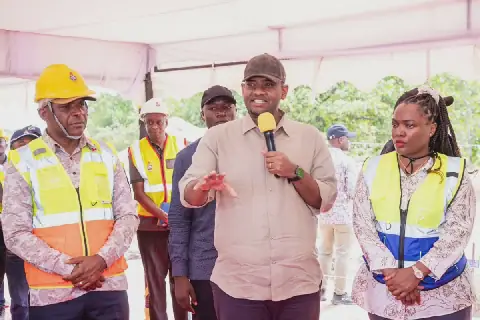
The Nabayagate scandal has taken a new turn in Guinea, with the country's former minister, Djenabou Nabaya, recently cleared of corruption charges. Nabaya's first public appearance in weeks, at the launch of the Simandou Mining Summit, brought the case back into the spotlight. The scandal involves allegations of embezzlement of over 200 billion francs guineens.
Alphonse Charles Wright, the special prosecutor at the Court for the Repression of Economic and Financial Infractions (CRIEF), has spoken out about the case. In an interview on Guinée Today, Wright explained that he was initially alerted to the allegations, like everyone else, and later requested the case file to examine it. After studying the documents and hearing from the defense, Wright concluded that the accusations against Nabaya lacked solid evidence.
According to Wright, the information from the Public Treasury did not support the allegations of embezzlement that had been circulating in public debate. He emphasized that no one can be charged without concrete evidence, stating that "if there are no indices, no factual elements, no probative elements." As a result, Wright issued a requisition for a non-prosecution order.
Wright also criticized the way the case was handled in the media, particularly by Youssouf Boundou Sylla, a journalist at Guineenews and now secretary general of the Ministry of Culture. Wright accused Sylla of publishing the allegations without providing evidence or verifiable facts. He questioned the source of the alleged embezzlement, saying it was not specified.
The special prosecutor argued that press freedom cannot justify harming individuals' dignity. He announced plans to pursue Sylla for defamation. Wright's comments have sparked renewed debate about press freedom and the protection of individuals' reputations in Guinea. The case has raised concerns about the role of journalists in reporting on corruption allegations.
The Nabayagate scandal has significant implications for Guinea's efforts to combat corruption and promote transparency. The case has highlighted the need for journalists to verify information before publishing and for prosecutors to handle cases fairly and impartially.
The developments in the Nabayagate case have sparked widespread interest in Guinea, with many citizens calling for greater accountability and transparency in government. The case serves as a test of the country's justice system and its ability to handle high-profile corruption cases.
Key points
- Charles Wright, the special prosecutor, has cleared Djenabou Nabaya of corruption charges due to lack of evidence.
- Wright has threatened Youssouf Boundou Sylla, a journalist, with prosecution for defamation over his role in publishing the allegations.
- The case has raised concerns about press freedom and the protection of individuals' reputations in Guinea.