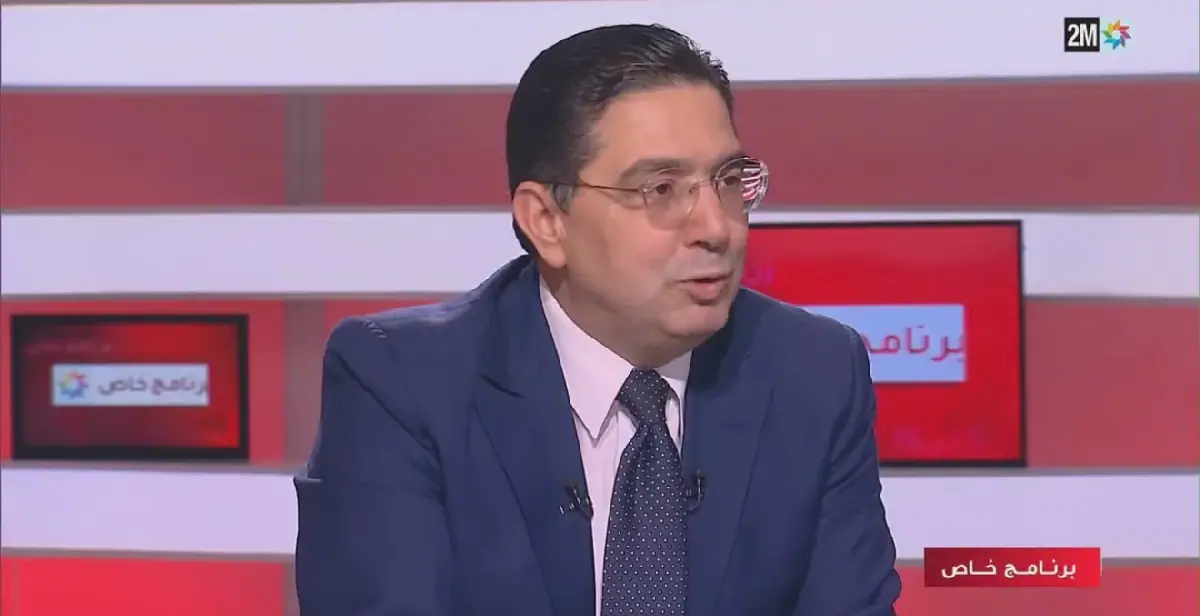
Moroccan Foreign Minister Nasser Bourita appeared on a local television channel to discuss the recent failure to extend the mandate of the UN peacekeeping mission in Western Sahara, known as MINURSO. The mission's mandate expired, and the UN Security Council was unable to reach an agreement on its renewal. Bourita attributed the failure to extend the mandate to the council's inability to make a decision. He highlighted the complexities of the Western Sahara conflict and Morocco's position on the issue.
The interview was criticized for not providing sufficient clarity on the situation and Morocco's future actions. Many felt that the questions asked were not representative of the concerns of the Moroccan people, particularly those from the Western Sahara region. The lack of representation from the region's journalists and experts was seen as a missed opportunity to provide a more comprehensive understanding of the issue. Bourita's responses were perceived as vague and not addressing the key concerns of the public.
A comparison was drawn between Bourita's performance and that of his predecessor, Omar Hilal. Hilal was praised for his handling of the situation, particularly in his interactions with the Algerian ambassador. Bourita's defense of Russia, which has been critical of Morocco on the Western Sahara issue, was also seen as questionable. Russia's veto power in the UN Security Council has been a significant factor in the failure to extend the MINURSO mandate.
The controversy surrounding Bourita's interview extends to his relationship with Russia. Morocco's ties with Russia have been a subject of interest, particularly in light of Russia's actions in Ukraine. Bourita's comments were seen as not doing enough to clarify Morocco's position on the issue. The public is seeking more transparency and clarity on Morocco's relationships with other countries, particularly those with a direct impact on the Western Sahara conflict.
The Western Sahara conflict remains a contentious issue, with many questions unanswered. The future of the MINURSO mission and the potential involvement of other countries, such as the United States and China, are still unclear. Bourita's interview did not provide sufficient insight into Morocco's strategy moving forward. The public is eagerly awaiting more information on the government's plans to address the situation.
The role of the international community in resolving the Western Sahara conflict was also raised. The African Union and the European Union have been involved in efforts to find a solution, but progress has been slow. Morocco's relationships with these organizations and their member states will likely play a significant role in determining the outcome of the conflict.
The controversy surrounding Bourita's interview highlights the need for more transparency and clarity on Morocco's position on the Western Sahara conflict. The public is seeking more information on the government's strategy and its relationships with other countries. The situation remains complex, and a resolution will likely require continued diplomatic efforts from all parties involved.
Key points
- The failure to extend the MINURSO mandate has significant implications for the Western Sahara conflict.
- Morocco's relationships with other countries, particularly Russia, will play a crucial role in determining the outcome of the conflict.
- The public is seeking more transparency and clarity on Morocco's position on the Western Sahara conflict and its strategy moving forward.