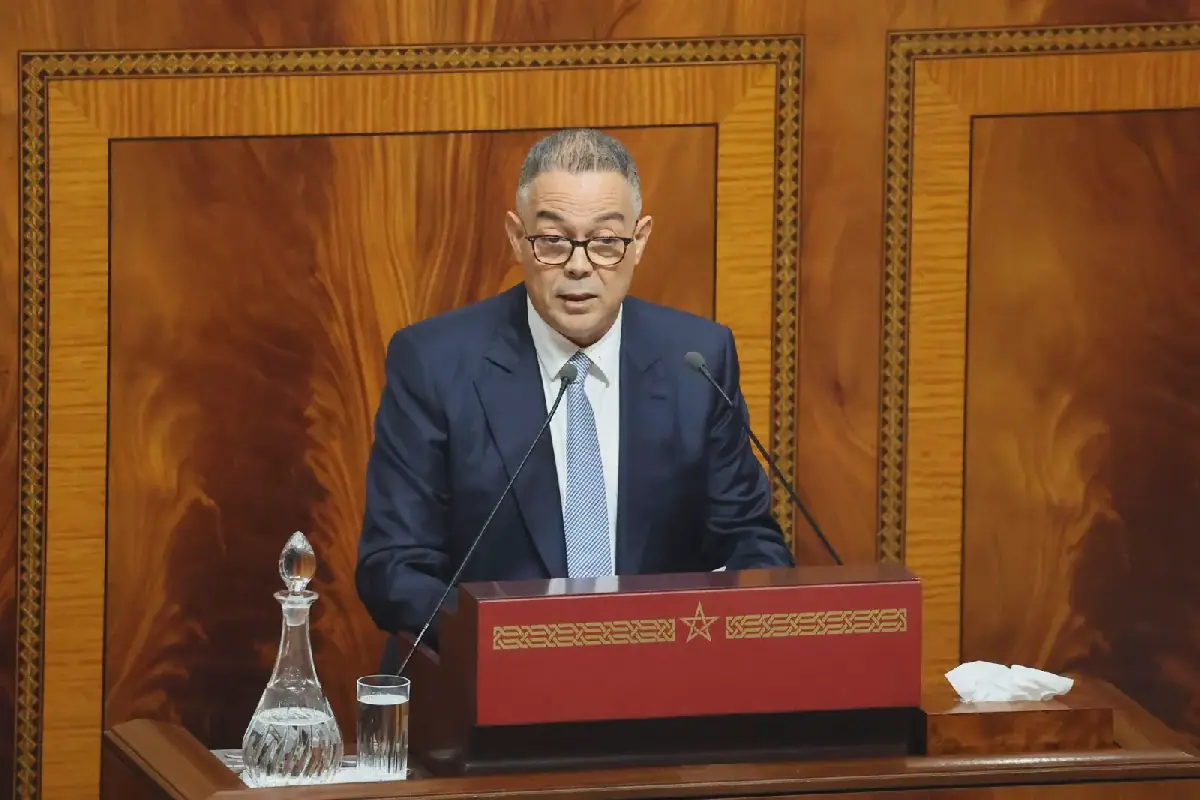
Morocco's Minister of Economy, Finance, and Public Performance, Fouzi Lekjaa, presented the country's 2027 budget plan, highlighting the need to balance resource mobilization with financial consolidation. The plan aims to accelerate the government's commitments while maintaining economic and financial stability. Lekjaa emphasized the importance of prioritizing spending in a challenging international context. The budget plan was presented to the Parliament.
The global economy is expected to grow by 3.4% in 2027, up from 3.1% in 2026. The eurozone, Morocco's main trading partner, is expected to grow modestly at 1.1% in 2026 and 1.2% in 2027. Lekjaa stressed the need to diversify external markets and sources of growth. Domestically, Morocco's economic growth is expected to reach 4.7% in 2026, driven by a 2.9% increase in non-agricultural activities and an 18% rebound in agricultural activity.
The agricultural sector is expected to benefit from a harvest of 90 million quintals in the 2025-2026 campaign. Inflation is expected to be around 0.7%, while foreign exchange reserves will cover nearly six months of imports by the end of the year. The budget deficit is expected to decrease to 3% of GDP in 2026, with a debt-to-GDP ratio stabilizing at 67.5%. Lekjaa attributed this positive trajectory to strong tax revenue performance.
Tax revenues reached 288.3 billion dirhams (MMDH) as of September 2026, up 30.2 MMDH or 11.7% from the same period last year. This provides a solid foundation for Morocco to pursue reforms and finance its priorities. Lekjaa emphasized the need to strengthen non-agricultural growth, consolidate sustainable resources, and preserve the country's intervention capacity.
The government's social priorities are expected to cost around 62 billion dirhams. Lekjaa assured that the government has fulfilled its commitments since the first budget plan was presented. Measures have been taken to reduce the prices of basic products, enhance purchasing power, and accelerate the implementation of the Royal project to generalize social protection.
The government plans to increase the minimum direct social aid from 500 to 1,000 dirhams by the end of its term, with a 100-dirham increase in 2027. This will be funded by 3 MMDH in credits. The health sector will receive a budget of 45.4 MMDH, up 3 MMDH from 2026, with 8,000 budget posts allocated. The education and training sector will receive a budget of 121.3 MMDH, up 5.3 MMDH.
The 2027 budget plan also allocates 10.4 MMDH for investment credits in the housing sector, 25 MMDH for integrated territorial development programs, and 1.68 MMDH for the second phase of the National Program for the Integrated Development of Emerging Rural Centers. Lekjaa's presentation outlined the government's priorities and spending plans for the coming year.
Key points
- The 2027 budget plan aims to balance resource mobilization with financial consolidation.
- Morocco's economic growth is expected to reach 4.7% in 2026.
- The government plans to increase the minimum direct social aid to 1,000 dirhams by the end of its term.