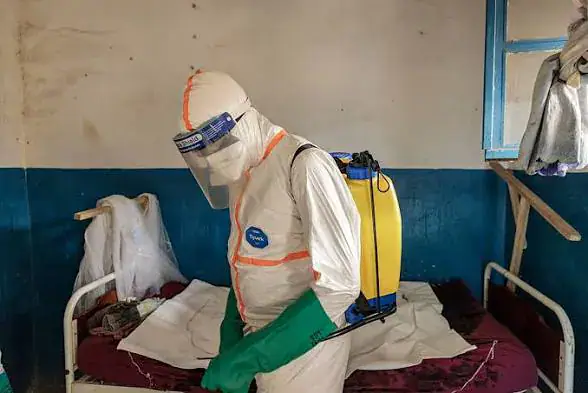
The Federal Executive Council (FEC) has approved a $45.8 billion biosecurity and disease surveillance project for five international airports in Nigeria. The project aims to strengthen the country's defenses against infectious diseases such as Ebola. Coordinating Minister of Health and Social Welfare, Professor Ali Pate, announced this after the FEC meeting presided over by President Bola Tinubu in Abuja.
The project will provide early warning, detection, and response systems at major entry points, along with a National Surveillance Operations Centre to coordinate real-time monitoring and responses to suspected outbreaks. The facilities will be deployed at five international airports: Murtala Muhammed International Airport, Lagos; Nnamdi Azikiwe International Airport, Abuja; Mallam Aminu Kano International Airport, Kano; Port Harcourt International Airport; and Akanu Ibiam International Airport, Enugu.
The council approved the project's full business case and a 20-year public-private partnership concession to BioHealth Consortium. Professor Pate emphasized that the project is crucial due to the significant vulnerabilities in public health threats crossing borders. He cited the COVID-19 pandemic as a prime example of the need for coordinated, technology-driven systems for early warning, detection, and response to emerging infectious disease threats.
Nigeria's airports handle over 18 million passengers annually, making effective surveillance at entry points essential. The project will incorporate advanced technologies such as wastewater surveillance associated with aircraft, air and surface sampling equipment, cargo and baggage monitoring technologies, and modern laboratories for rapid diagnosis. This comprehensive approach aims to enhance the country's ability to detect and respond to infectious diseases.
The project will integrate its operations with those of relevant agencies, including the Nigeria Centre for Disease Control and Prevention, Port Health Services, the Nigeria Customs Service, the Nigeria Immigration Service, and the National Agency for Food and Drug Administration and Control. This integration will ensure a coordinated response to public health threats.
The initiative was informed by lessons from Nigeria's recent response to an imported Ebola case. Professor Pate highlighted the importance of a robust surveillance system in preventing and responding to infectious disease outbreaks. The project is expected to significantly enhance Nigeria's preparedness and response to public health emergencies.
The biosecurity project is a significant investment in Nigeria's public health infrastructure. With its implementation, the country will be better equipped to detect and respond to infectious diseases, reducing the risk of outbreaks and protecting the health of its citizens. The project's success will depend on effective collaboration between the public and private sectors.
Key points
- The project will be implemented at five international airports in Nigeria.
- The project aims to strengthen Nigeria's defenses against infectious diseases such as Ebola.
- The project will incorporate advanced technologies such as wastewater surveillance and modern laboratories for rapid diagnosis.