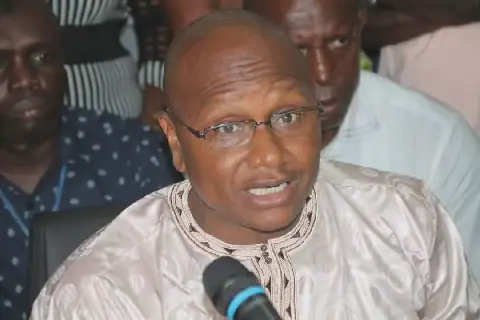
Moroccan journalist Jameel Kolhassan, host of the TV program "Hour of Frankness" on Al Massira Channel, has addressed the controversy surrounding the latest episode featuring Finance Minister Fouzi Lekjaa as the sole guest. Kolhassan explained that the absence of opposition representatives was not a deliberate editorial decision to exclude them. Instead, it was due to three parliamentarians from opposition parties apologizing for not being able to participate.
According to Kolhassan, the program's production team had extended official invitations to representatives from three opposition parties to engage in a discussion with Lekjaa. However, the parliamentarians' apologies, citing various reasons, disrupted the planned format of the episode. This led to Lekjaa appearing without opposition counterparts, sparking accusations of intentional exclusion and biased discussion management.
Kolhassan emphasized that his team made every effort to ensure the participation of opposition representatives, stressing that the circumstances surrounding the parliamentarians' apologies clarified why Lekjaa appeared without opposition counterparts. He also rejected claims of bias, stating that the program aimed to provide a platform for diverse perspectives.
The journalist refused to disclose the names of the parliamentarians who apologized, citing a desire to respect their privacy and avoid subjecting them to further criticism or interpretation. This decision was made amidst the ongoing controversy surrounding the episode.
Kolhassan criticized those who quickly formed opinions about the program's alleged bias, urging them to verify facts and communicate with the program's producers before adopting positions based on incomplete information. He emphasized that evaluating media work should be based on accurate information, rather than preconceived notions.
The controversy surrounding the episode highlights the challenges of managing discussions with diverse perspectives, particularly in Morocco's media landscape. Kolhassan's clarification aimed to provide context and transparency, while also underscoring the importance of fact-based evaluation in media criticism.
The incident has sparked a broader conversation about the role of media in promoting inclusive discussions and the challenges of balancing diverse perspectives in a rapidly changing media environment. As the Moroccan media landscape continues to evolve, such incidents serve as a reminder of the importance of transparency, accuracy, and fairness in media reporting.
Key points
- - Moroccan journalist Jameel Kolhassan clarified that opposition representatives were absent from a TV program featuring Finance Minister Fouzi Lekjaa due to apologies from three parliamentarians. - Kolhassan emphasized that his team made efforts to include opposition perspectives, but circumstances led to Lekjaa appearing without opposition counterparts. - The incident highlights the challenges of managing discussions with diverse perspectives in Morocco's media landscape.