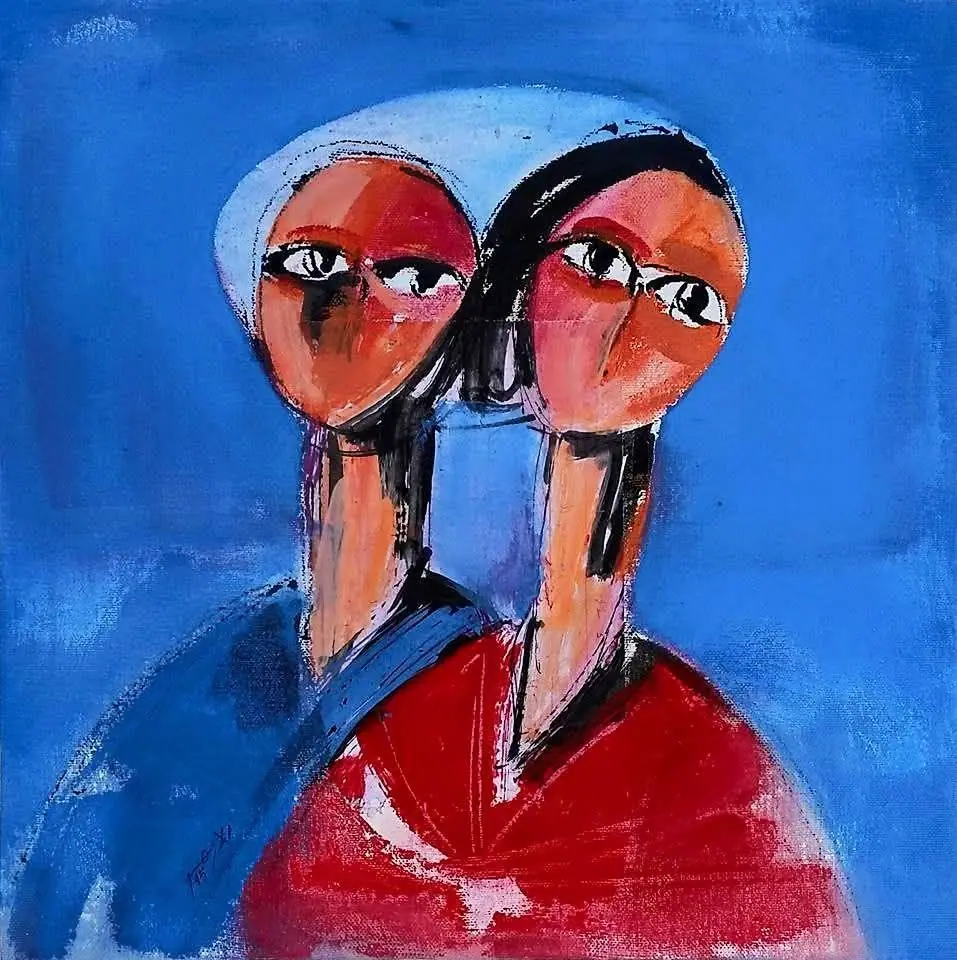
In a thought-provoking literary analysis, Moroccan author Anis Rafei's work, "Juju the Weaver of Eternity," has been scrutinized for its profound exploration of human existence and the intricacies of life and death. The narrative revolves around Juju, a weaver of faces, whose life undergoes a significant transformation after he retires from his job at the National Company for Wool Production. Rafei's protagonist embarks on a journey of self-discovery, navigating the complexities of existence and the mysteries of life and death.
Rafei's work is characterized by its minimalist writing style, which is reminiscent of renowned authors such as Julio Cortazar and Jorge Luis Borges. The narrative is structured around four internal sections, which create a sense of geometric progression, ultimately leading to a closed circle. This literary device serves to underscore the themes of existence and the interconnectedness of life and death. Furthermore, Rafei's use of marginal notes and references adds depth and complexity to the narrative, much like the works of philosopher Jacques Derrida.
The story of Juju is deeply intertwined with the traditional Moroccan folk dance, Ahwash. The dance, which is characterized by its intricate movements and geometric patterns, serves as a metaphor for the complexities of human existence. Rafei's protagonist is drawn to the dance, and it becomes a catalyst for his exploration of the human condition. Through Juju's experiences, Rafei sheds light on the fragility of life and the inevitability of death, highlighting the intricate web of relationships between the two.
As Juju's life becomes increasingly entwined with the dance, he begins to experience a series of strange and unexplained events. The weaver's faces, which he had created, seem to be connected to a series of mysterious deaths. Juju becomes convinced that his creations are cursed, and he is haunted by the possibility that his art has brought about the demise of others. This development serves to underscore the themes of responsibility and the power of art to shape reality.
Rafei's exploration of the human condition is deeply rooted in Moroccan culture and tradition. The author's use of Ahwash and other cultural references serves to create a sense of authenticity and depth. Furthermore, the narrative's focus on the intersection of life and death serves to highlight the complexities of human existence. Through Juju's story, Rafei poses fundamental questions about the nature of reality and the human experience.
The literary work has been praised for its innovative style and its exploration of the human condition. Rafei's use of language and narrative structure serves to create a sense of intimacy and immediacy, drawing the reader into the world of the story. The author's exploration of themes such as loss, existence, and the power of art serves to underscore the complexity and richness of human experience.
Ultimately, "Juju the Weaver of Eternity" is a thought-provoking and deeply unsettling work that challenges readers to confront the mysteries of existence. Through Juju's story, Rafei offers a profound exploration of the human condition, one that is both deeply rooted in Moroccan culture and universally relatable. The narrative's focus on the intersection of life and death serves to highlight the complexities and mysteries of human existence.
Key points
- The literary analysis of "Juju the Weaver of Eternity" highlights the author's exploration of human existence, loss, and the intersection of life and death.
- Rafei's use of traditional Moroccan folk dance, Ahwash, serves as a metaphor for the complexities of human existence.
- The narrative's focus on the power of art to shape reality serves to underscore the themes of responsibility and the human condition.
Reporting sources
- جوجو نساج الأبدية هوامش حول قصة «جوجو» لأنيس الرافعي · Al Ittihad Al Ichtiraki