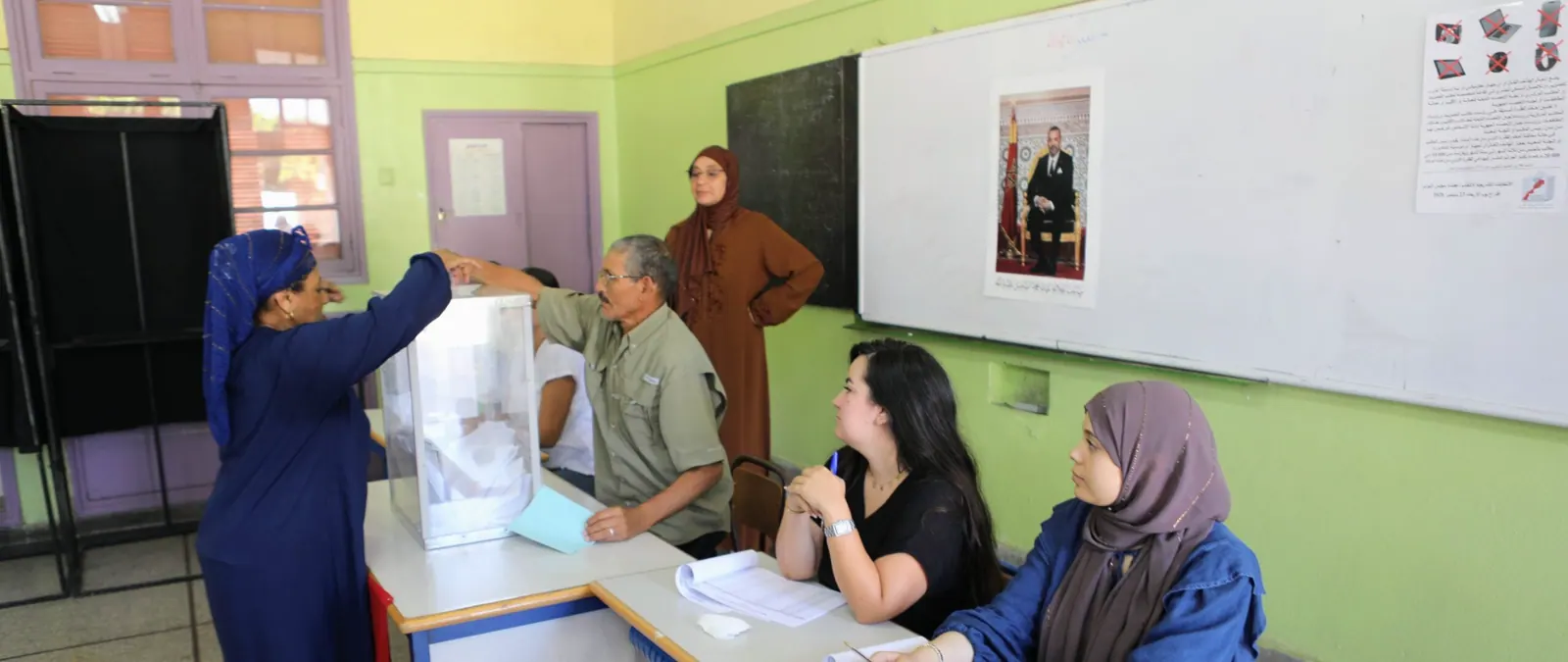
A network of 78 civil society organizations deployed 1,455 observers during Morocco's September 23 legislative election, monitoring 4,645 polling stations. They reported 59 suspicious cases of corruption or financial inducement targeting voters and 279 instances of voter guidance. This irregularity, involving directing voters towards a specific candidate, was the most frequently observed, occurring in 6% of monitored polling stations.
The observers noted that in approximately 28% of observed polling stations, voters did not select their own ballots, creating opportunities for manipulation. The report also documented 53 cases of public funds being used for campaign purposes, 40 instances of observers being denied access, and 66 cases of falsified or AI-generated electoral content. Furthermore, a single training organization spent $150,000 on advertisements on one platform, exceeding the combined total of its competitors.
The observers also identified accessibility issues, with 27% of polling stations remaining inaccessible to people with disabilities. The network criticized the administration's "passive neutrality," despite circulars from the Ministry of Interior prohibiting the use of public funds during the campaign. This neutrality was seen as a concern, given the potential for undue influence.
The National Human Rights Council characterized the election as generally normal, while reserving judgment on incidents in Tangier, where an investigation is expected. The council examined over 2,030 online publications containing religious content, including videos claiming certain parties would combat Islam or linking electoral choices to divine judgment.
The council reported 44 cases of explicit religious symbolism in campaigns and 6 instances of electoral propaganda within places of worship, including the use of mosque loudspeakers. The legal framework prohibits the use of religious themes in electoral competition. These findings are expected to inform appeals to the Constitutional Court, which has sole authority to rule on the regularity of the election.
The civil society network's report highlights concerns about the integrity of the electoral process. The use of public funds for campaign purposes and the inaccessibility of polling stations to people with disabilities are issues that require attention. The council's findings will likely be scrutinized by various stakeholders, including political parties and civil society organizations.
The Moroccan legislative election has concluded, but the process of verifying its integrity has just begun. The Constitutional Court will review the election's regularity, taking into account the concerns raised by the civil society network and the National Human Rights Council. The court's decision will have significant implications for the country's democratic process.
Key points
- The Moroccan legislative election was marred by 279 cases of voter guidance and other irregularities.
- The National Human Rights Council characterized the election as generally normal, despite some concerns.
- The findings of the civil society network and the National Human Rights Council will inform appeals to the Constitutional Court.