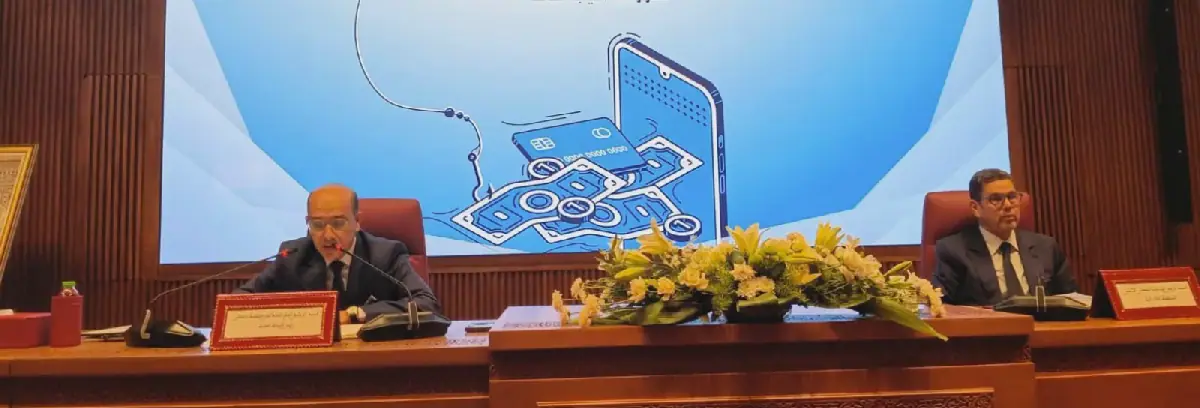
The Moroccan judiciary has recently organized a seminar on the judicial treatment of money laundering cases in light of recent legislative developments in the Code of Penal Procedure. The event, attended by high-ranking judicial officials, jurists, and experts, highlighted the growing challenge of money laundering crimes. Mohammed Abdennabaoui, Delegate-President of the Higher Judicial Council, noted that these crimes have become a major challenge for modern judicial systems due to their connection to various criminal activities and complex financial transactions.
Abdennabaoui emphasized that money laundering crimes often involve transnational elements and exploit rapid technological advancements and financial services. He cited statistics showing that competent courts handled over 724 money laundering cases in 2025, surpassing the total number of cases handled in the past five years. The average judgment time for these cases was 110 days. This development reflects the judiciary's commitment to addressing financial crimes.
Hicham Balaoui, Prosecutor General of the King at the Court of Cassation, stressed that combating money laundering is no longer solely a matter of penal policy but a fundamental pillar for preserving the integrity of the financial system. He highlighted the importance of ensuring fair competition and improving the business climate. Balaoui also emphasized the judiciary's role in balancing effective crime fighting with protecting individual rights and freedoms.
The judiciary has demonstrated its commitment to tackling money laundering through increased efforts in recent years. According to Balaoui, statistical indicators show a notable improvement in judicial performance. In 2023, 821 money laundering cases were registered, followed by 801 in 2024 and 839 in 2025. Although the number of registered cases decreased to 584 in 2026, the number of cases processed varied between 763 and 827 annually.
The year 2026 has seen a positive trend in judicial performance, with 824 cases processed by September 30, exceeding the total number of cases handled in 2024 and 2025. This development suggests that the judiciary is making progress in addressing money laundering crimes. The data also indicates that the outcome of processed cases reveals a proactive approach to tackling financial crimes.
The Moroccan judiciary's efforts to combat money laundering are part of a broader strategy to address financial crimes and promote economic stability. By enhancing its capabilities and collaboration with relevant authorities, the judiciary aims to effectively disrupt and dismantle money laundering networks. This approach is expected to contribute to a safer and more transparent financial environment.
The ongoing efforts of the Moroccan judiciary to address money laundering and other financial crimes demonstrate its commitment to upholding the rule of law and promoting economic integrity. With continued cooperation and vigilance, the judiciary is well-positioned to make a meaningful impact in the fight against financial crimes.
Key points
- Moroccan judiciary handles over 724 money laundering cases in 2025.